Naples: Ancient Tombs Beneath a Residential Building

Buongiorno!
Sometimes the most interesting places turn up completely by chance. That’s exactly what happened in Naples. After Pompeii, the historic center, all the underground crypts and skulls, I thought it would be hard to surprise me. And then I stumbled upon the Ipogeo dei Cristallini.
Honestly, before the trip I hadn’t even heard of this place. It turned out to be one of the most extraordinary sites I’ve ever seen and not just in Italy.
So…

Imagine: the year 1889, Naples, the Sanità quarter.
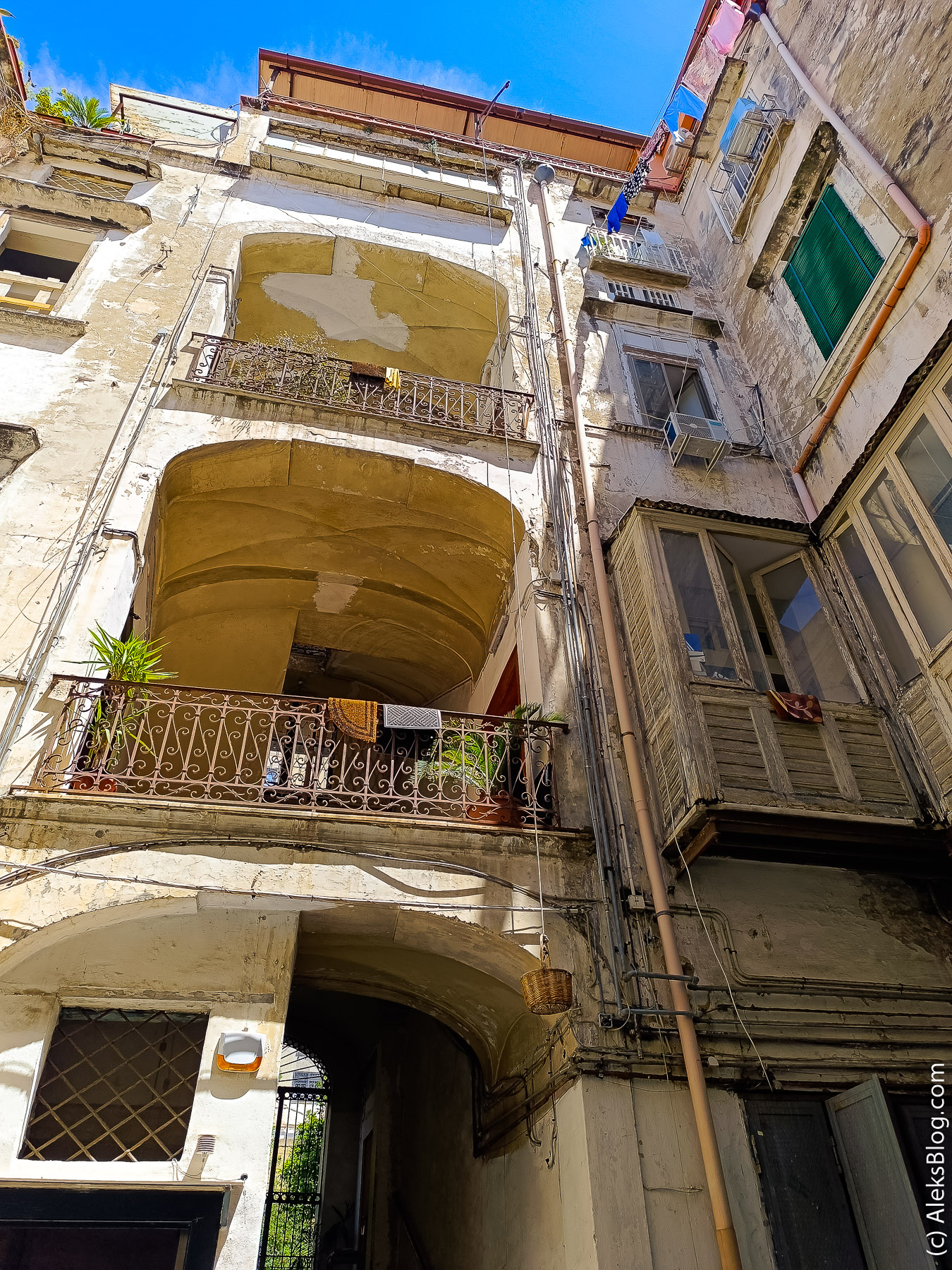
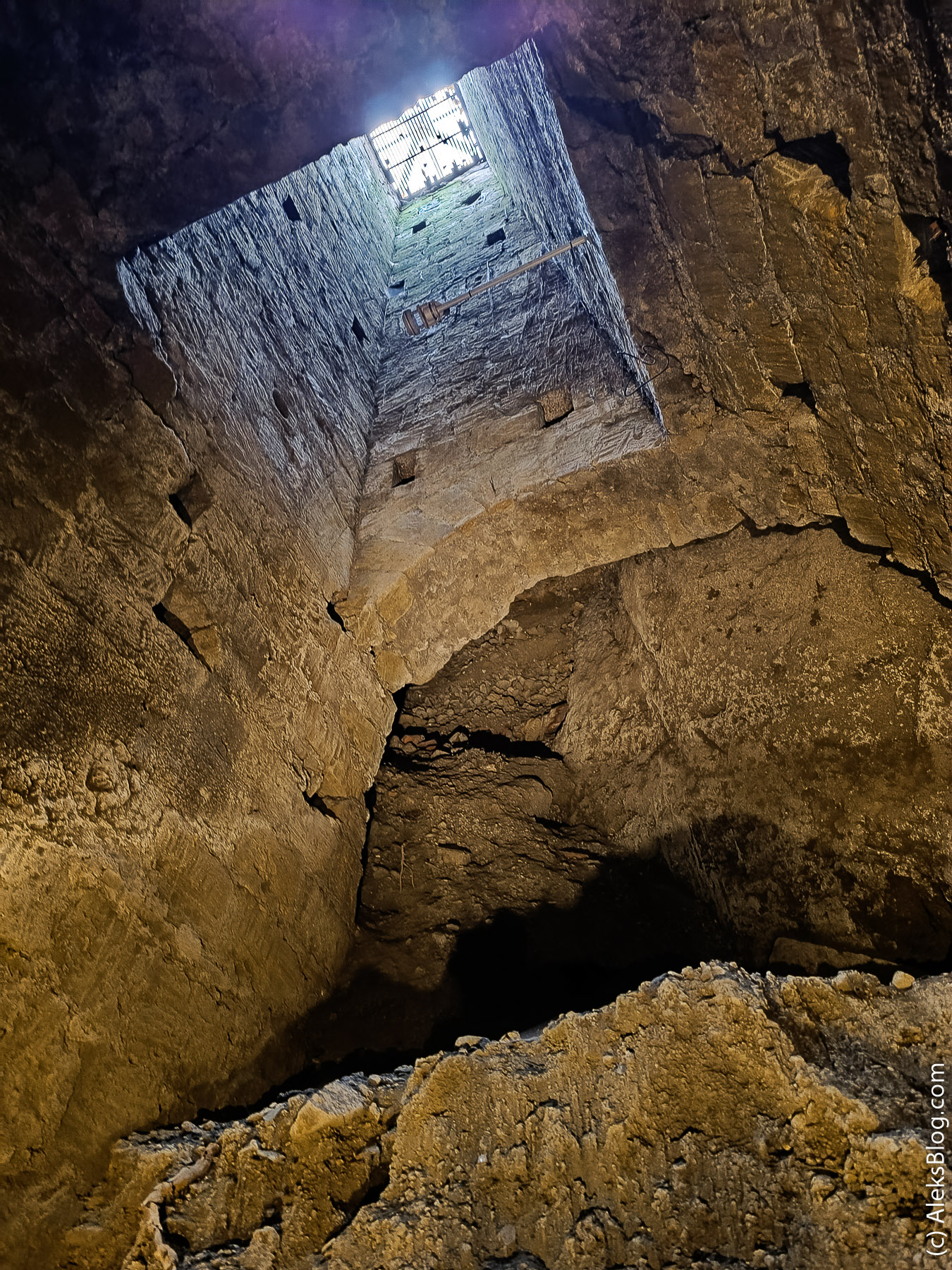
Baron Giovanni Donato decides to dig a well in the courtyard of his palazzo. But at a depth of 11 meters, what awaited him wasn’t water — it was four enormous, untouched, lavishly decorated Greek tombs from the era of Alexander the Great.
Not just the baron, but the whole neighborhood was stunned. The residents of the quarter kept this discovery secret for more than 130 years. The necropolis was only opened to visitors in 2022.
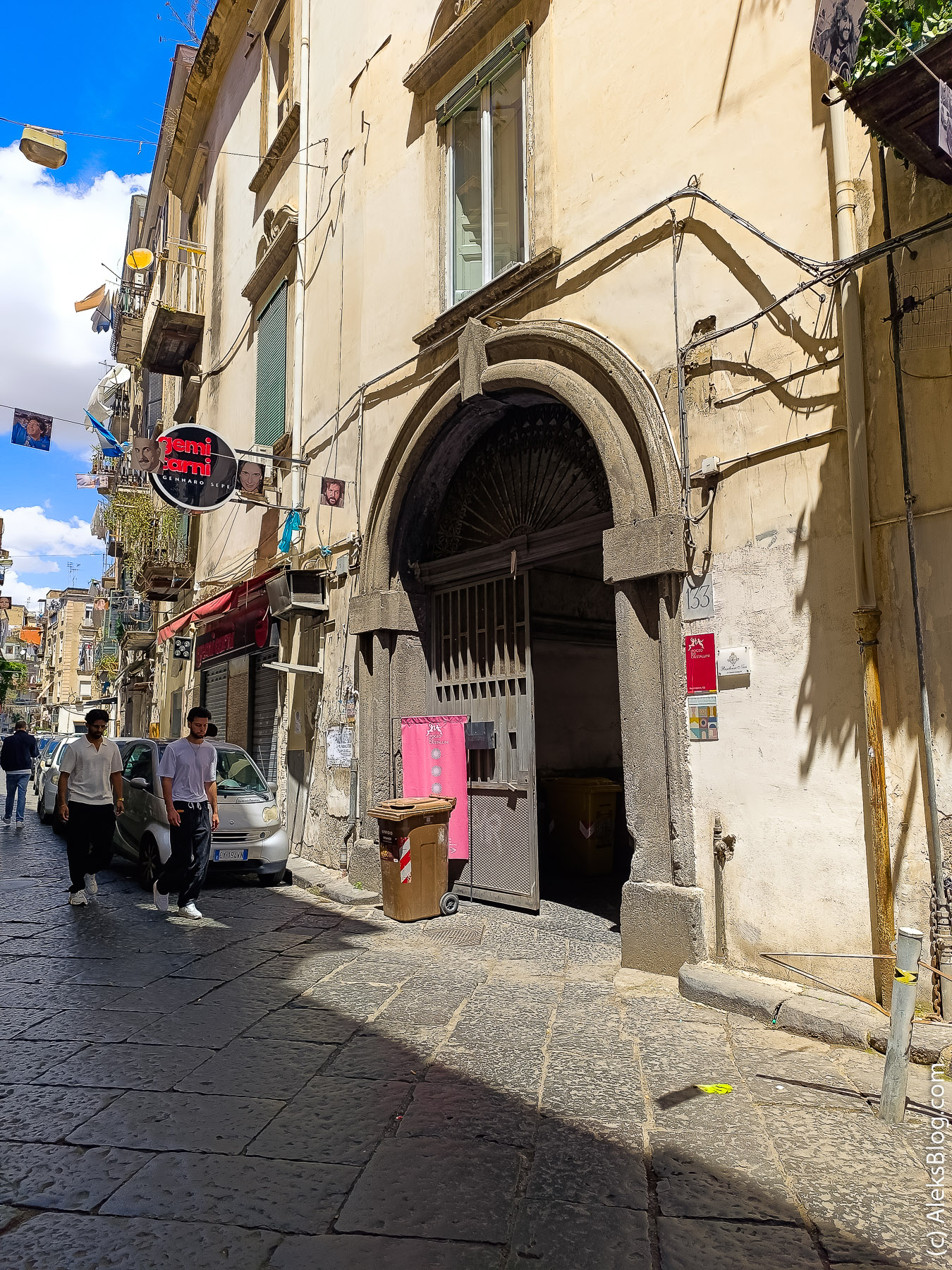
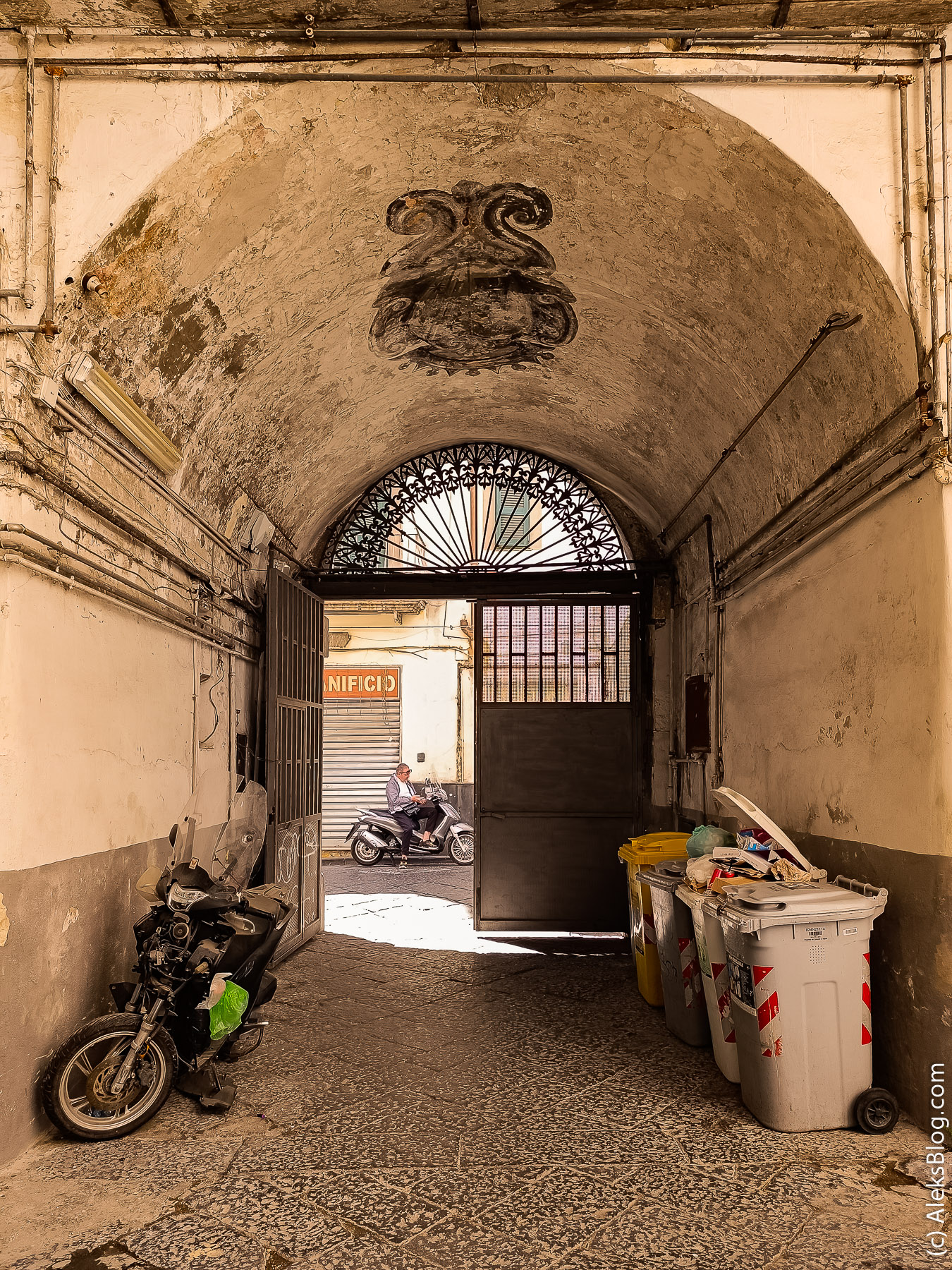
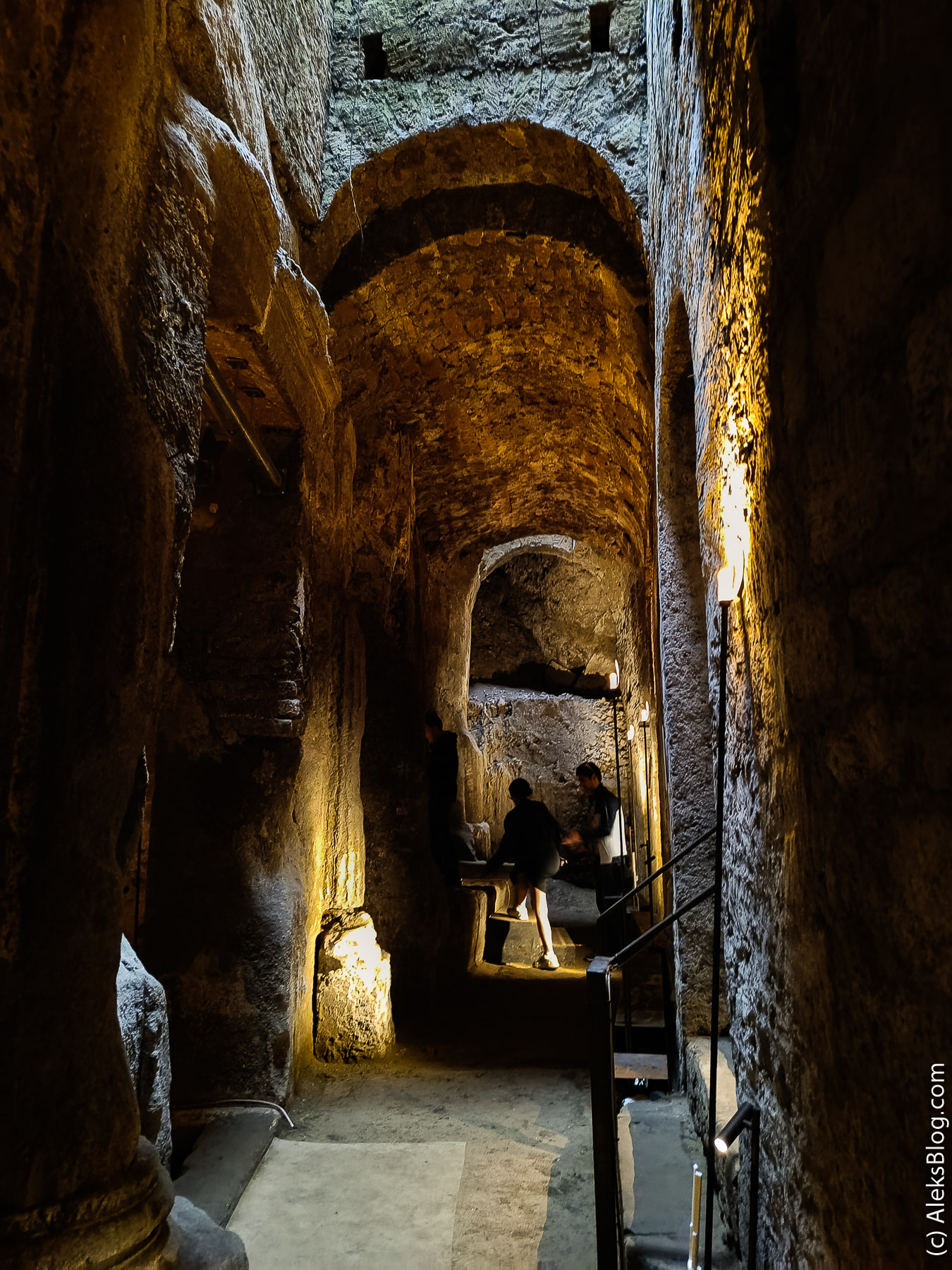
It’s hard to wrap your head around it: here’s an ordinary Neapolitan apartment building, here’s the entrance to the floors with apartments, and here’s the entrance to a basement containing a necropolis from the 3rd century BC.
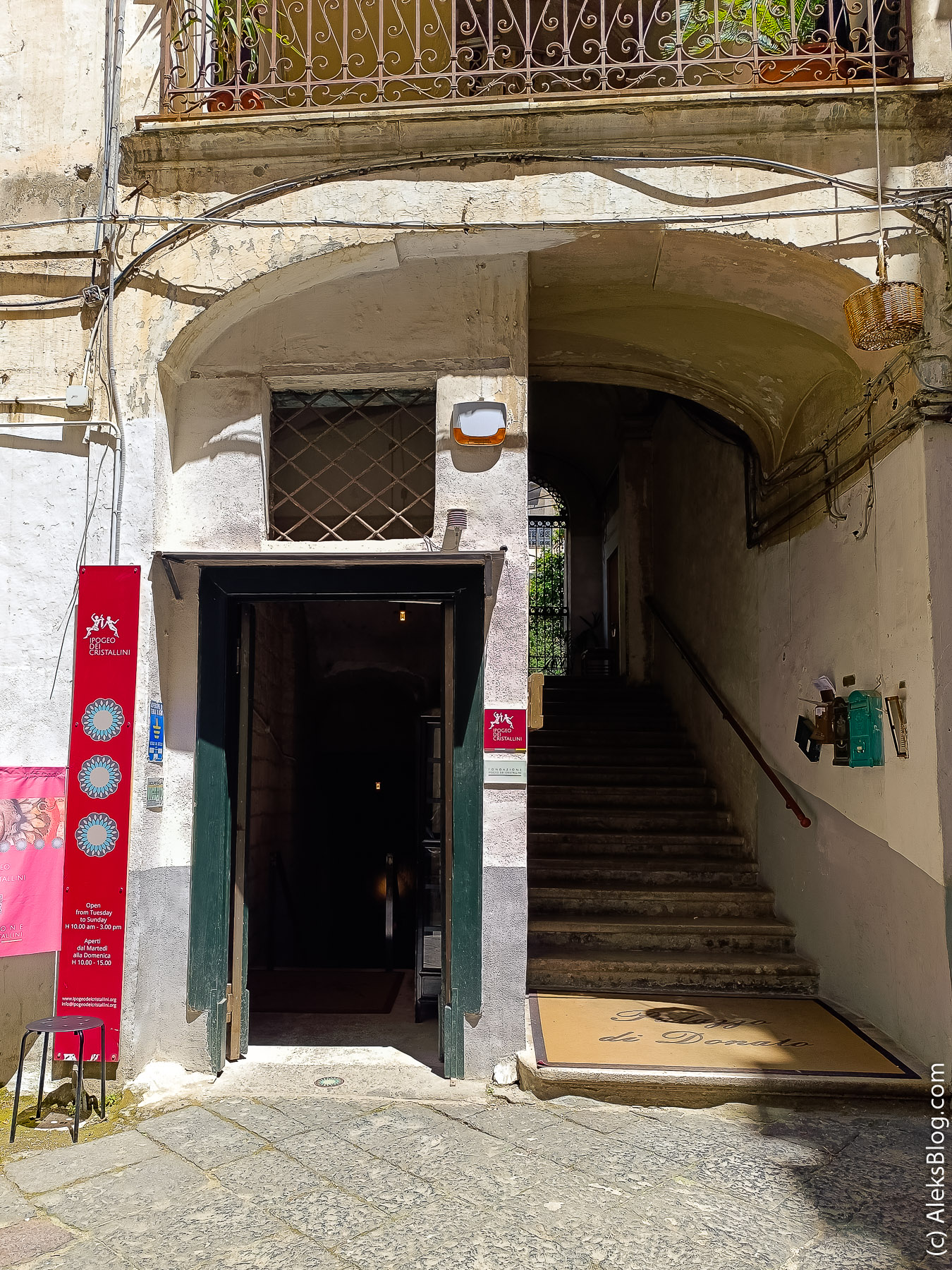
What is an “ipogeo”
The word “ipogeo” comes from Greek and literally means “underground.” This particular one, the Ipogeo dei Cristallini, dates back to the late 4th–3rd century BC — meaning it was built roughly 2,300–2,400 years ago.
Mamma mia! And all of this sits right underneath an apartment building.
Four tombs underground
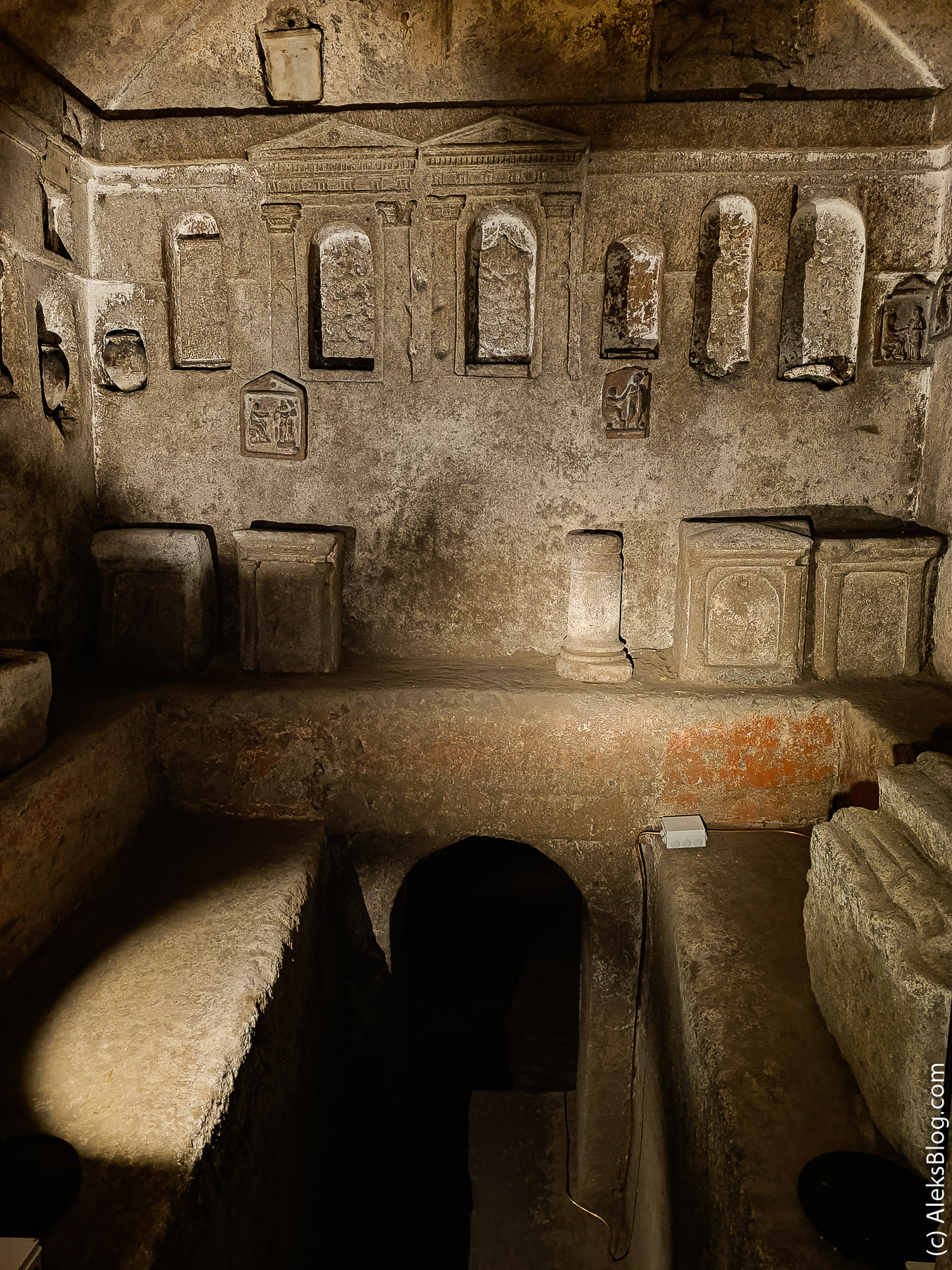
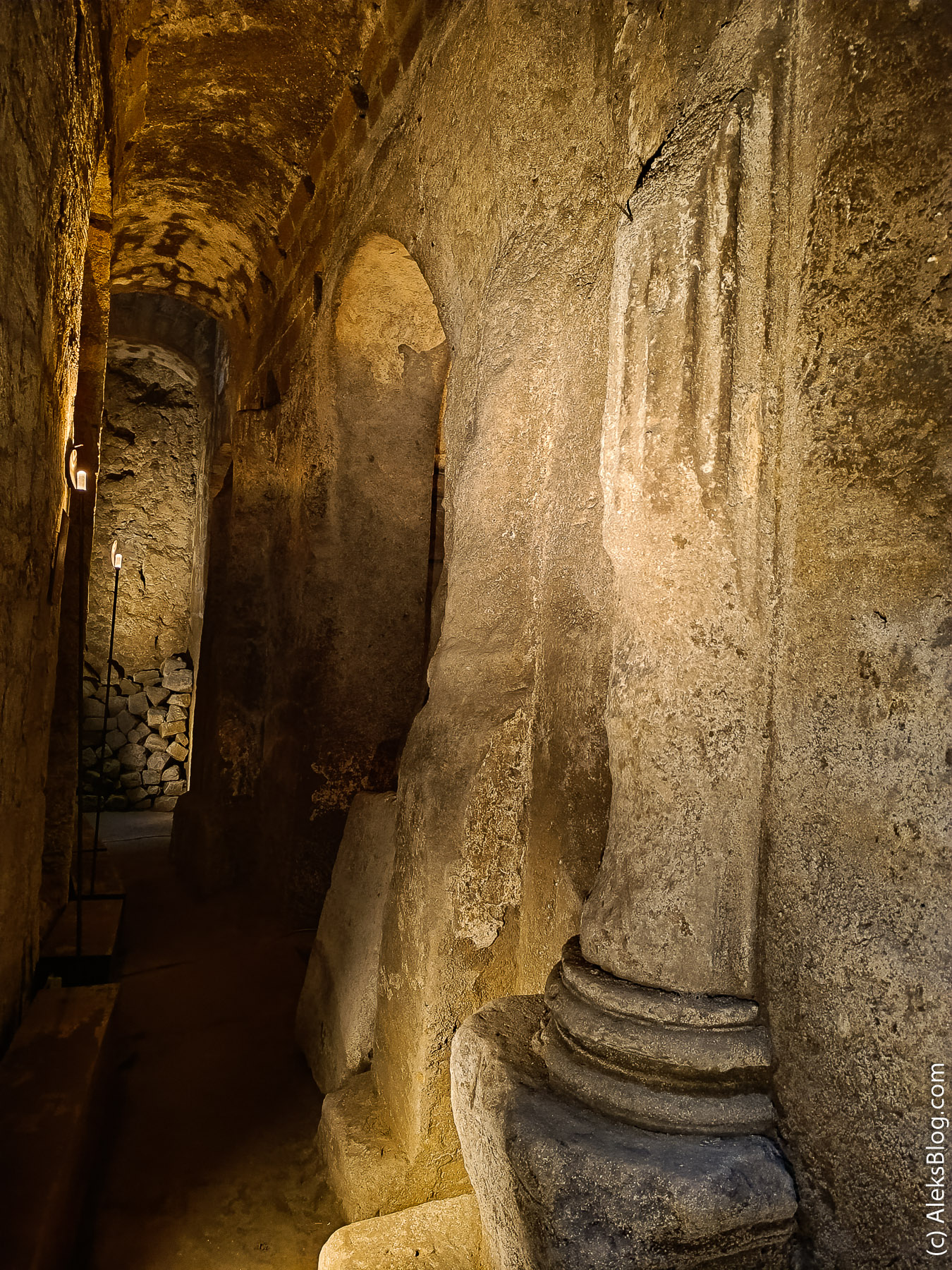
Inside the complex there are four tombs, labeled A, B, C, and D for visitors’ convenience. The letters have no historical meaning — they’re purely for navigation.
Since Naples was founded by the ancient Greeks (Neapolis translates to “New City”), Greek burial traditions were used here. Each tomb consisted of two chambers: in one, relatives performed memorial rites, while the other held the burials themselves.
During the excavation, Baron Giovanni di Donato uncovered around 700 objects related to funerary rituals: amphorae, pottery, statuettes, and other artifacts. Today most of this collection is kept in the Naples Archaeological Museum.
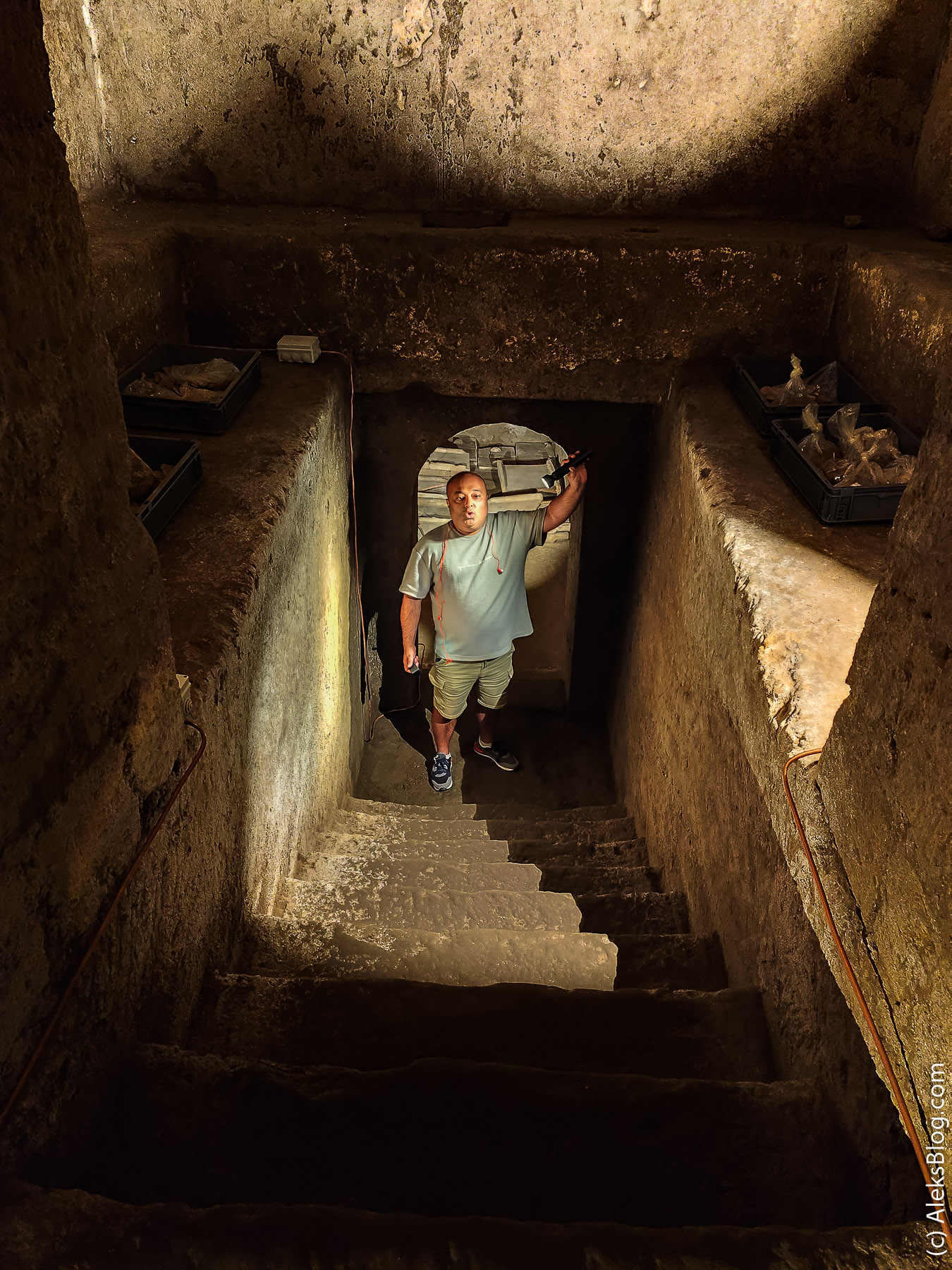
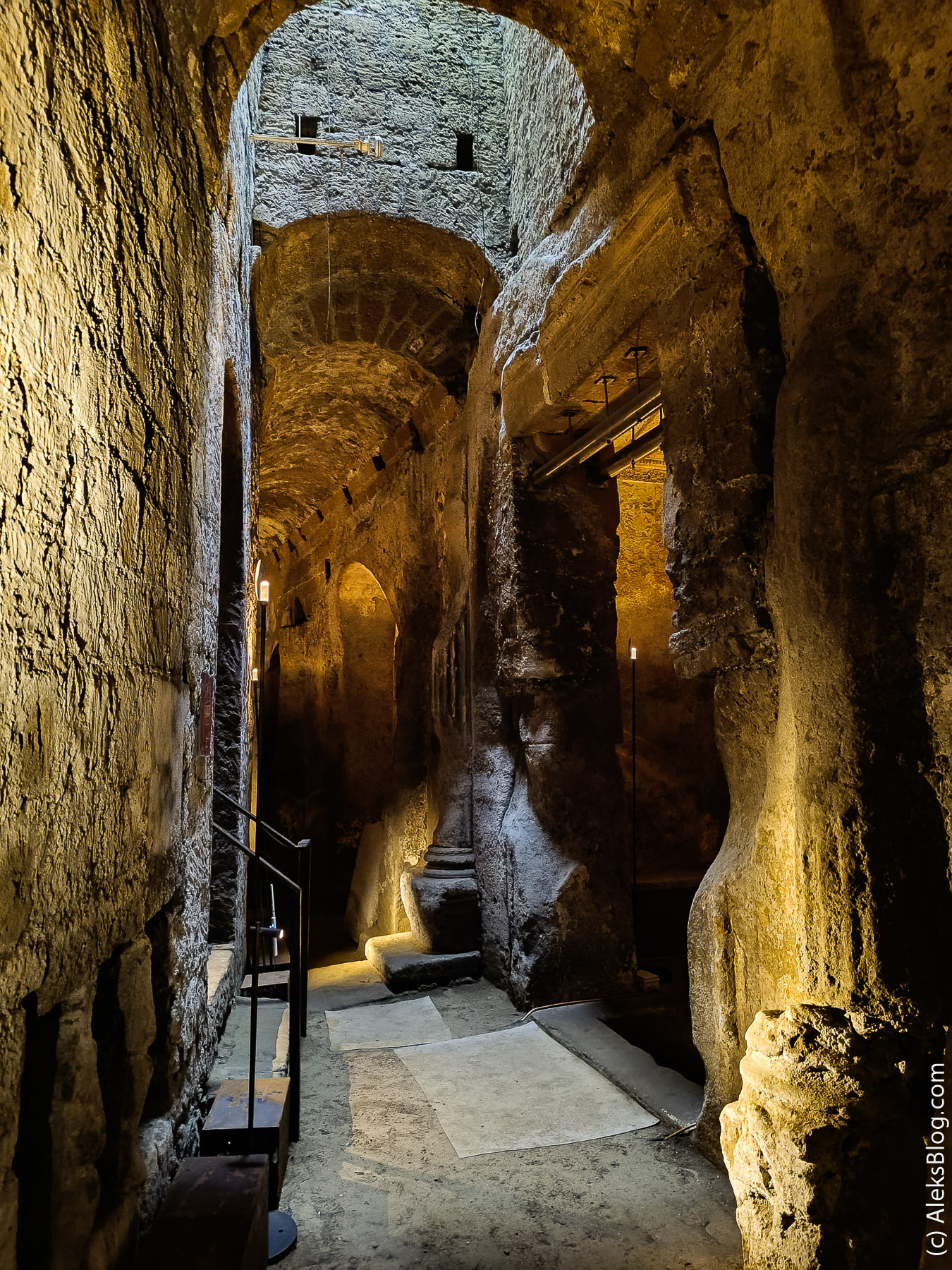
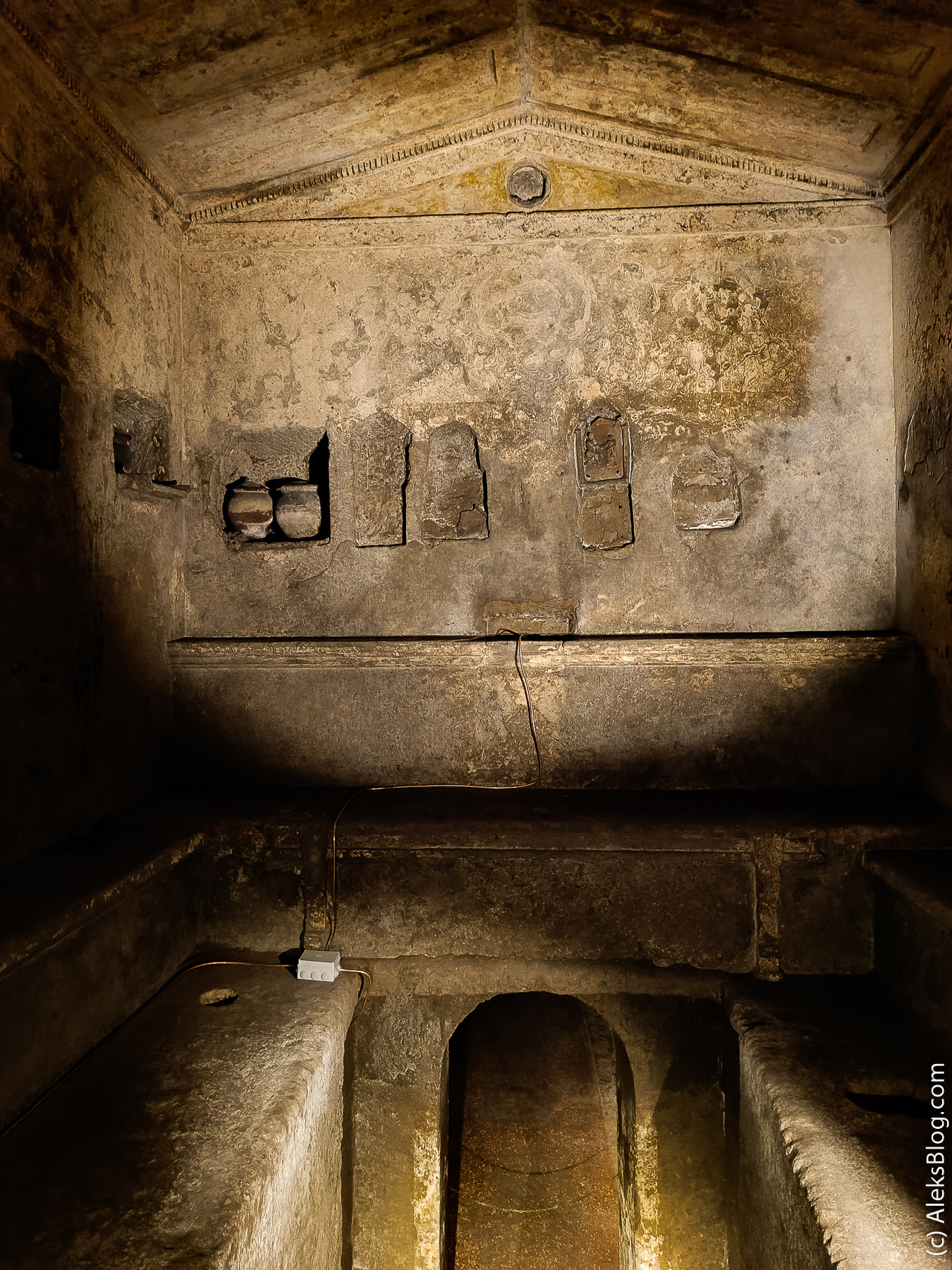
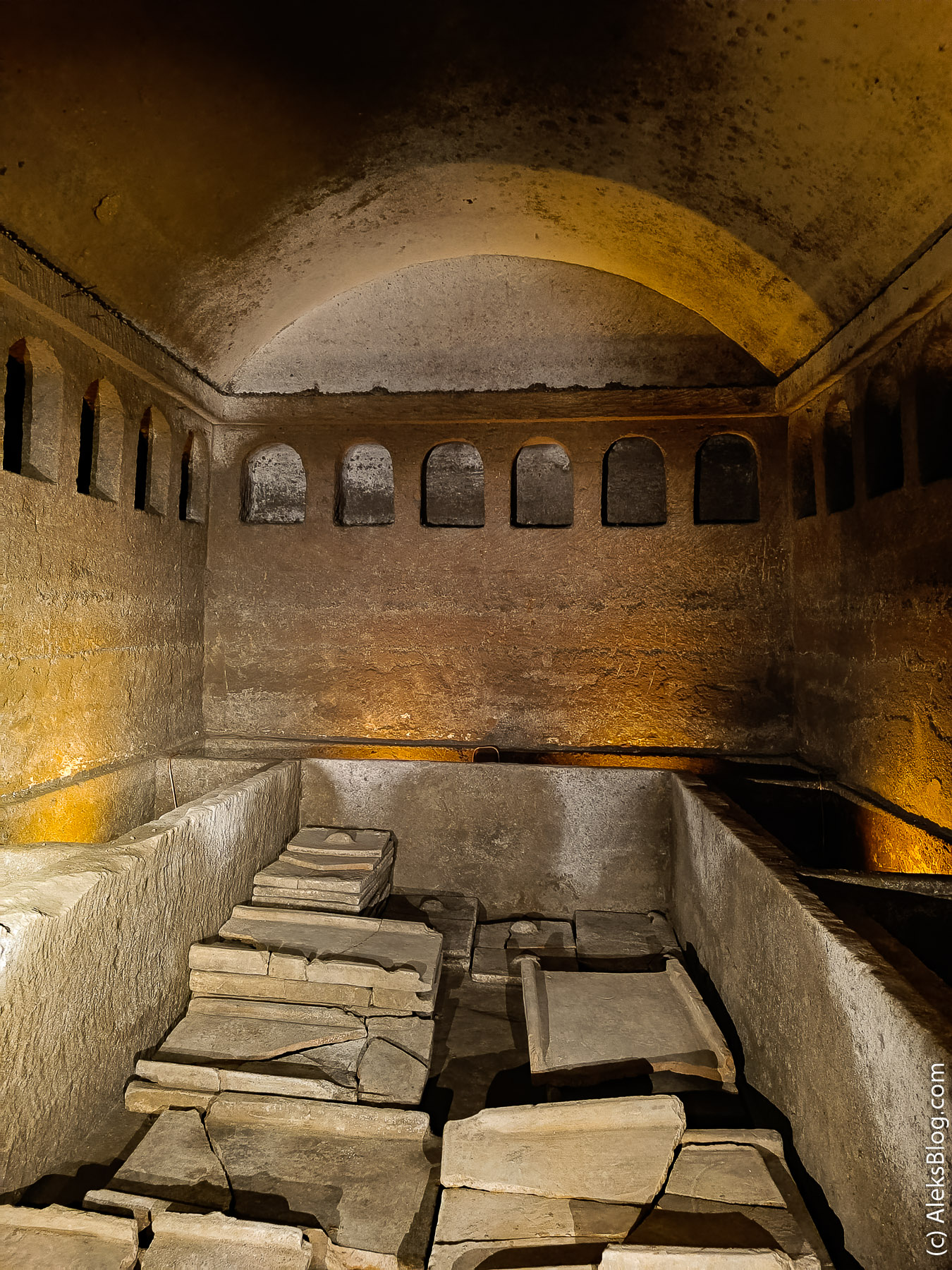
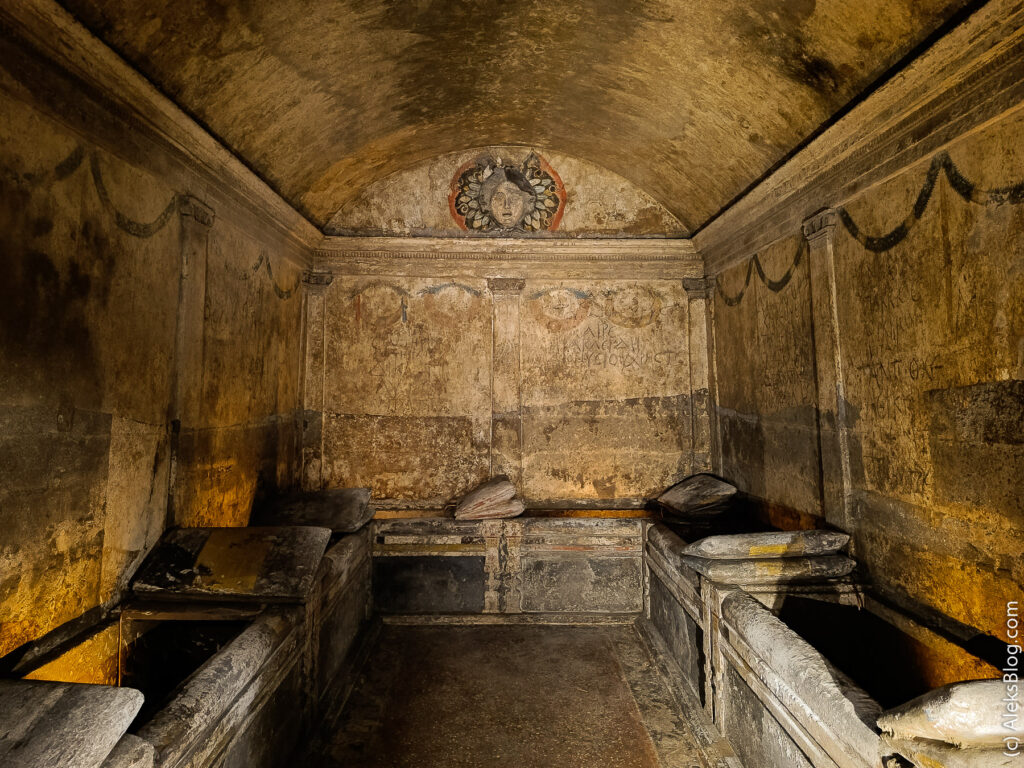
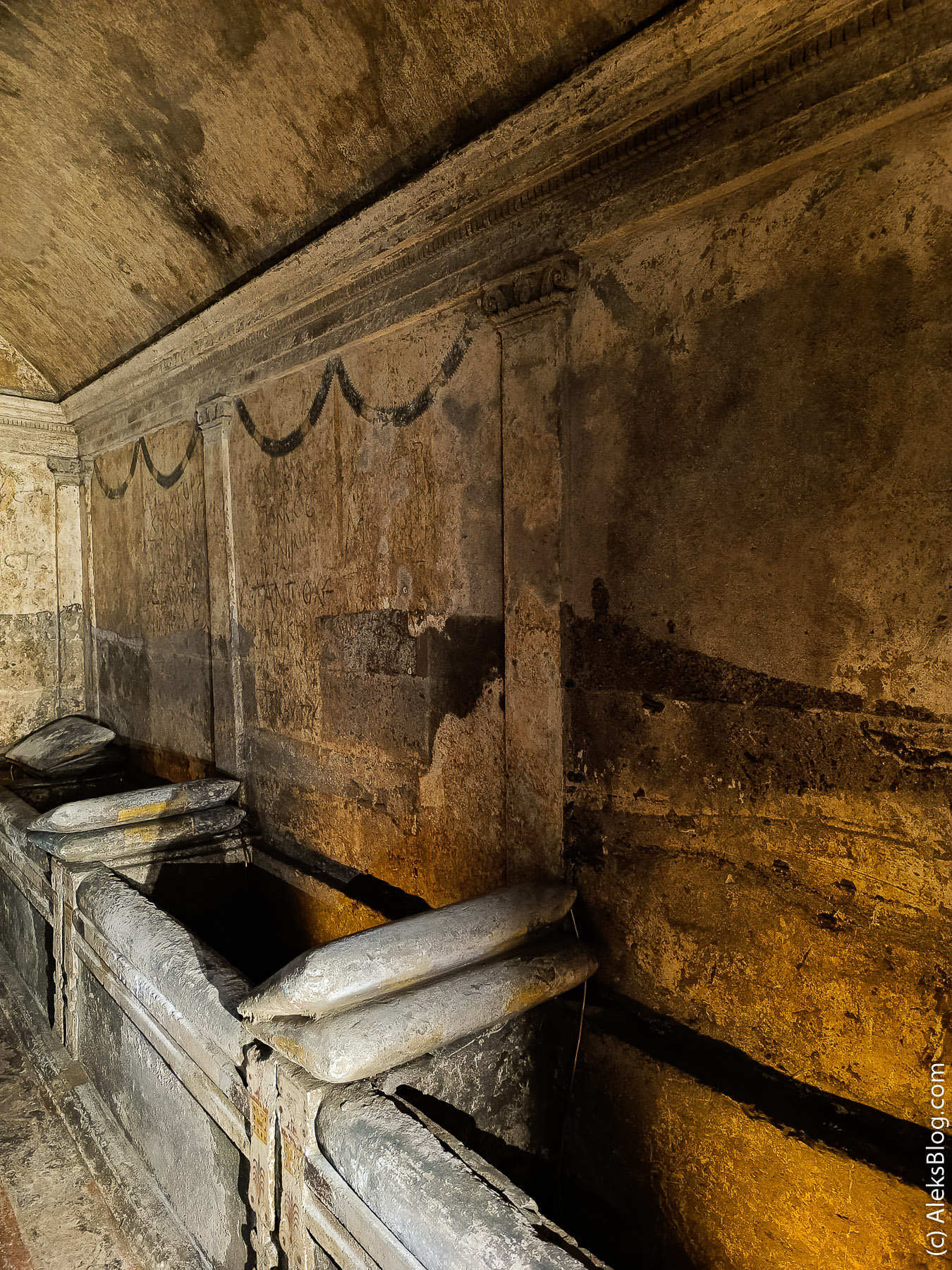
Tomb C is the best preserved in the entire complex.
Inside it are six sarcophagi shaped like beds with pillows. You can even see patterns imitating stitching and fabric texture on them. All of it was once painted in vivid colors.
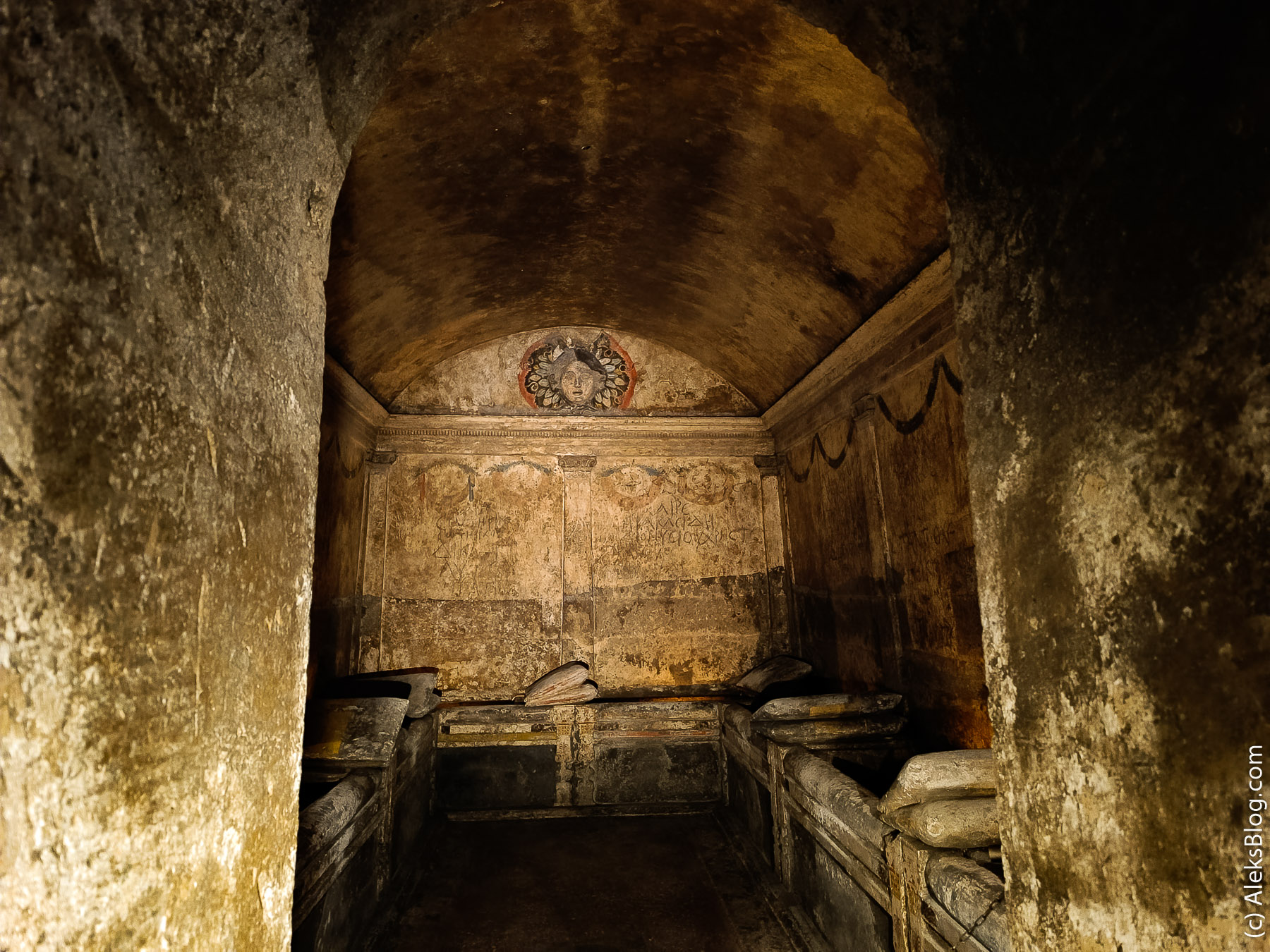
This tomb has remarkably well-preserved ancient frescoes. And that’s another sensation in itself: ancient Greek wall painting has barely survived anywhere in the world. Yet here, right in the basement of a Neapolitan apartment building, you can see genuine paint over two thousand years old and the famous Medusa Gorgon.
How it ended up there
For centuries, this area suffered from destructive mudflows: during heavy rains, powerful streams of mud, rocks, and volcanic tuff rushed down from the surrounding hills. They gradually buried the lowland, and the ancient Greek street level ended up deep underground. In the 16th century, the Sanità quarter was built right on top of this layered “cake.”
For comparison, here’s an example. In the historic centers of many old European cities (Prague, Tallinn), you can often see ground-floor windows almost at sidewalk level. Over the centuries, an ordinary urban cultural layer builds up — road paving over old surfaces, household debris, repairs. The ground rises by 1–2 meters.
But in Naples, the scale is far greater. Here, nature – through mudslides – raised the ground level by a full 11 meters.
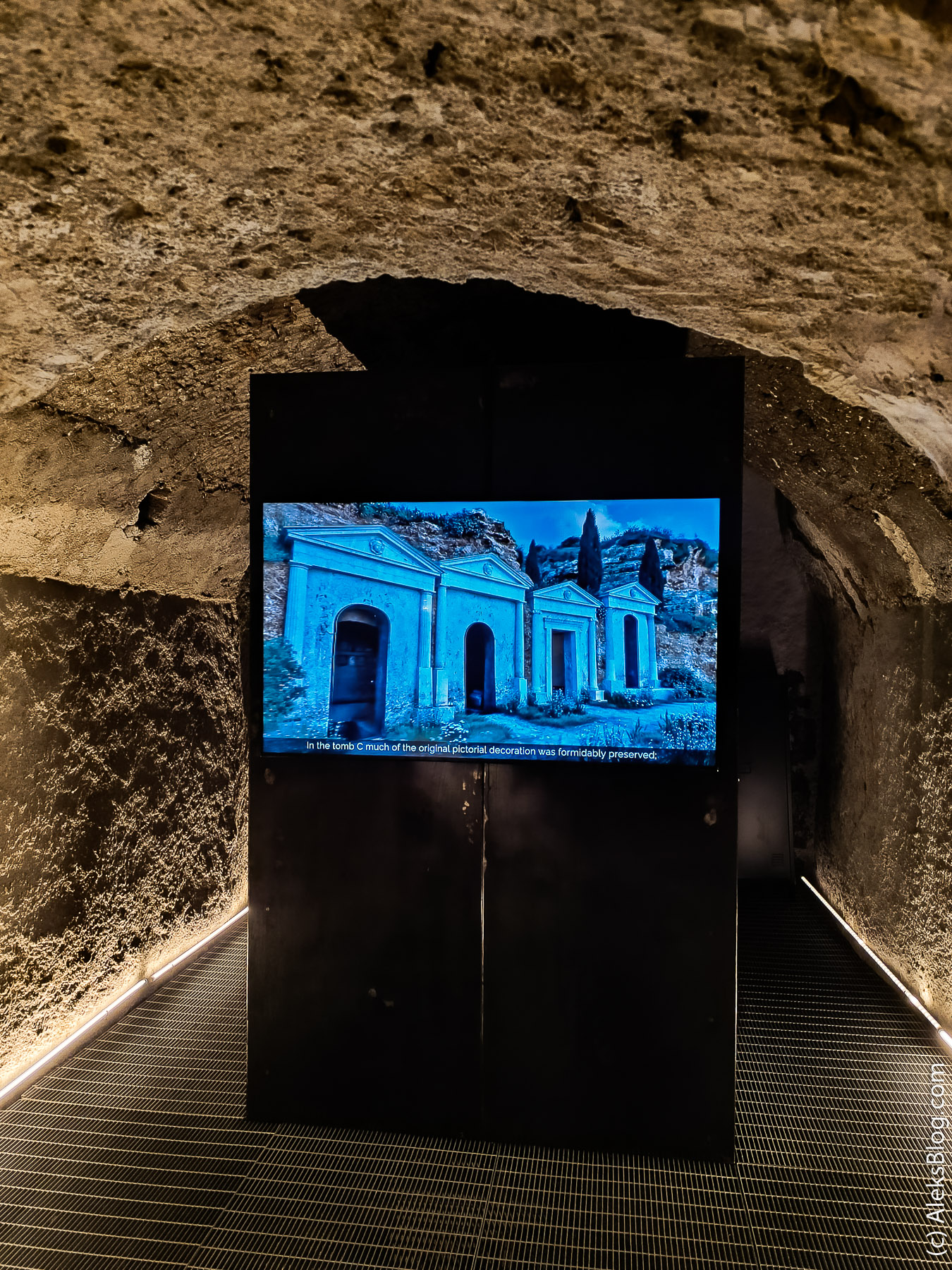
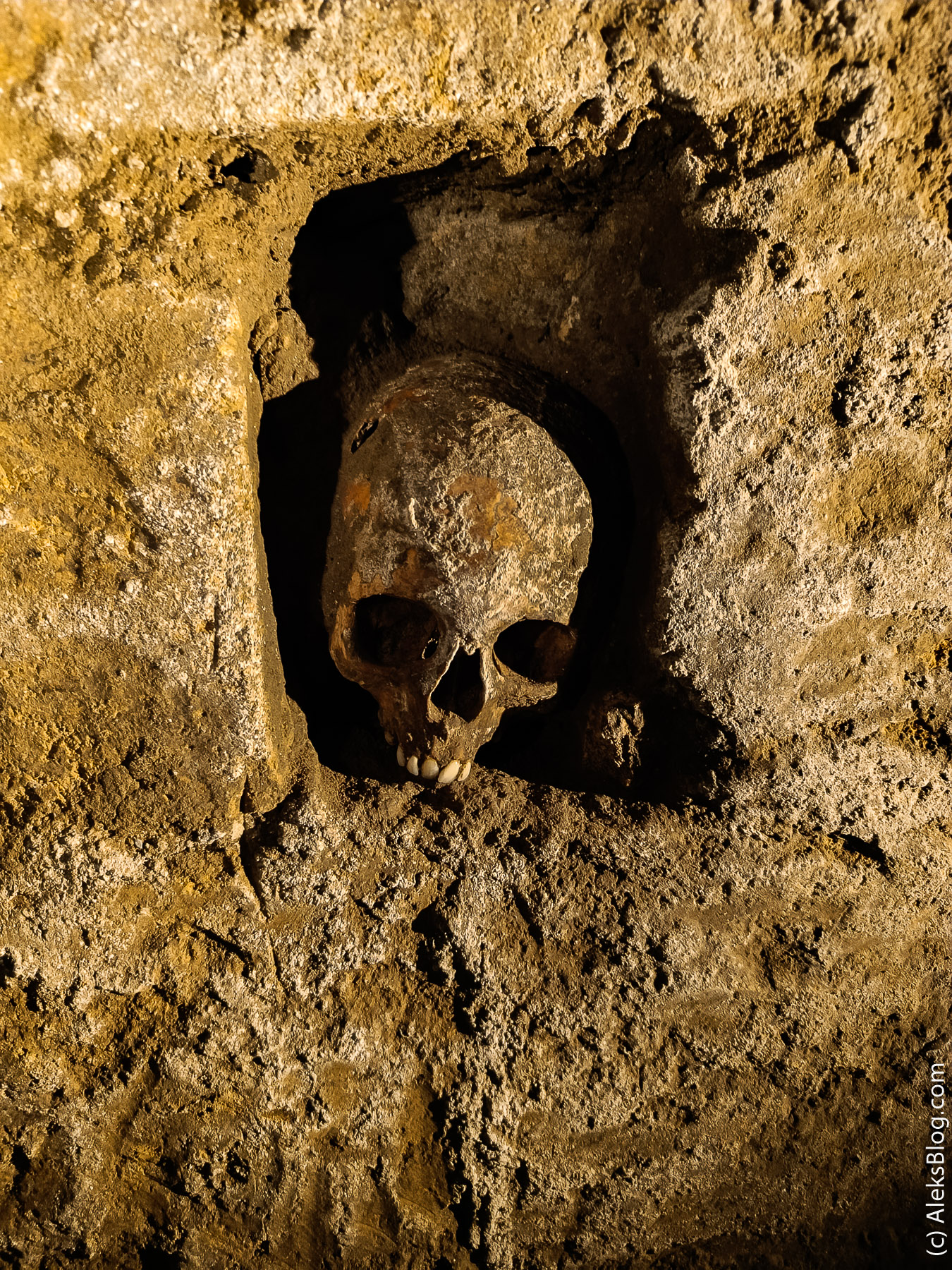
In the next photo, you can see (possibly) what these tombs looked like when they were originally built.
Practical information
Location
Naples, Rione Sanità district, Via dei Cristallini, 133 (Google Maps link). The entrance is right in the courtyard of Palazzo di Donato.
How to get in
Since the underground space is very limited, visitors are only admitted in small groups at intervals, roughly every hour to hour and a half.
To guarantee entry, it’s best to buy tickets in advance. We didn’t get in on our first try and had to come back a couple of hours later.
The price includes an audio guide and disposable headphones. The audio guide runs online, on your phone. There’s no signal inside, so don’t forget to connect to the local Wi-Fi at the entrance.
Groups go down together with an accompanying guide (in English or Italian). Join any group and explore on your own, without the crowd, using the audio guide. No one will mind if you break off from the group.