Best Flamenco Shows in Barcelona

Hola, chicos!
Today we’re diving, but not too deep, into Spanish passions and dances.
I’ve been to the five most famous flamenco spots in Barcelona and the two most unknown ones in Seville. So you can trust this “professional” flamenco watcher.
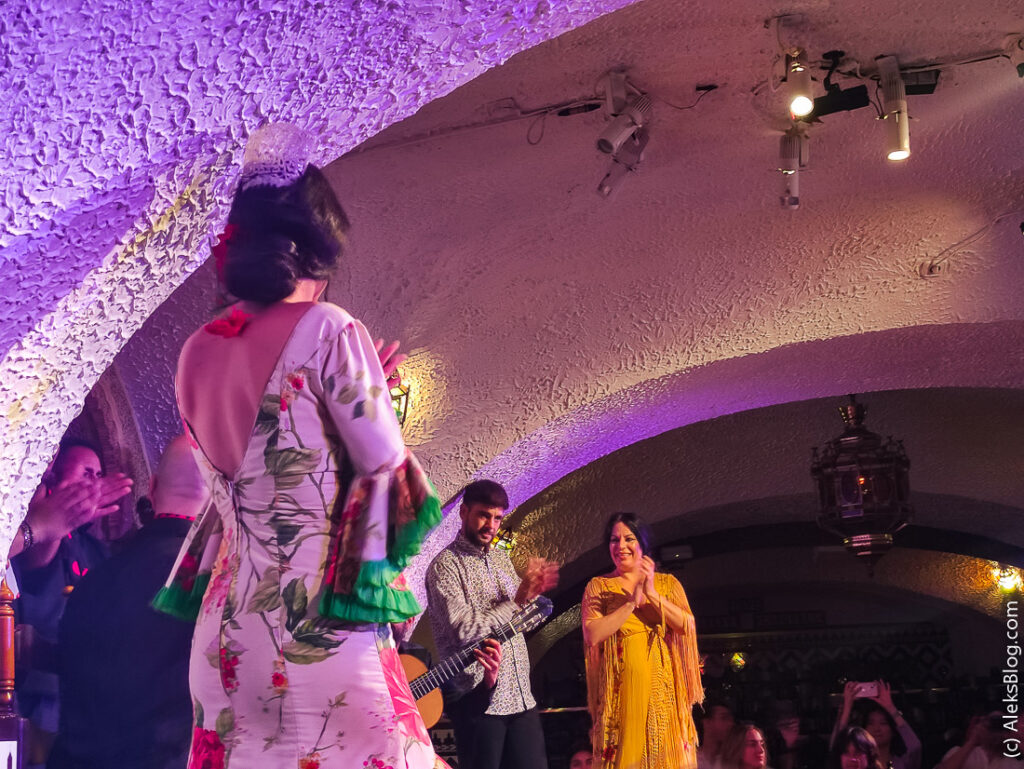
Quick note about photos. In all venues, taking photos or videos during the performance is forbidden. At the end, you get about 10 minutes to snap a few memories. That’s why I didn’t take anything myself; the only photos here are from a single tablao. So… tablao… Don’t panic, I’ll explain everything in a sec.

Flamenco is a passionate dance that emerged in Andalusia in the 18th century. The dance combines three key elements: singing (cante), guitar playing (toque), and the dance itself (baile). It has roots in the traditions of the Gypsies, Moors, Jews, and Andalusians. Just imagine what a fiery mix that makes.
Some connoisseurs believe that real flamenco only exists in southern Spain. For us enthusiasts, all of it is good. And I hope you got the joke about the “professional,” because I like all flamenco, even the ones performed on the streets of Seville. I’m mostly talking about the overall impression and the vibe of the venue too.
What they dance about
Flamenco is a dance of emotion, from deep suffering to joy and triumph. It’s not just tap dancing—don’t even think about comparing it, you might call the police. It’s a soul struggle, passion, freedom, love. In Spanish, this state of expression is called “duende.” By the end of a flamenco show, the whole audience should be shouting “we believe” and crying, even without understanding what was actually sung.
By the way
What they sing about
Flamenco song lyrics (called “palos”) often deal with suffering, grief, love, loss, and life in general. The songs are highly emotional and strongly dependent on the performer.
From the intonation, it might seem similar to Portuguese fado. Not exactly. In Portugal, fado is pure sadness, lamenting the past—everything was, but it’s gone and will never come back. It’s the Portuguese saudade—don’t try to translate it, the word can’t be translated; it’s something you feel, you have to be Portuguese.
Flamenco, on the other hand, has positivity—it’s not all bad.
Why they stomp their feet so hard
Foot-stomping (zapateado) is one of the key elements of flamenco. This rhythmic accent is used to express inner energy and passion, heightening the emotional intensity of the dance. Sometimes it feels like the flamenco performer could literally break the floor with their feet—such fierce, crazy energy.


Tablao VS Theater
A tablao is a venue specifically designed for flamenco performances, combining a restaurant with a small stage for the artists. In a tablao, the performance is more intimate, with the audience close to the dancers and musicians, which amplifies the emotional impact of the show. Minimalist interiors, simpler costumes, fewer people, and energy that overflows.
Tablaos often offer two ticket options: dinner + show, or show + one drink (sparkling wine or sangria). Usually, dinner starts an hour before the show, with tables set in a separate room. But there are tablaos where you can eat during the performance. Those who buy dinner tickets get the first choice of seats; the rest are seated in order of ticket purchase.
Theater — better costumes, lighting, and sound are possible. Definitely a bigger stage, audience sits a bit further away, which, in my opinion, gives a better view. In theaters, they don’t serve food, only drinks.
In both theaters and tablaos, performers can be famous artists or resident performers. But you really have to know your stuff for that… I swear, for your first time, don’t bother studying the playbill or the names of Maria and Pedro, known only to certain insiders.
It’s a matter of taste — choose for yourself: tablao or theater. But here’s one example.

I ended up at one of the most famous tablaos, Tablao Cordobés on La Rambla, quite spontaneously. We were just passing by, decided to check it out, the next performance was in forty minutes, and there were only a few tickets left.
So, as you can see—the seat was on the side. I could barely see the singers, but the dancers were clearly visible, though during the show they face the audience across the stage. In a theater, there are no side seats; all seats face the stage, but not as close.
And the performers at Tablao Cordobés were amazing. The guy was stomping so hard I thought the neighbors would call the police. You won’t see it on video—they didn’t allow filming—but at the end, there was an encore.
Where to watch flamenco in Barcelona
All flamenco shows take place in the evening. Times vary, but usually there are several sessions after 7:00 PM. Shows last about an hour. Buy tickets in advance.
- Tablao Flamenco Cordobés — one of the most famous and oldest tablaos, open since 1970, located at La Rambla 35. I liked the performance itself; the artists’ passion overflowed. Side seats are possible — that’s the only downside.
- Palau Dalmases — flamenco in a historic Gothic palace near the Picasso Museum, at C/ de Montcada, 20. I recommend it; I enjoyed the show, the hall, and the overall atmosphere.
- Los Tarantos — affordable but high-quality flamenco shows at Plaça Reial, 17. Another recommendation!
- Tablao de Carmen — a tablao in Poble Espanyol park. A popular tourist spot. I’m not a big fan of Poble Espanyol itself, and the general vibe in this tablao wasn’t great either. Also, it’s far and inconvenient to get to. But it’s a matter of taste; maybe you’ll like it.
- City Hall Theater — near Plaça de Catalunya (Rambla de Catalunya, 2, 4, Eixample). Large hall, tickets divided into four groups: VIP, front rows, middle, and gallery. Visibility in the back isn’t great, but it’s cheap. Though for budget options, I personally liked Los Tarantos better.
- El Duende by Tablao Cordobés — you can never have too much flamenco. Tablao Cordobés opened another venue nearby, at La Rambla 33. I don’t know much about this place, but reviews are positive. The performers are the same as at Tablao Cordobés.