Bryce Canyon Wonders

Continuing the series of posts about trips to US national parks. Yes, slowly — there are thousands of photos on the drive, and I have to go through them all. Sorry.
Today, it’s May at Bryce Canyon.


Practical Info: Location, Getting There, and Where to Stay
Bryce Canyon is a national park located in the southwestern part of Utah.
We got to Bryce Canyon by car, rented at Los Angeles Airport (), where we started our trip along the US West Coast. We booked through DiscoverCars. In general, the nearest major airport to the park is McCarran International Airport (LAS) in Las Vegas, about 420 km away (roughly a 4-hour drive).
How Many Days to Spend
One full day is enough to not only drive through the park but also walk some of the well-known trails.
Tours from Las Vegas
For those who prefer an easier option, there are day tours from Vegas. If you just want to see the viewpoints and take photos quickly, you can even fit a visit to Zion National Park in the same day.
Where to Stay in Bryce Canyon
You can stay inside the park at Bryce Canyon Lodge, but the nightly rates are so high you could buy a house somewhere in Eastern Europe.
It’s better to stay in Tropic or Bryce Canyon City — the nearest towns with a range of accommodations from hotels to campgrounds.
We stayed one night near the park entrance at Best Western Ruby’s Inn. The location is perfect — just ten minutes from all the viewpoints, plus breakfast included. We also had dinner there at the hotel restaurant.


When to Go
The park is open year-round, but in winter some trails and sections may be closed due to snow. The best time to visit is from May to September, when the weather is most stable.
Clothing
Bryce Canyon experiences big temperature swings between day and night. In mid-May, it was around 30°C during the day, but about 5°C early in the morning — you could even see your breath. So warm clothing is needed year – round. Layering is recommended: at 8 a.m. we took off our jackets, by 10 a.m. the hoodies came off, and so on. A complete striptease by lunchtime.
What to See in Bryce Canyon
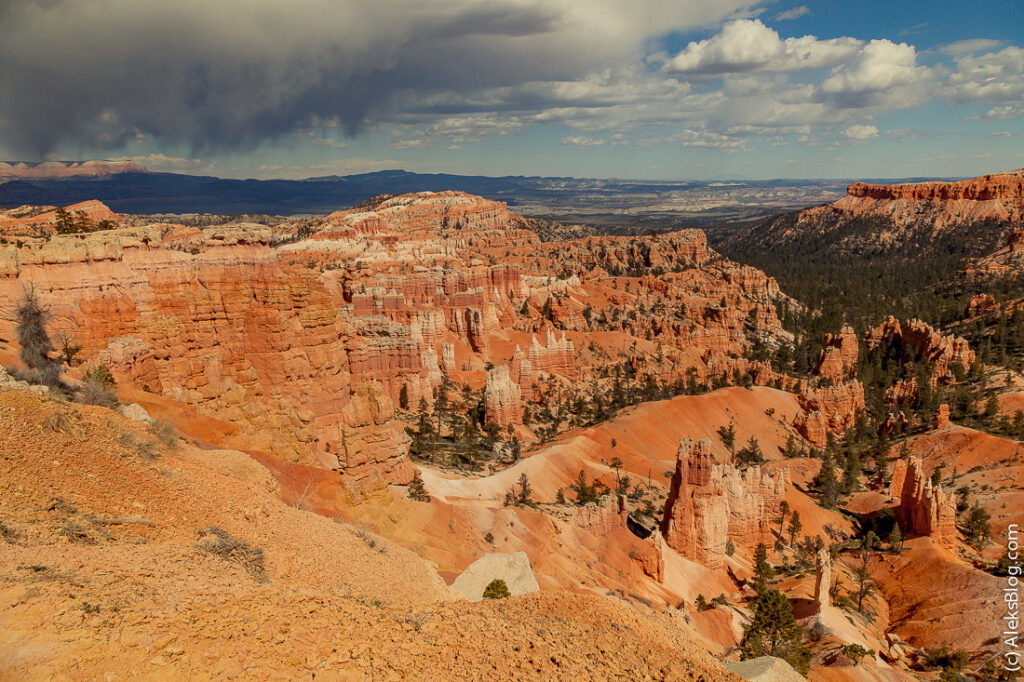
Despite its name, Bryce Canyon is not a traditional canyon, but rather a series of massive natural amphitheaters carved by erosion in the eastern part of the Paunsaugunt Plateau. The park is famous for its unique geological formations called “hoodoos” — tall, thin spires of soft rock that create stunning landscapes.


Viewpoints
The main viewpoints offering spectacular views of the amphitheaters and hoodoos:
-
Sunrise Point: 37.6229° N, 112.1659° W
-
Sunset Point: 37.6205° N, 112.1713° W
-
Inspiration Point: 37.6161° N, 112.1755° W
-
Bryce Point: 37.5950° N, 112.1749° W
Hiking Trails
You know I’m not a big fan of hiking in nature? For me, a circular trail of up to two hours is enough.
Navajo Loop and Queen’s Garden Trail: One of the most popular trails, it goes through the valley among the hoodoos and includes the most famous views and rock formations: Wall Street, Thor’s Hammer, and Queen Victoria.
- Trailhead coordinates: 37.6205° N, 112.1713° W (Sunset Point)
- Trail length: 4.8 km (loop)
Of course, this was my choice. It’s the most popular hiking trail in Bryce Canyon. But in the brochure available at the Visitor Center, there are many other trails as well.


What Else to See Nearby
If you feel like it or are passing by, I recommend a short trail in a beautiful—and slightly scary—canyon.
-
Cottonwood Narrows North Trail: 37.2754° N, 111.8435° W
This trail is located in the Grand Staircase-Escalante National Monument, about 50 km south of Bryce Canyon.
You don’t need to do the whole trail, but it’s worth checking out. We didn’t see a single person on the path, lots of twists and turns, and there was a moment of panic when we somehow managed to lose each other.


Onward to see more natural wonders. To be continued.