Walking the Blue City Chefchaouen

Go ahead, Google “Morocco images.” Right there at the top, you’ll see it: streets and houses painted in all shades of blue. No, it’s not some tourist trap (well… okay, maybe just a little). This is Chefchaouen — a city in northern Morocco where painting the town blue has been a tradition for centuries. And let me tell you, between those shades and the charming old streets, I had a full-blown photo ecstasy.
Wipe your phone or laptop screen — there are a lot of pictures coming up. But first, let’s talk about how to get there, and why everything’s actually blue.
Getting There
By bus or rental car — there are no trains to Chefchaouen. If you’re thinking about renting a car in Morocco, I can recommend LocalRent from my own experience.
I took a CTM bus from Fes. It was a five-hour ride, but honestly not too exhausting. The driver made a proper stop halfway — 30 minutes to stretch your legs, use the bathroom, and grab a bite at a local café. On the way back, I headed to Tangier — only 2.5 hours and flew by in a flash.
There aren’t many daily departures from Fes or Tangier, so check the schedule and book your ticket in advance at ctm.ma.
You’ll also find a ton of day tours from either city — just walk around Fes, Tangier and someone will offer you one on every corner. Or go the easy way: check reviews and book through GetYourGuide.
Where to Stay
Most people visit Chefchaouen for just a few hours. You can walk through the medina in three. But if you’re like me, stopping at every alley, staircase, and blue door to take a hundred photos, make it four or five. I arrived around 6 PM, stayed overnight, wandered all the next day, and then headed to Tangier in the evening.
I stayed at Dar Echchaouen Maison d’Hôtes & Riad. It was the best hotel of my whole trip. Big property, beautiful pool, and magical lighting in the evening. They offer rooms and private cottages. Unlike many riads inside medinas, these rooms have real windows facing outside (not just into a courtyard), no musty smells, and stylish decor. Perfect for those Instagram photoshoots!
The location is spot-on — right by the medina entrance and next to a parking area. If you come by bus, a taxi can drop you at the door. If you’re driving, you’ll find parking easily.


What to See in Chefchaouen
The medina itself — its streets, souvenir shops, hidden courtyards, and the locals living their daily lives.
I won’t give you an exact Google map route, but here’s how to get your bearings.
Leave Dar Echchaouen Maison, turn right, and walk slightly uphill — soon you’ll reach Bab El Onsar, one of the gates into the old town. From there, wander downhill to the Kasbah (a fortress from the Portuguese era) and the main square in the medina. It’s full of cafés and restaurants — the perfect spot to take a break before continuing your photo hunt.
Eventually, you’ll reach Bab El Ain, another gate on the opposite side of the medina.
Now, thanks to my natural-born directional blindness and some enthusiastic tips from the hotel staff, I accidentally walked the whole thing in reverse — from Bab El Ain up to Bab El Onsar. But no worries! The medina is not confusing at all, and the walk uphill is gentle. Just keep your camera ready — Chefchaouen is made for wandering.


Why Is Chefchaouen Blue?
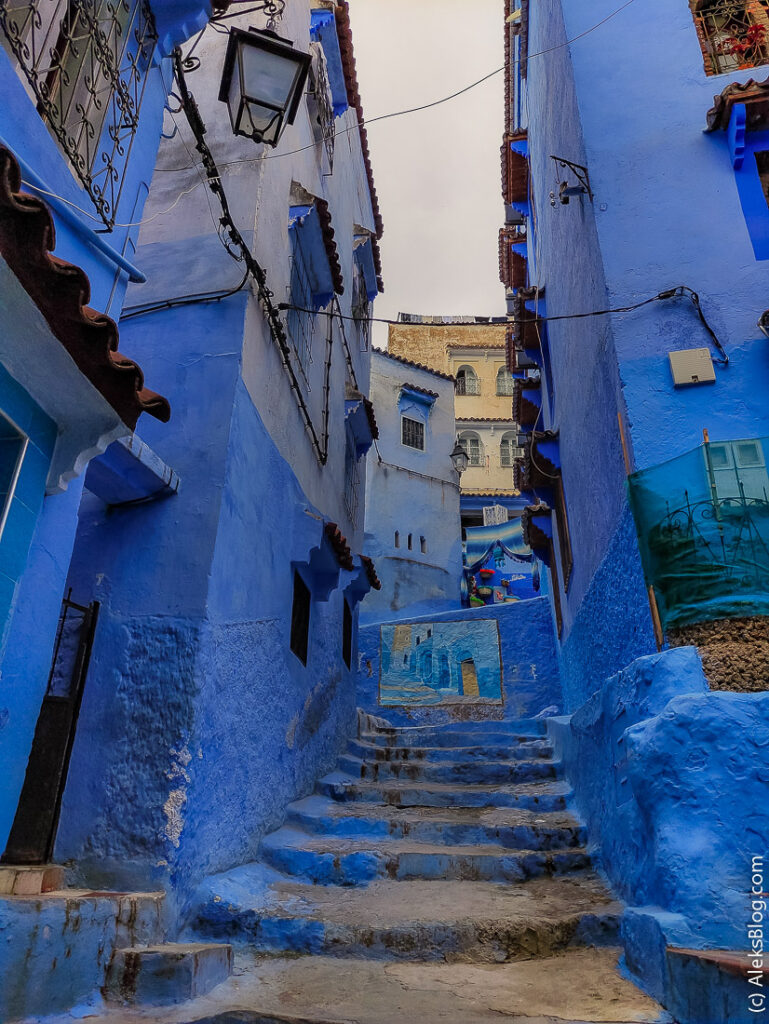
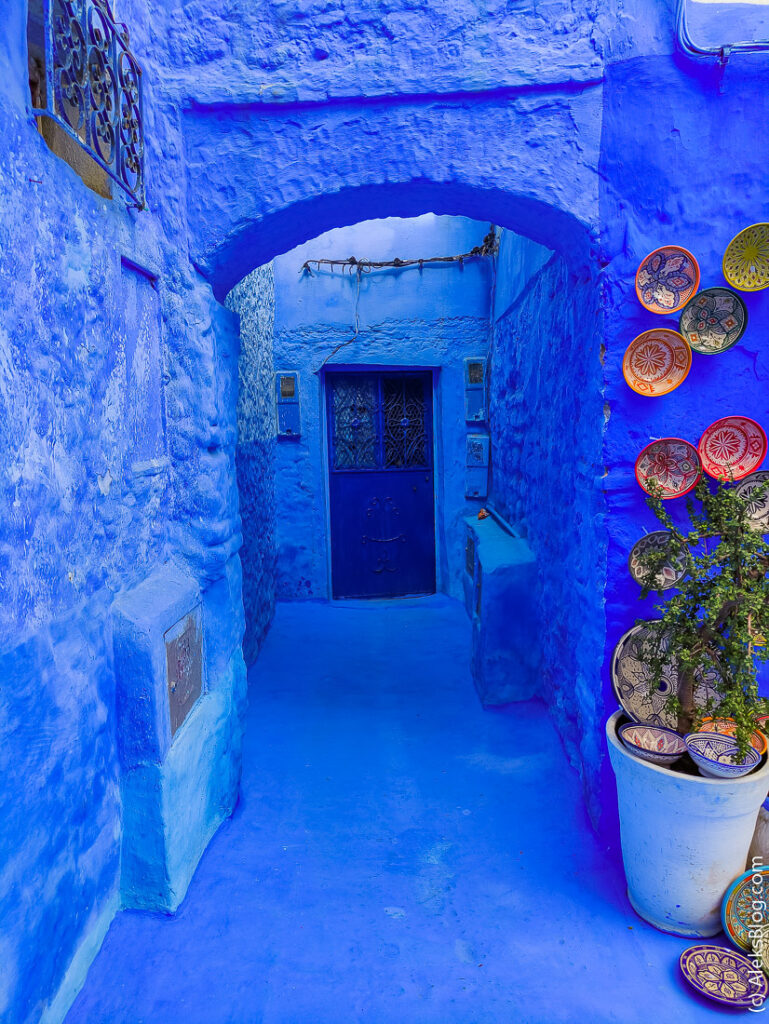
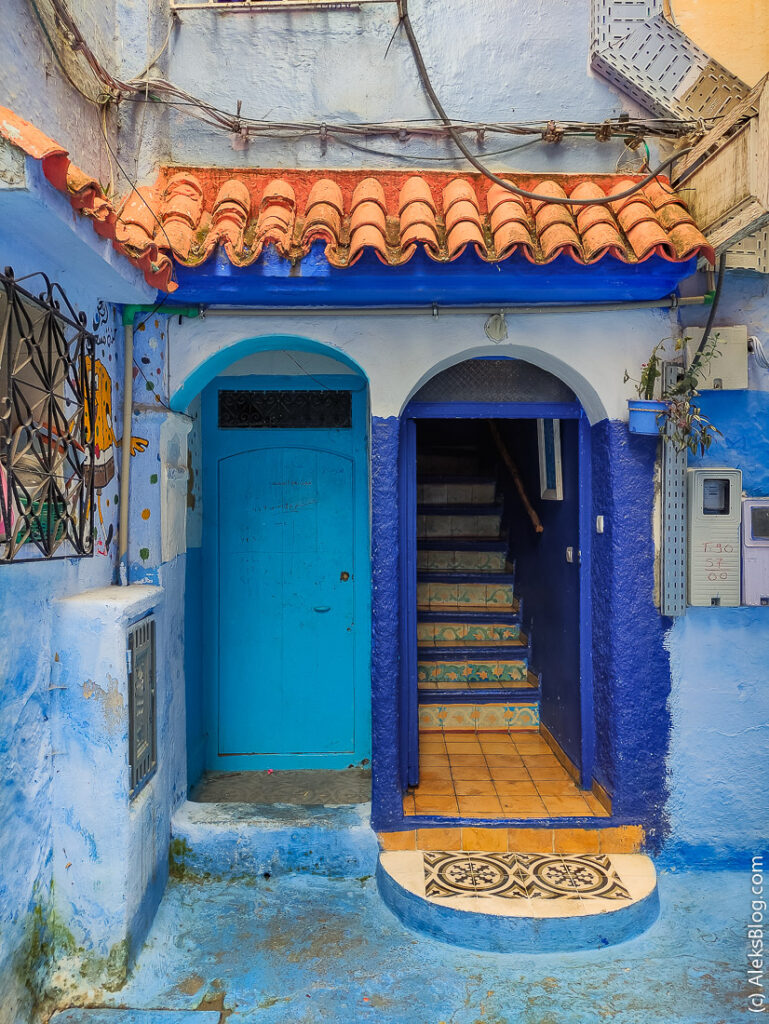
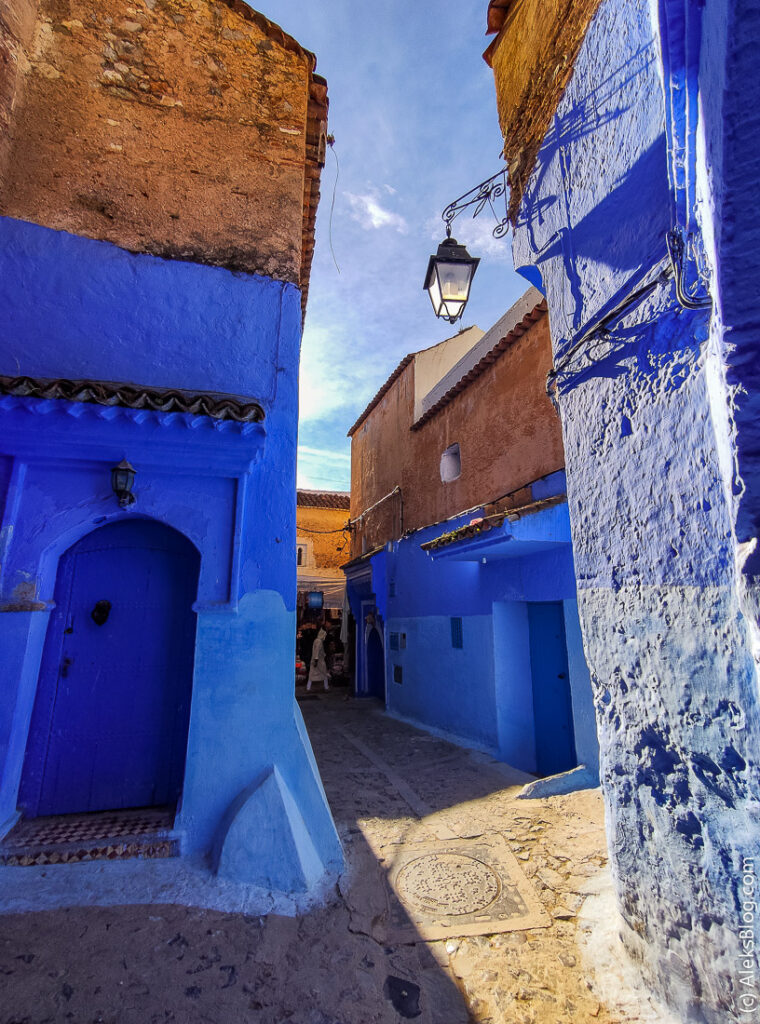
The shades really are all over the spectrum — from deep navy to soft sky blue, some almost violet, others sun-faded into pastel. It all depends on the light. On a cloudy day or in the morning before the sun climbs too high, you’ll see rich, dark blues. But under bright sunlight, everything softens into lighter tones. Some people recommend walking around early in the morning to catch that “true blue” glow.
Personally, I think Chefchaouen looks stunning at any time of day. Just go and see for yourself! If you want that ultra-saturated, Instagram-worthy blue, you’ll definitely find it — especially when the sun’s blazing. But even without that, the town is pure magic.


Now, I can’t not give you a little history lesson. I read up on it — and if I read it, I have to share it.
A Quick Flashback to the 15th Century
At the end of the 1400s, the Spanish Reconquista came to a close — Christian kingdoms took back control of the Iberian Peninsula from the Moors. After conquering Muslim Granada, Spain pushed for complete religious uniformity. A decree was issued: all Jews who refused to convert to Christianity were expelled from Castile and Aragon.
Thousands of Jews and Muslims fled to various parts of the world — many to North Africa, including Morocco. A large number settled in what was then a small village: Chefchaouen.
(Okay, I promise no more history rabbit holes. If you’re curious, Google will gladly take over.)
Oh, here’s another fun fact: In 1912, the north of Morocco fell under Spanish control, while the south was governed by the French. And although the colonial era is long gone, Spanish remains the dominant language in Chefchaouen — unlike most of Morocco where French is more common. You’ll notice it in place names too: Café Andalucía, Hostel Madrid, etc.


So… Why Blue?
There’s no one answer — just a mix of theories, legends, and practical reasons. Here are the most popular:
1. Religious Significance
For both Jews and Muslims, blue symbolizes the sky and serves as a reminder of the divine. It’s said that the Jewish refugees — particularly the Sephardic Jews — began painting their homes blue as a spiritual expression. Some sources say only the Jewish quarter was originally blue; the rest of the town remained white.
2. Sentimental Reasons
Blue reminded the exiles of the Mediterranean Sea — something they had lost when they left Spain. It was a way to recreate a sense of peace and belonging.
Another legend says: Chefchaouen welcomed people from all over the world, and blue came to symbolize tolerance and unity.
3. Biological Explanation
Apparently, the pigments used to make the blue paint act as natural mosquito repellents. Aesthetic and practical!
4. Thermal Logic
Blue-painted buildings absorb less heat under the sun — a handy feature in Morocco’s warm climate.
5. Tourism Strategy
By the mid-20th century, most of the Jewish population had left Morocco, many moving to the newly founded state of Israel. As a result, the blue tradition faded.
But over time, locals realized tourists loved the blue. And not just a little. So they brought it back — not just for tradition, but as a full-on aesthetic. Today, shop owners paint their homes, alleys, staircases, and storefronts in every shade of blue. Then they fill them with handmade goods and souvenirs, turning the whole medina into a living photo studio.


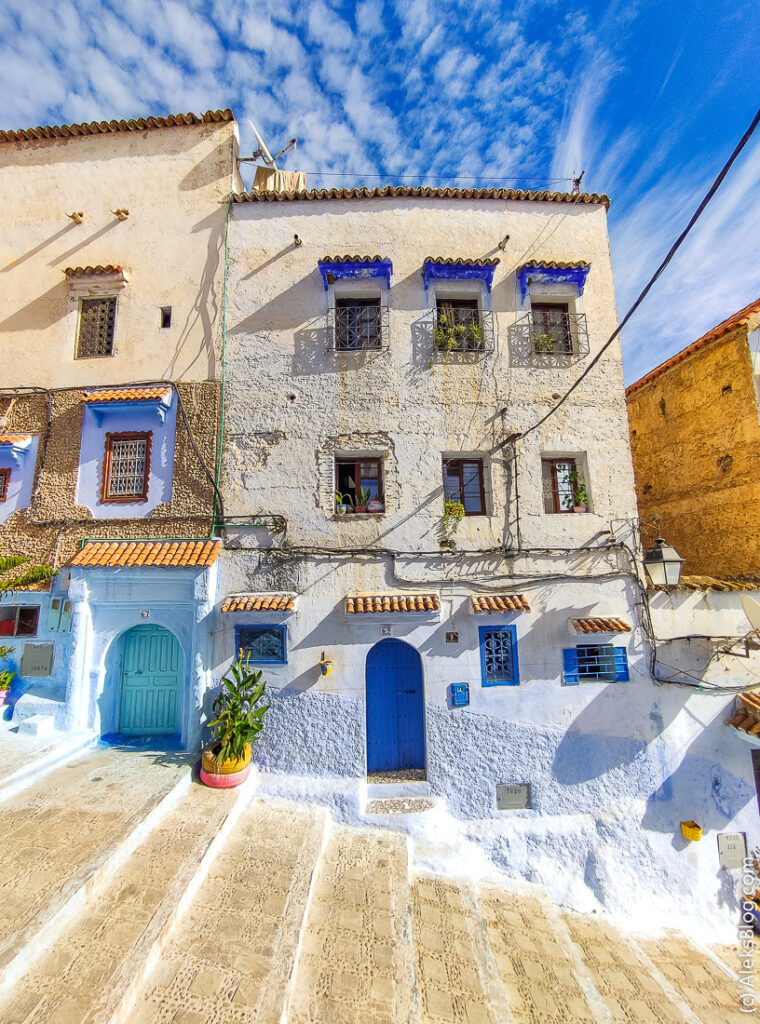
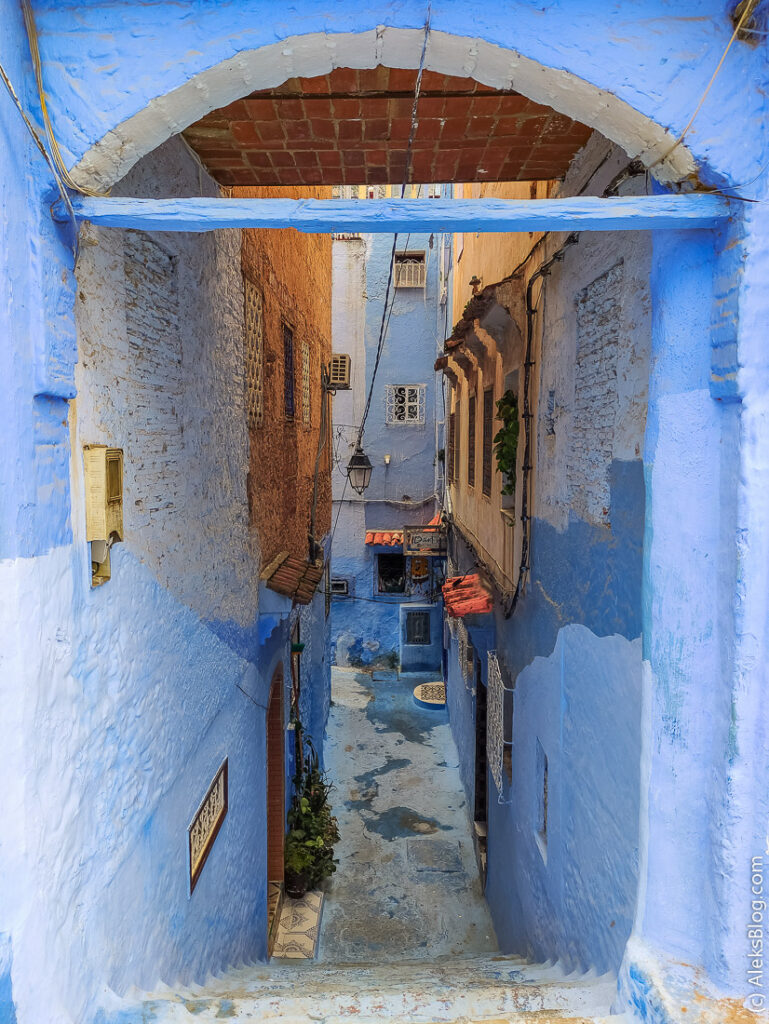
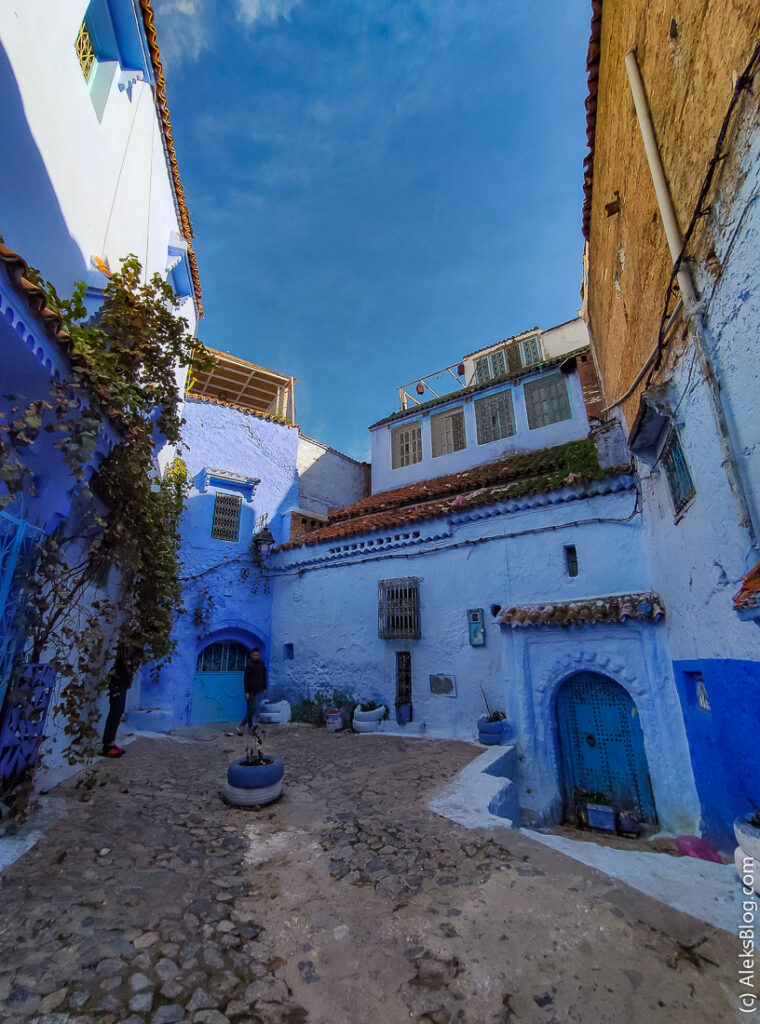
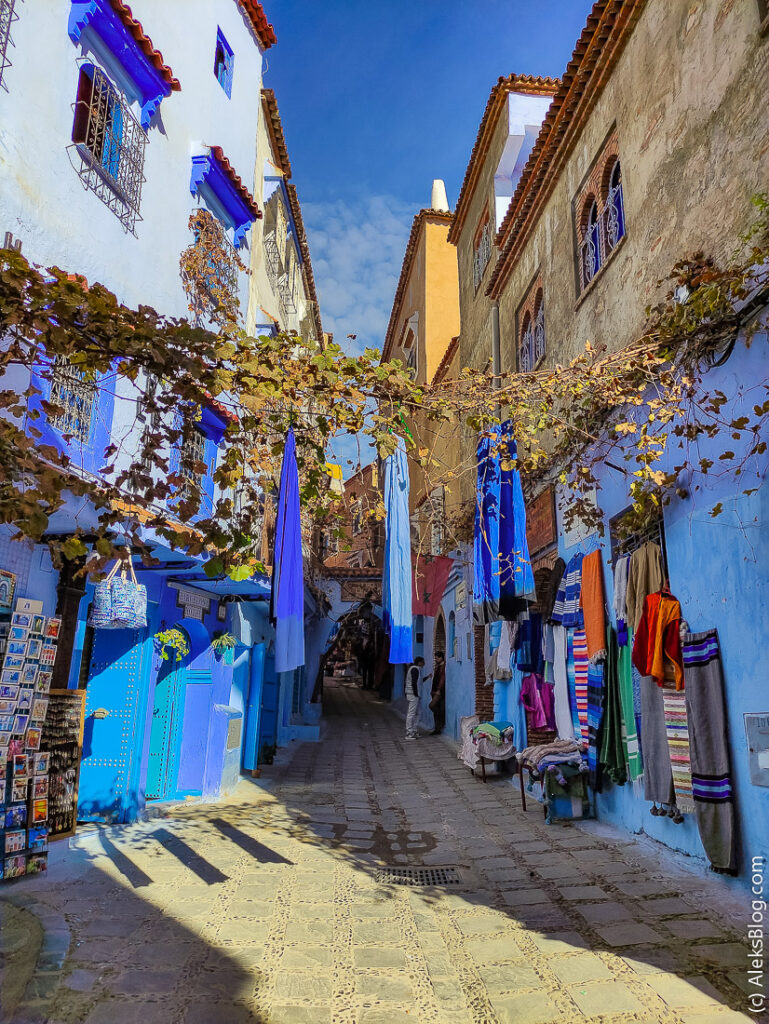
And yes — everything is blue! Blue houses, doors, windows, steps, alleyways, all decorated with textiles, paintings, ceramics… total photo-op heaven. I stumbled into one tiny courtyard that felt extra special — antique trinkets everywhere, and a full-on commitment to blue. It’s now a mini photo museum, and yes, there’s an entrance fee (around €5), but worth it.
Despite all the hype, wandering through the medina doesn’t feel fake or overly curated. And I’m usually a total skeptic when it comes to “Instagram towns.” But Chefchaouen? I loved every bit of it.
A day in Chefchaouen is a must. Big thumbs up from me!