Morocco Transport Guide

When planning a trip to Morocco, the question arises—what is the best way to travel between cities and what about transportation?
With car rentals, everything is clear—we look for a suitable option on LocalRent. This is an aggregator of local rental companies. On LocalRent, you can book a car and make a prepayment with any card, and pay on-site not only by card but also in cash; this option is available in the filters.
The roads in Morocco are excellent, and the traffic is civilized. It’s not Asia with chaotic traffic, and it’s not Georgia—there are almost no speedsters or racers. There are many police speed traps on highways. Fines are issued immediately. Gasoline costs about €0.8 per liter.
In Morocco, we wanted to see only the cities, not go to the desert, etc. So, we decided not to rent a car but to use public transportation. In all cities, you cannot drive into the Medina—the old part. Therefore, you need to park in paid parking lots. Paid doesn’t mean guarded; the person in the yellow vest’s task is simply to strip you of as much as their audacity allows. Therefore, a car is needed only to get from point A to point B. After weighing all the pros and cons, we decided to test Moroccan intercity buses and trains. And we didn’t regret it at all.
But! If you’re also looking at natural beauties, it’s better to rent a car to avoid dealing with rude Berbers.
Intercity Buses in Morocco
The two main bus companies in Morocco are SupraTours and CTM; everyone tries to use only them. There are other carriers, but the best buses are only with these two. Moreover, SupraTours and CTM depart strictly according to schedule. The others also try, but they depart as the bus fills up.
To find the bus station, look for Gare Routière (the bus station) on Google Maps. But keep in mind that CTM and SupraTours may depart from different stations. SupraTours is usually closer to train stations. Therefore, I recommend taking a taxi and telling the driver the name of the carrier.
We traveled with different companies and will share our impressions of all of them.
CTM
The biggest advantage of CTM is that you can buy bus tickets online at ctm.ma.
If payment by card doesn’t go through on Moroccan sites, try using another card; this sometimes happens, but generally, there are no problems. You’ll probably have to buy tickets on the French version of the CTM website, as their language switcher doesn’t work, but it’s intuitive.
Tickets are purchased with seat selection. Everyone sits in their assigned seat on the bus.
Of course, you can buy tickets at the station counters, but on popular routes for the desired date, there may be no seats, especially during the season. We wanted to leave Chefchaouen for Tangier and approached the CTM counter 2 days before the trip—there were no tickets.

You don’t need to print anything in advance. It’s enough to show the booking email with the number on your phone. Luggage transportation in the luggage compartment is paid separately, right at the counter in cash. It costs only 5 dirhams (regardless of the number of items). A sticker will be attached to your suitcase, and before boarding, you’ll need to hand it over to a special person at the bus.
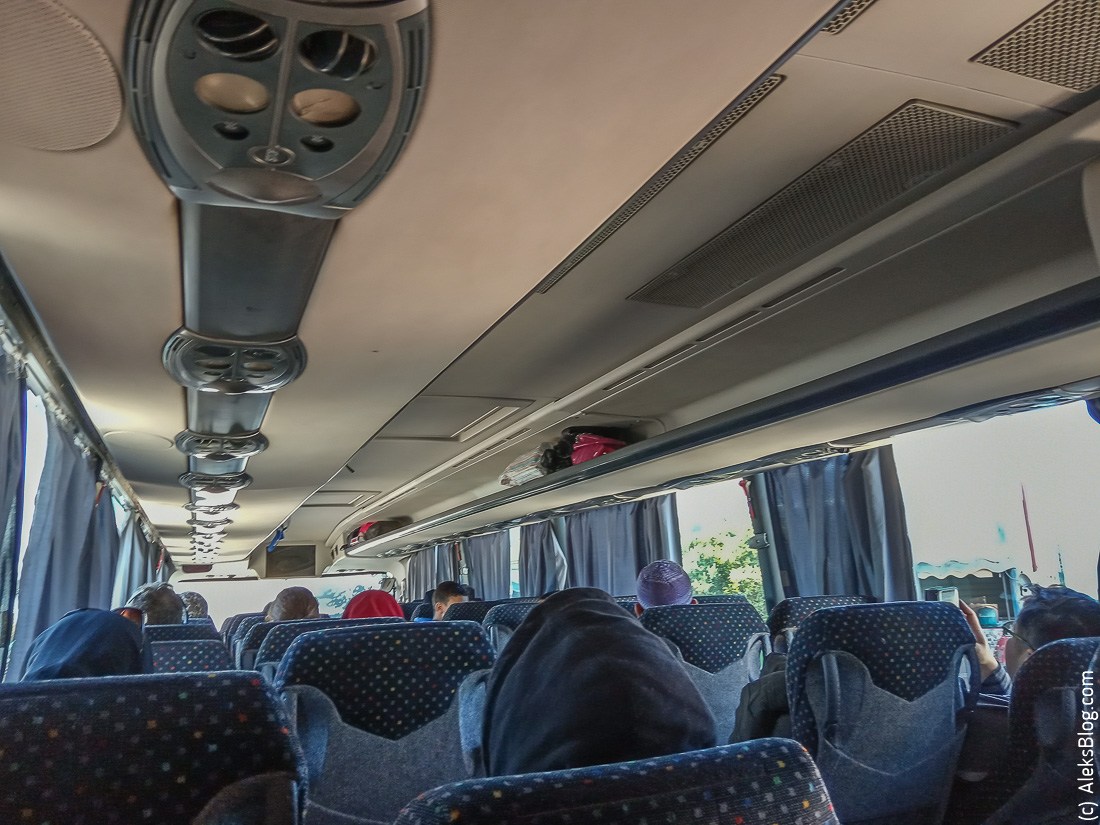
The buses are clean, and the seats are comfortable. There are no sockets or Wi-Fi. There’s no toilet either. The bus doesn’t serve food or drinks, as on some Asian routes. Every 2 hours, there’s a 20-minute stop at roadside cafes.
Supra Tours

Trains in Morocco
Let’s start with train stations. In large cities, Morocco has large, beautiful train stations.
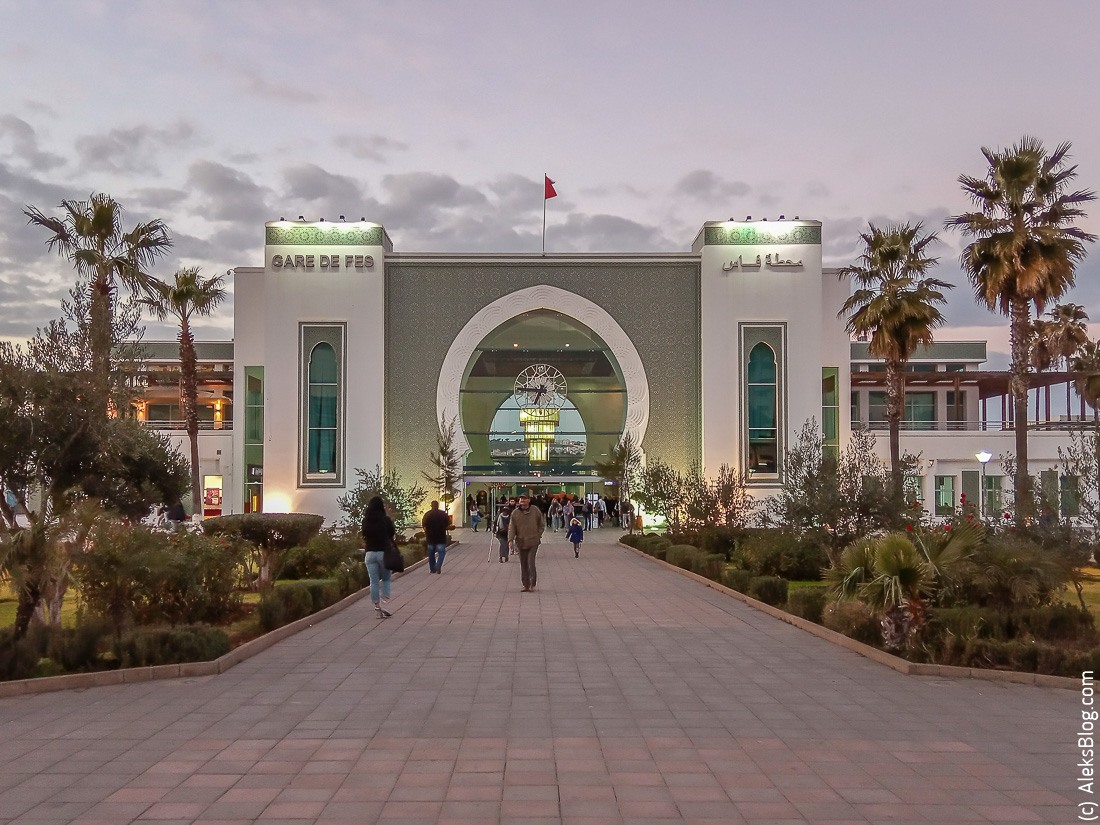

Inside, there are ticket offices, ATMs, cafes, and free Wi-Fi.

Information on the boards is in two languages—Arabic and French. To understand the train number and platform, you don’t need special language knowledge.
On the Moroccan Railways website—oncf.ma—you can not only view the train schedule but also find out the cost and even buy tickets.
Tickets can also be purchased either at kiosks installed at the station or simply at the ticket office. I tried to buy a ticket at the kiosk at each station we departed from. But it never worked—either the kiosk wasn’t working, or it refused to accept cards and cash, or it displayed some unknown error in Arabic.
Ticket offices at train stations work very quickly; don’t be afraid of queues. The staff understands English. If there are communication difficulties, you can write on a piece of paper—where and to where you need tickets, dates, number of passengers, class of carriage. If you want to sit together or both by the window, inform the cashier. You can pay for the ticket in cash or by card. Tickets are checked when exiting to the platform and on the train.
Train Classes and Trains
On popular routes connecting the cities of Rabat, Casablanca, Fez, Marrakech, and Tangier, Al Atlas trains run.


There are two classes—first and second. The price difference between them is small. But the first class is definitely more comfortable.

First class—these are air-conditioned compartments for 6 people, with wide comfortable seats. There are no sockets, and there’s no Wi-Fi either. Or a carriage with seating in a 1+2 configuration.
Second-class carriages vary—there are just seating places in a 2+2 configuration, but very cramped, and there are also compartments like in first class, but without air conditioning and for 8 people with narrow seats. Toilets are available in both class carriages. A person with a trolley—tea, coffee, snacks—constantly rides through the train.
High-Speed Trains AL Boraq
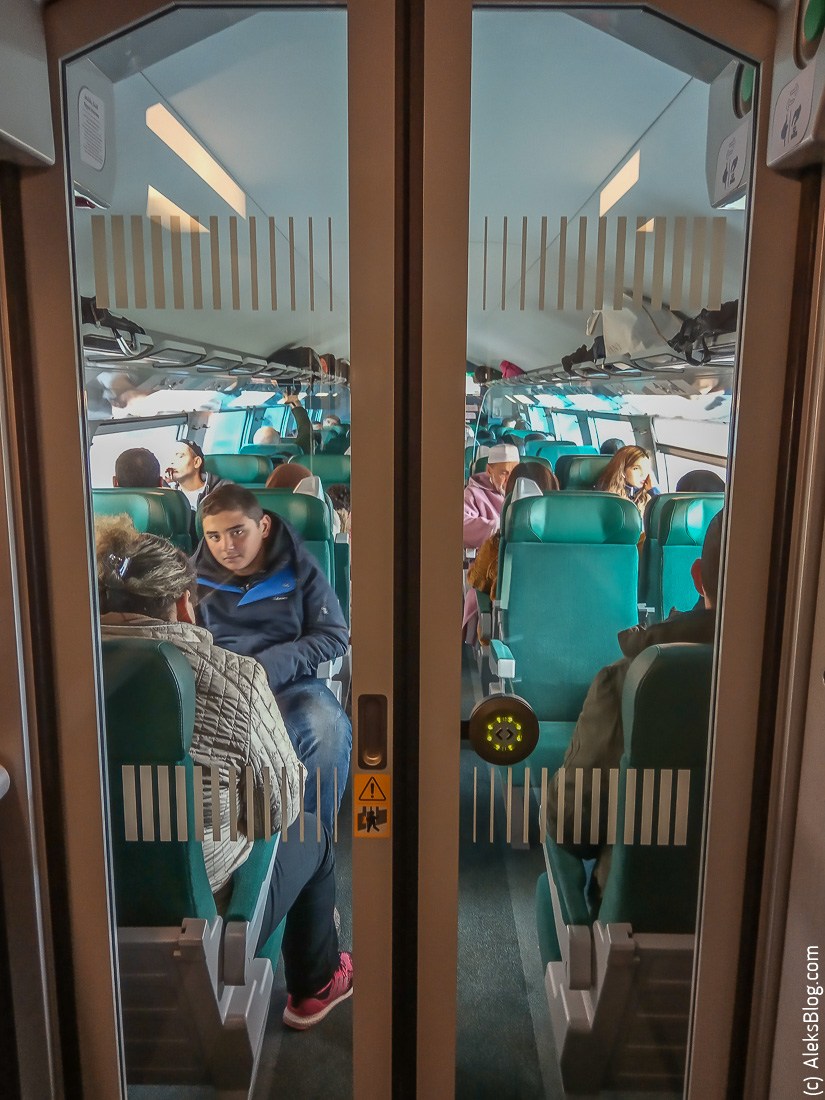
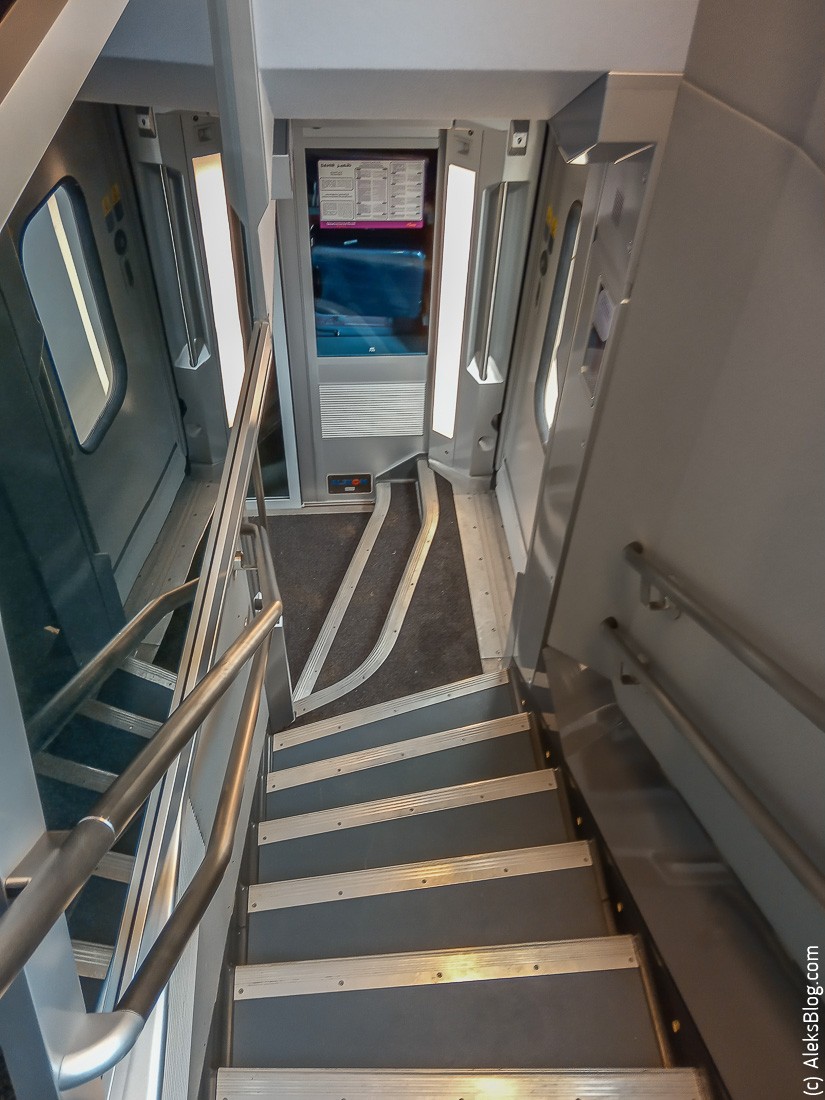
Between the cities of Casablanca—Rabat—Tangier, you can travel on the high-speed double-decker train Al Boraq. It’s like the “Sapsan,” but double-decker. I recommend it!

Al Boraq accelerates to a speed of 318 km/h and covers the distance from Tangier to Casablanca in 2 hours, making a stop in Rabat. In terms of speed, it ranks among the top five fastest trains in the world. The “Sapsan” has a maximum speed of 250 km/h.

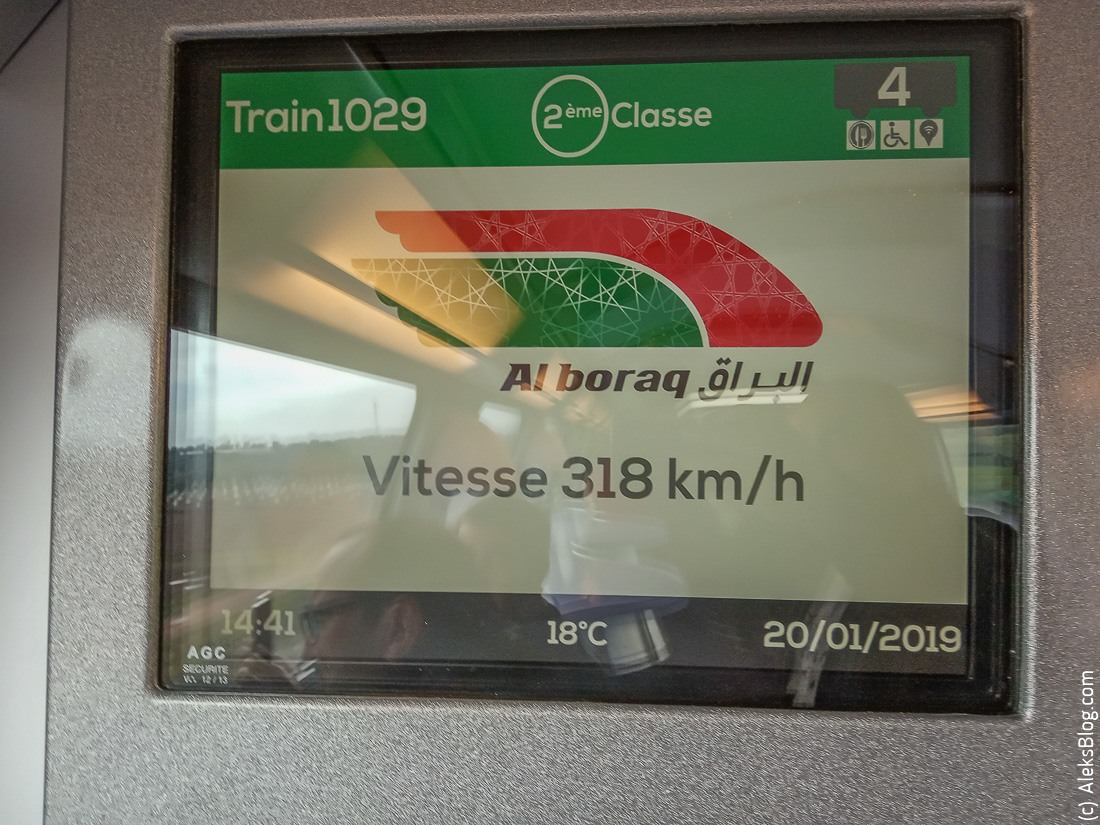
Al Boraq also has two classes—first and second.
Second class—these are comfortable carriages with soft seats in a 2+2 configuration, reclining tables for each passenger, one socket for two.
For first-class passengers, Al Boraq provides a separate lounge at the station with coffee, lemonades, and water. There are no free drinks on the train itself, so… well, you understand what to do.

In first class, only stylish and beautiful people travel. Ugly ones are not allowed.
In Tangier, the Al Boraq lounge is two-level.

On the second floor, there are convenient work areas for those who arrived early and want to work.

The first-class carriage is designed for fewer passengers. Wide soft reclining chairs in a 2+1 configuration. Each has its own socket and table.
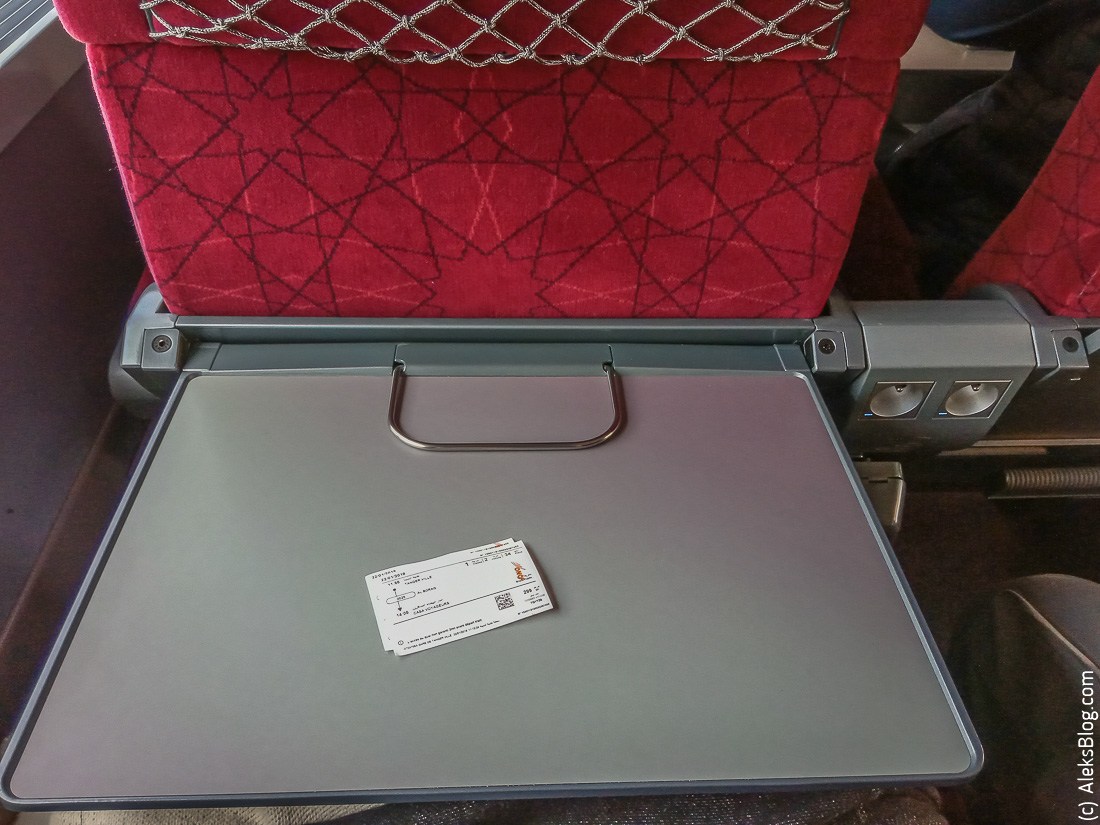
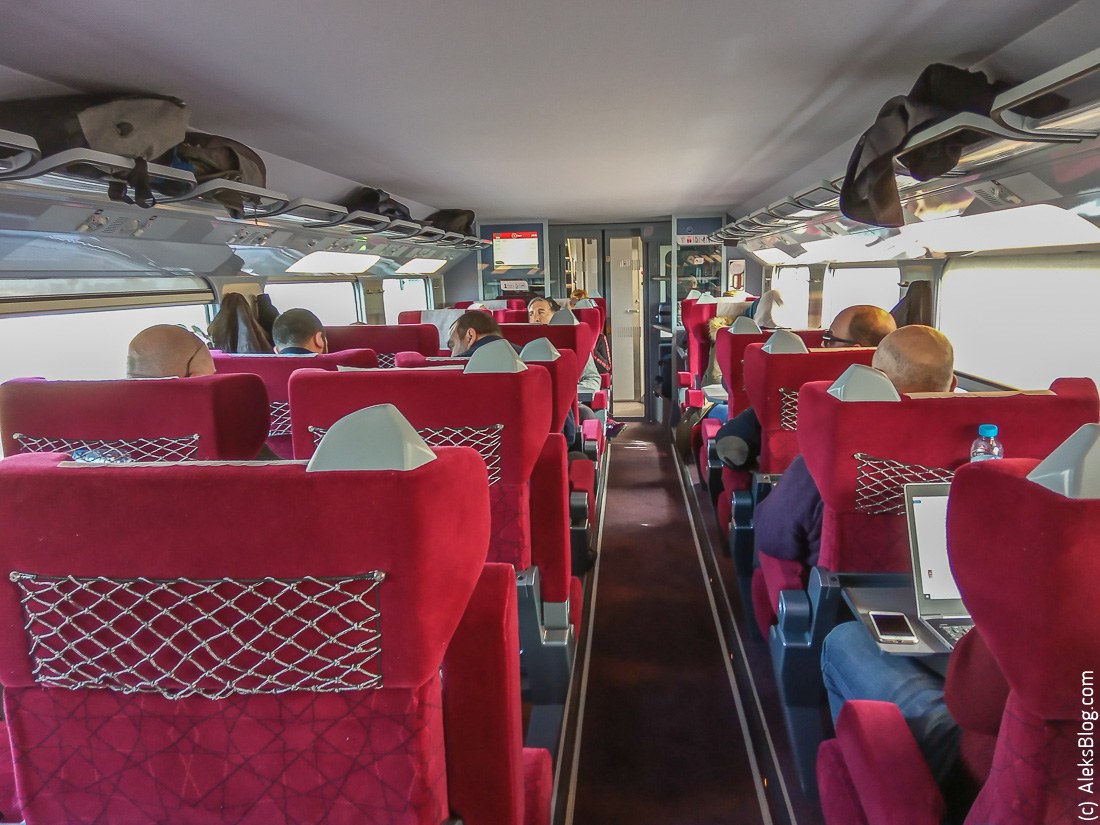
The price difference between first and second class in Al Boraq is quite significant. Therefore, if you need to save, you can endure just 2 hours, especially since second class is very good.

Taxis in Morocco
Whoever invented Uber should be given a monument. Because in any country, all taxi drivers are crooks. Uber wanted to come to Morocco, but the “pirate taxis” began to protest, and it was shut down. The only alternative is Careem, which works in Casablanca and, apparently, also in Tangier and Marrakech. I used it twice in Casablanca; in Tangier, I never succeeded—the drivers constantly canceled the order. By the way, Uber bought Careem a couple of years ago.

In Morocco, there are several types of taxis—Petit and Grand.
Petit Taxi
A Petit taxi is a regular city taxi, but it’s often shared. Here’s how it works: you hail a car and tell the driver your destination. If the driver agrees, you get in, he turns on the meter, and you start the ride. Other potential passengers may flag the taxi down along the way. If there’s space in the car and the driver decides it’s on the way, he will pick them up.
The meter can operate in several modes. The driver may switch to a “second” mode for a new passenger, starting a separate fare for them. Sometimes you may have to stand on the street with your hand out for a long time, waiting for a taxi to stop—these taxis are often full, as this is a popular form of transport. Other passengers may be waiting nearby; this is normal. You can even flag a taxi that already has passengers, and the driver might pick you up.
Everything would work smoothly if not for one catch… If you don’t look Arab or don’t speak Arabic—or at least French—the driver might refuse to turn on the meter. Or he may turn it on, but you’ll have to wait through many cars before getting a ride. For tourists, haggling is usually the only option.
Key Rules:
Cut the driver’s quoted fare by 3–4 times. If he refuses to use the meter or lower the price, close the door and walk away.
If you check the price at a taxi stand (for example, near a station) and someone claims the fare to the old town is a fixed rate, don’t believe it. Turn around and walk to the road—you’ll likely be chased by the taxi, or you can catch another one on the street.
Always have exact change—getting change can be tricky.
Numbers like “fifty-fifteen” can be misunderstood. A common scam: you say “fifteen,” and the driver claims he said “fifty.” Speak numbers digit by digit—e.g., 15 = “one-five.” Even better, show the money you’re ready to pay.
If at the end of the ride the driver insists the fare is too low, just smile and walk away.
Accept that you will probably overpay slightly. Don’t let a few extra cents ruin your nerves or your trip.
Grand Taxi
Grand taxis have their own designated stops. These are 7-seater cars that travel long distances between cities. They are also shared taxis—a kind of Moroccan BlaBlaCar. You also need to haggle. Once the car is full, you depart. You don’t have to wait for others—you can even buy out all the seats if you want.