Ultimate Morocco Travel Guide

Ah, Morocco… Is it beautiful and colorful? Of course! Vibrant cities, fascinating architecture, the ocean, mountains, and even the cuisine are delightful in parts. But there’s one major downside to this wonderful country — the Moroccans! Morocco could be a fantastic destination for tourists if not for the pathological greed of its residents, who see every visitor as a walking wallet.
I’m not a travel agent and don’t aim to send you to Agadir at any cost. I’m not writing a glossy guidebook, so I’ll honestly share my experiences in Morocco and how to travel around the country without issues.

Entry Requirements: Getting There, Money and Cards
How to Get There
Popular tourist cities in Morocco like Agadir, Fes, Marrakech, Tangier, Rabat, and Casablanca have airports. The cheapest flights are often with Ryanair.
Arrival
Upon arrival the border officer will try to ask something in Arabic or French, then realize there’s a language barrier, stamp your passport, and write a number over the stamp. Remember where he placed this stamp, as hotels will ask for this number during check-in.
Money and ATMs
The currency is the Moroccan dirham. Banknotes come in denominations of 20, 25, 50, 100, and 200 dirhams, with coins of 1, 2, 5, and 10 dirhams. ATMs are widely available, and most charge a small fee per transaction (approximately 20–30 dirhams). Cards are rarely accepted; only large supermarkets and hotels might take them. In riads, it’s almost always cash only.
Language in Morocco
The official languages are Arabic and French. In the north, especially in Tangier, Spanish is also understood. English is not commonly spoken. However, communication wasn’t a major issue. If you’re concerned, Google Translate with offline language packs can be very helpful.
When to Go
If you’re interested in swimming, summer is the best time to visit. For sightseeing, Morocco is a year-round destination. However, if you’re traveling between November and March, pack both summer and autumn clothes, including thermal wear. Daytime temperatures can reach +27°C, while nights can drop to -5°C to +1°C. Make sure to stay in accommodations with air conditioning, as that’s often the only form of heating.


Transportation
- Within Cities
In cities, taxis are the primary mode of transport. There are buses, but they’re not commonly used. Rabat even has modern trams.
- Between Cities
You can travel by plane, train, or bus. Roads are generally in good condition, and fuel is affordable (around $1 per liter). Renting a car is an option, and I recommend LocalRent. However, in cities, a car is unnecessary. In medinas, cars can’t enter, so you’ll need to park outside and walk.
- Public Transport
I have a detailed article on transportation in Morocco, covering train and bus ticket purchases, taxi rides, and more. It’s a must-read for navigating the country smoothly.

Safety in Morocco
Morocco is a poor country. Unlike Thais, Vietnamese, or Indians, Moroccans can be aggressive. You’ll be scammed and hassled at every turn. It’s unpleasant, but it’s the reality.
A typical scenario: a well-dressed, healthy man approaches you on the street and says, “Give me money to buy cigarettes.”
You: “Why should I give you money? You don’t sing, you don’t dance. You’re healthy; go work more. If you can’t afford it, don’t smoke.”
Him: “I don’t want to work; I want to smoke and have money. Give me some; you’re a tourist, you have it.”
I’ve written a comprehensive article for those concerned about traveling to Morocco. Read it, and you’ll return home satisfied.

Accommodation
In old parts of cities, you’ll find riads — traditional houses converted into guesthouses. Each riad has unique interiors, which is charming. However, there are some downsides.
Most riads have windows facing an internal courtyard, limiting fresh air. The buildings are old, and despite “luxurious” renovations, city plumbing hasn’t been updated, leading to sewage smells. In Essaouira, I had to buy incense sticks because the room was unbearable.
There’s no heating. If you’re traveling in winter, ensure the room has air conditioning — it’s often the only way to warm up.
Hotel staff often understand English. In riads, payment is usually in cash; hotels may accept cards. Breakfasts are typically modest — a bun with butter and jam, a shared omelet, a mandarin, and coffee. Wi-Fi is generally available. Hot water pressure in riads depends on the number of guests.
We booked accommodations a day before our trip. Some travelers wander the medina with backpacks looking for a place to stay. If you choose this approach, good luck, but don’t delay until late. Even in winter, many riads in Marrakech displayed “No Vacancy” signs. Expect to pay 1–2 euros more than the standard rate. Booking.com has a wide selection.

Where to Go and What to See
Morocco offers a mix of ancient cities, colonial architecture, Berber dwellings, markets, mountains, deserts, beaches, and the ocean. These are the reasons to visit Morocco.
I immediately excluded Merzouga. Having seen deserts before, I was drawn to Morocco for its local color. I also skipped the film studio in Ouarzazate for similar reasons.
If you decide to go, renting a car from Marrakech (with a stop in Ouarzazate) or Fez is the most convenient. Buses also operate from these cities, but the journey is long.
On GetYourGuide, there are English-speaking desert tours at great prices:

Agadir
A popular Moroccan resort. Many tourists criticize Agadir for lacking attractions. While there’s not much to see, it’s a beach destination. Millions of Europeans can’t be wrong: Agadir is a fantastic resort. It boasts a beautiful beach, numerous hotels of varying categories, and you can relax even in winter. Daytime temperatures reach +25°C in January, making it comfortable for sunbathing. The Atlantic water is cold, though.
It’s advisable to avoid the old part of the city, where refugees sleep in boxes on the streets, waiting for space in a hold to Italy.
Marrakech
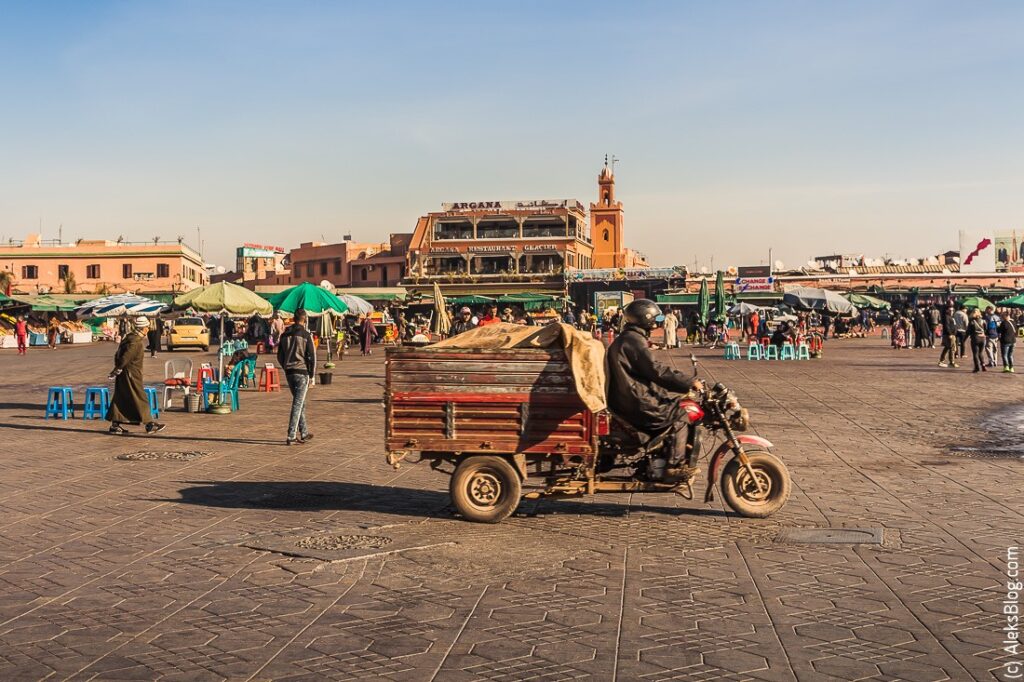
Among all Moroccan cities, I liked Marrakech and Tangier the most. Marrakech: for its delightful medina — large, not overcrowded, interesting souks, and, of course, the constant buzz at the vast Jemaa el-Fna square.

Fes
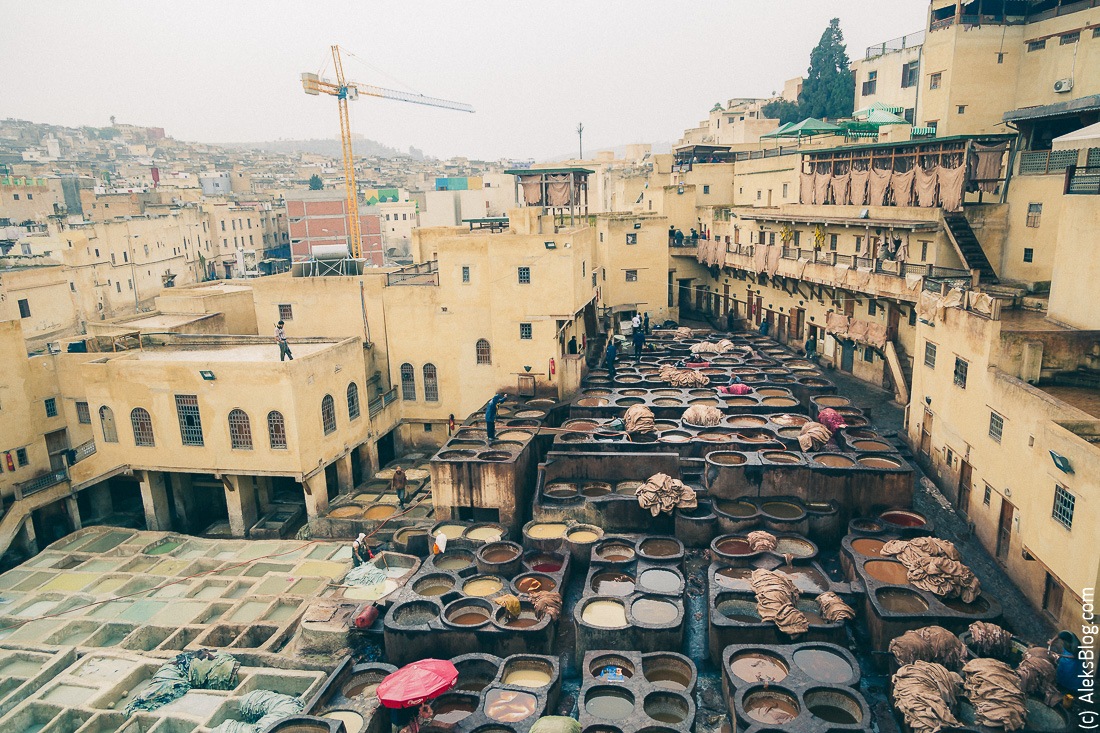
Dirty, boring, and a disappointing market compared to Marrakech. The medina is vast, with narrow streets filled with Chinese goods. There’s nothing particularly frightening, as some claim. But there’s also not much to marvel at. The most interesting part of Fes is the vast Chouara tanneries.
Meknes
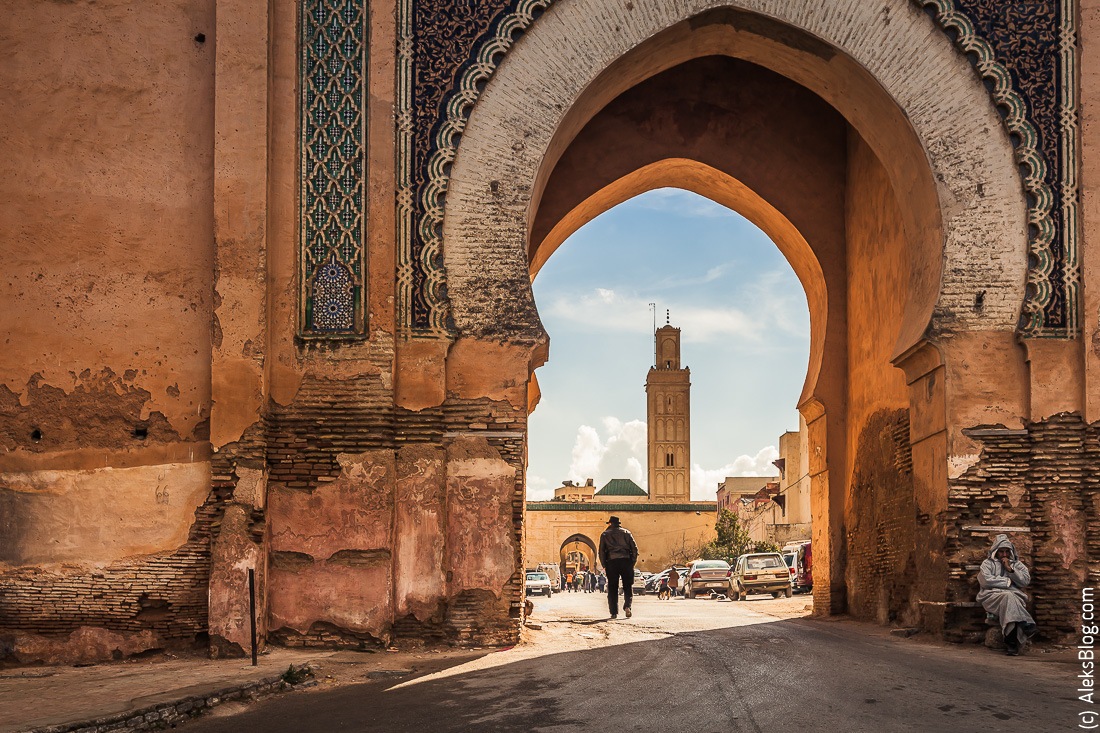
One of Morocco’s four imperial cities. From Fes, it’s an hour by train or about an hour and a half by bus. We visited Meknes briefly — it’s quiet and peaceful, with fewer tourists than Fes or Marrakech.
Rabat
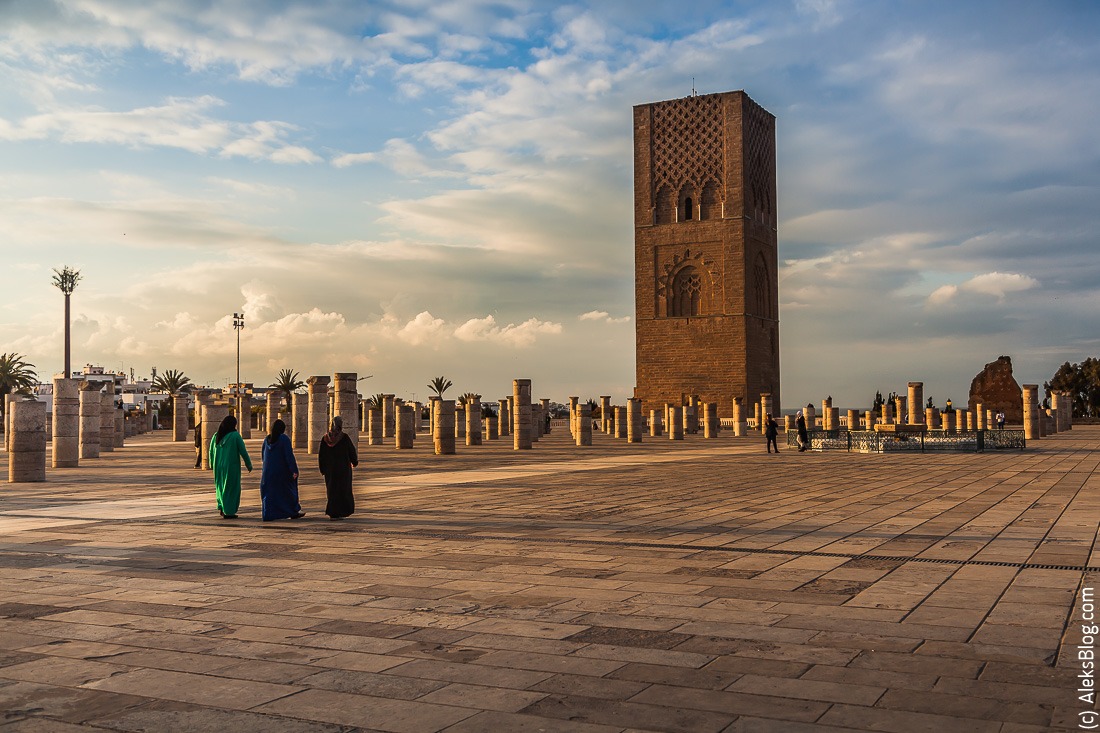
The capital of the kingdom and another city in Morocco that is unfairly overlooked. Why does everyone only flock to Marrakesh and Fes?
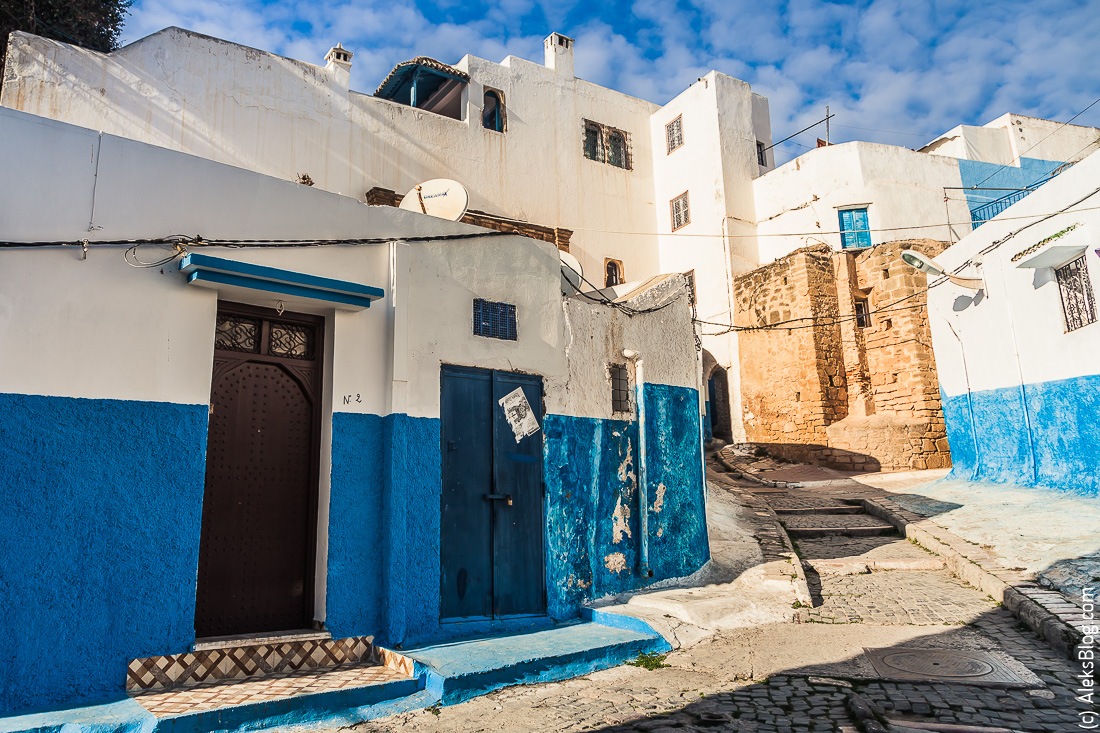
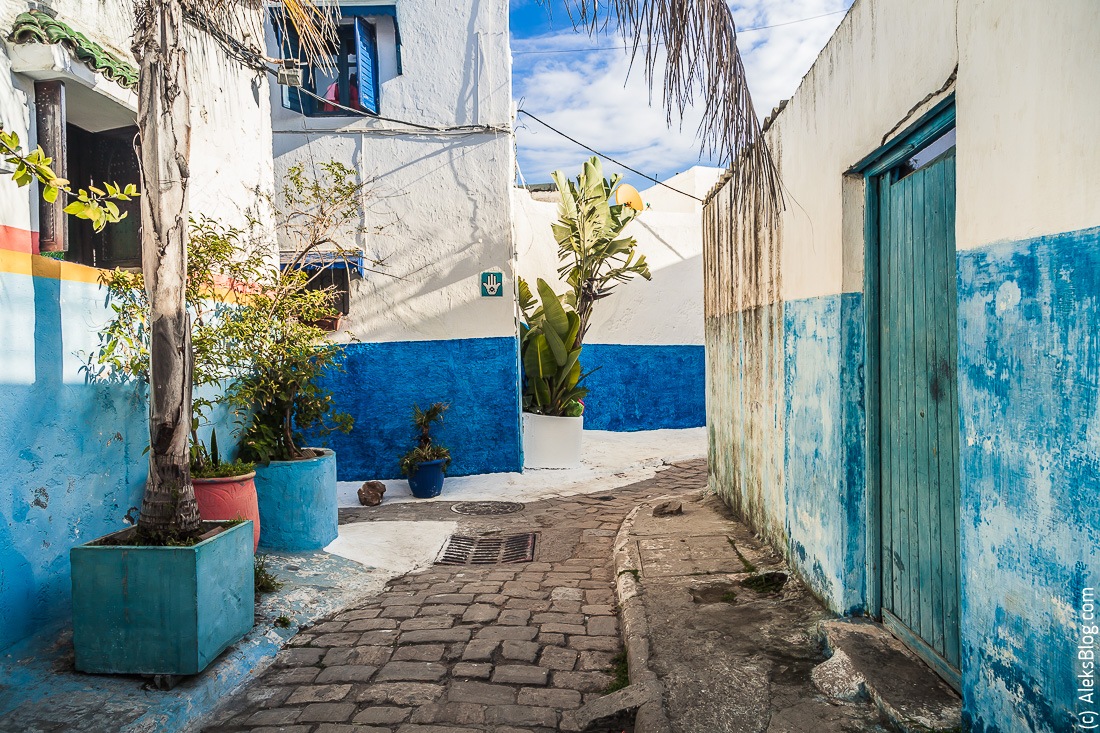
Rabat is definitely worth spending a full day in: the stunning Kasbah with its white-and-blue houses, Salé — once a stronghold of smugglers — and a couple more cool spots.
Casablanca
It so happened that I didn’t really get to see Morocco’s financial capital — I only spent a few hours in the city, most of which were near the Hassan II Mosque.
Although, to be fair, I did see the main landmark, drove around the city, sat in traffic, walked through the center, and saw the casa blanca.

Tangier
According to the plan, I had only half a day for Tangier. On every forum, people advised me to skip it altogether or, at best, spend a couple of hours and move on.
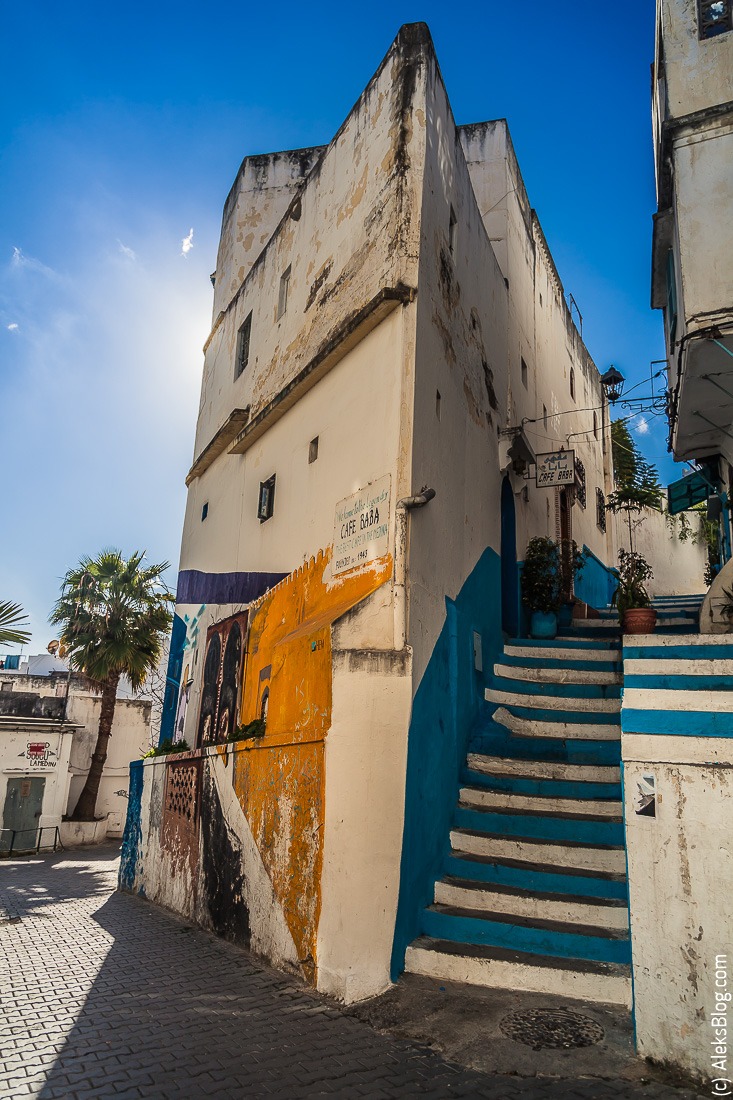
It turned out to be the best city in the country. If I ever come back, it will definitely be to Tangier! This place is absolutely mind-blowing — you wouldn’t even say it’s Morocco. Unexpectedly, I ended up staying for 2 days.


Essaouira
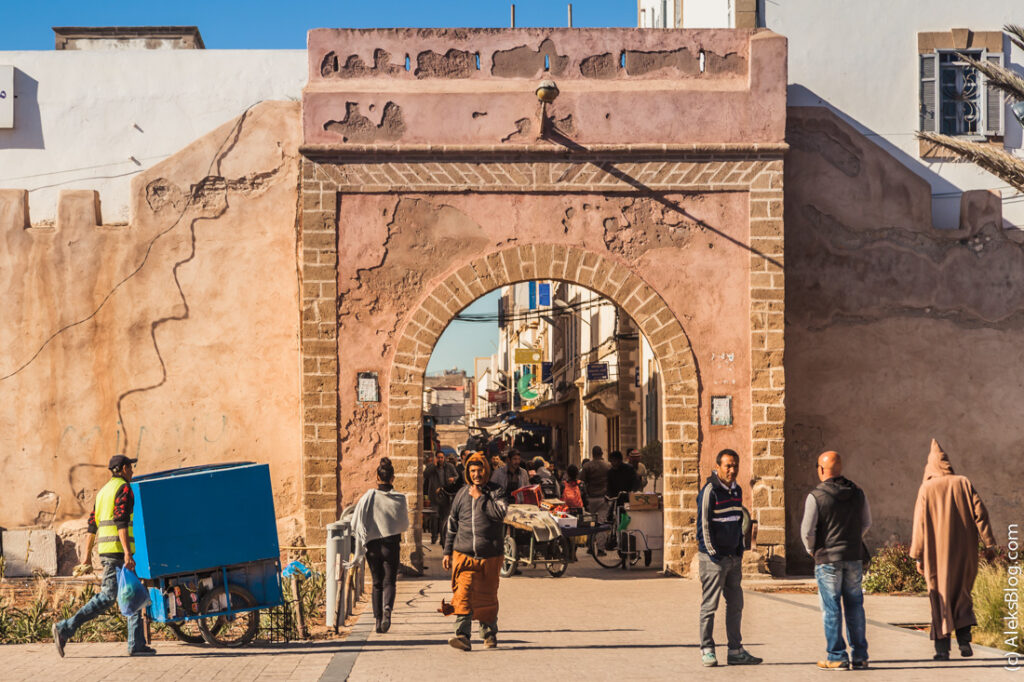
Essaouira is a small town on the Atlantic coast of Morocco that leaves every traveler enchanted. “Breathtaking,” “fell in love forever” — just a few of the words visitors use to describe it. After reading so many rave reviews, my first thought was to stay here for a whole week. Luckily, we limited it to just two days.

Gifts and Souvenirs: What to Bring from Morocco
I recommend shopping in Marrakesh or Fes. In other cities, the selection is significantly smaller.
- Leather goods: suitcases, backpacks, wallets, and more. Despite leather production in every city and my grand plans to buy a bag, I didn’t even feel like touching anything. Everything looked awful. It felt like they were made according to 18th-century patterns or produced 300 years ago and still can’t be sold.
- Babouches — traditional colorful pointed slippers. From afar they look nice, but when you pick them up, they’re awful. You can’t walk around the house in them — the sole is too soft and slippery.
- Djellaba — Moroccan clothing in the form of a long, usually warm, thick robe with a hood. There are shorter versions — tourist versions. In Morocco, it’s fine and even fun to wear, but in another country you probably won’t.
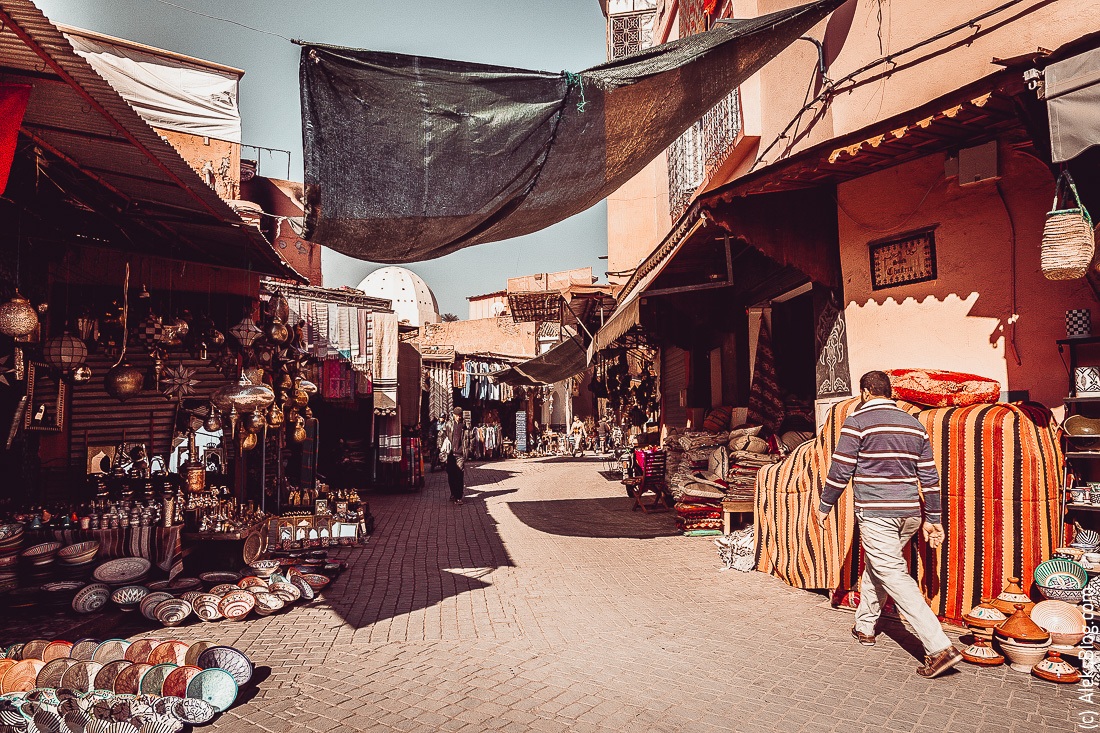
- Pottery — looks great. Plates, dishes, tagines, and plenty of other kitchenware made of beautifully painted clay. I would have bought something for apples, but carrying it on a plane…
- Carpets, scarves, shawls, and other textiles. In markets, you can find cheap scarves for 5–10 dirhams. Try wetting one, and your hands will be stained with dye. I ended up buying a decent scarf, mostly because the seller put on a little performance.
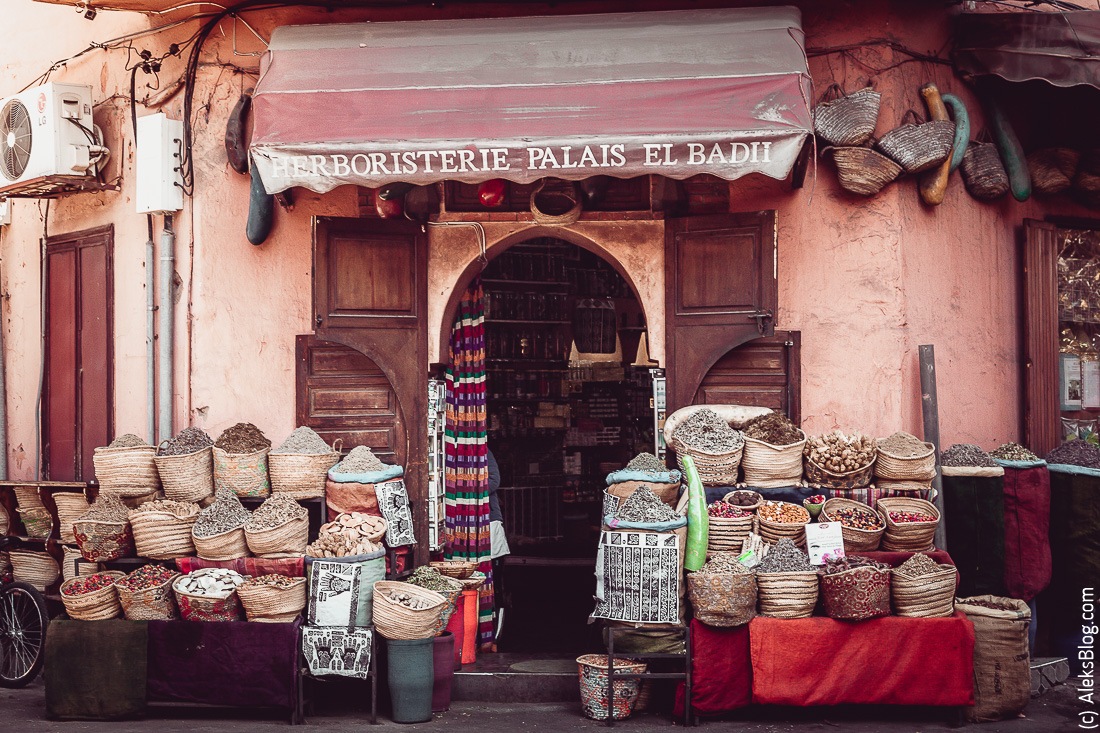
- Spices — a wide variety.
- Argan oil — comes in cosmetic and culinary versions. Made from the fruit of the argan tree, which grows only in Morocco. Thanks to certain beneficial elements, it is valued for heart and vascular health. Good-quality oil is expensive.
Food: What to Try in Morocco
I wouldn’t say I’m absolutely delighted by Moroccan cuisine, but there are definitely things I liked. Everywhere only cash is accepted — you can put your cards away right away.
Typical street food — shawarma. They drink it down with cola or ayran. A portion in flatbread costs about 25 dirhams.
In restaurants, tagine and couscous are served everywhere.
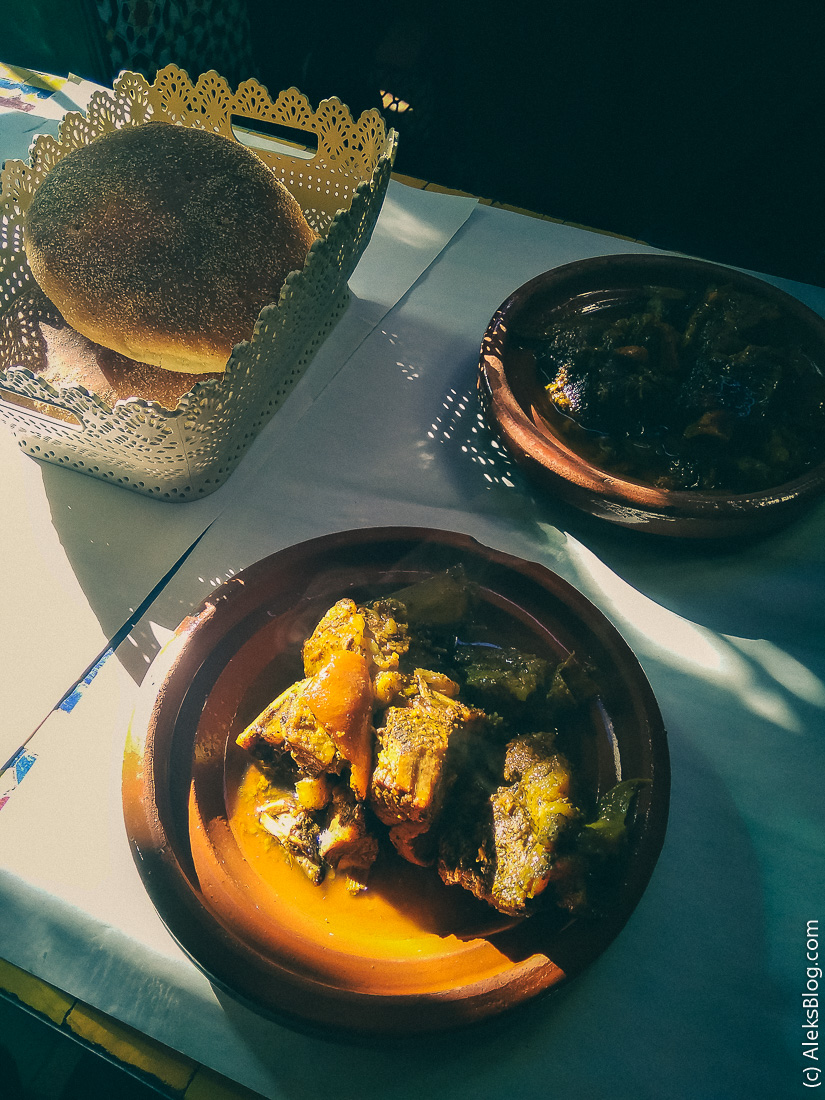
Tagine is a dish prepared in a deep clay plate covered with a conical lid. It can be vegetable or meat-based, and it is not spicy. Usually it contains potatoes, vegetables, and two pieces of meat, costing from 35 dirhams depending on how touristy the place is.
Couscous is a wheat grain dish. Couscous can also be meat or vegetable-based. As a rule, it costs about the same as tagine.
On average, lunch for two costs 100–150 dirhams. This includes proper meat tagines and couscous dishes.
The most delicious thing we tried was tanjia. Meat is placed in a pot, spices, salt, olive oil, and herbs are added, water is poured in, and it is baked in an oven for 8 hours. Divine — it melts in your mouth. In my Marrakesh post, I explained where you should try tanjia.
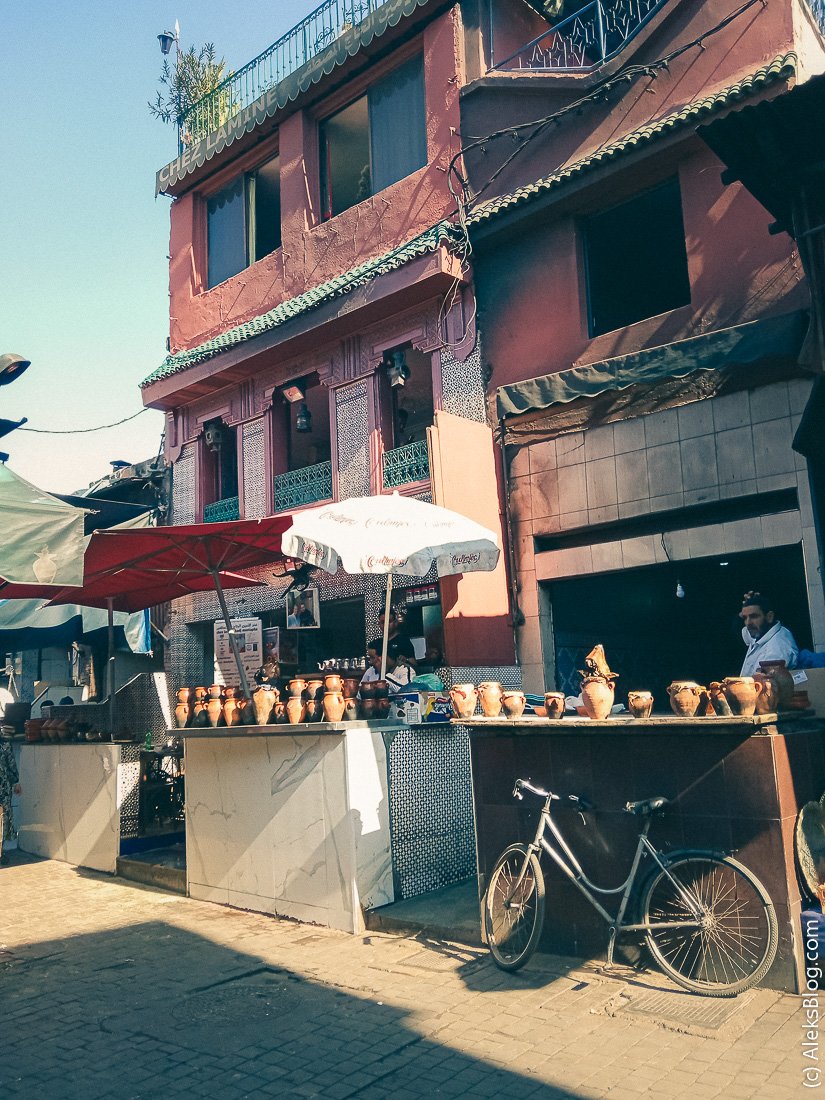
In small cafés, everyone smokes and drinks Moroccan tea and coffee. There is no food, but there is WiFi — the waiter will give you the password. Inside, it’s very smoky. These teahouses are a great place to sit and simply watch life go by.

Moroccan tea — mint tea. That’s exactly how you should order it. It’s half a glass of mint leaves and a little green tea, served very sweet.
Coffee in Morocco — the best coffee I have ever tasted. Don’t even think about asking for a latte, cappuccino, or whatever you prefer at home. Only black, only café noir. The coffee everywhere is excellent — so strong it feels like your heart is bursting out of your chest.
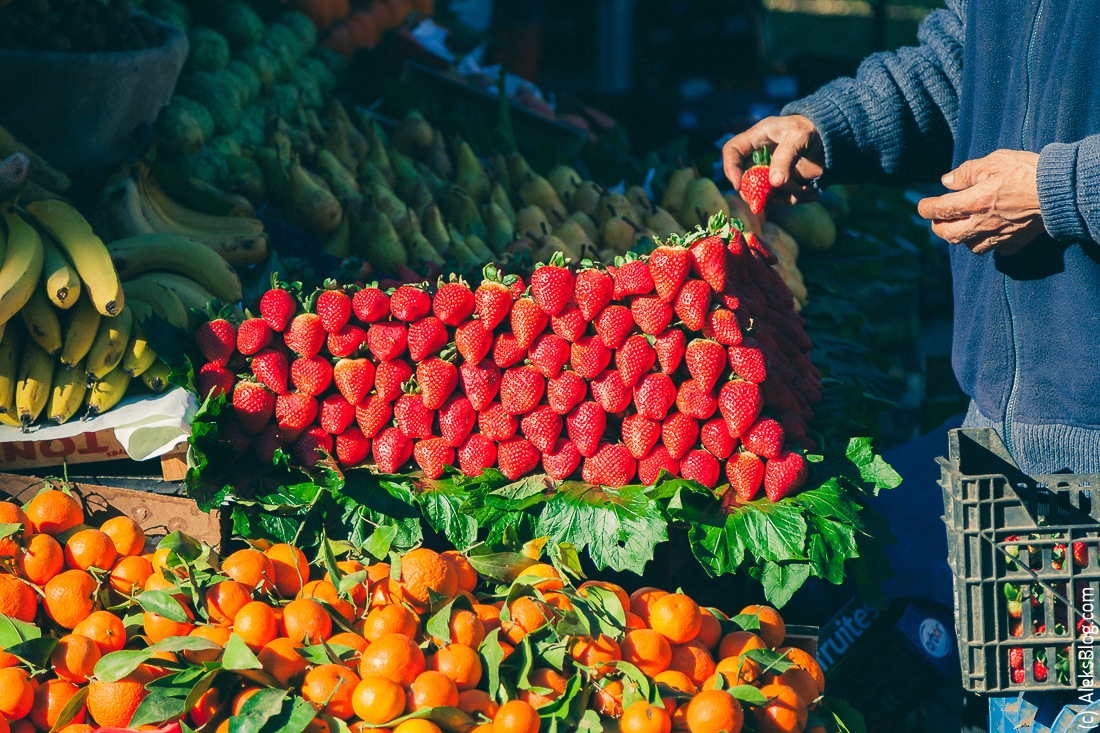
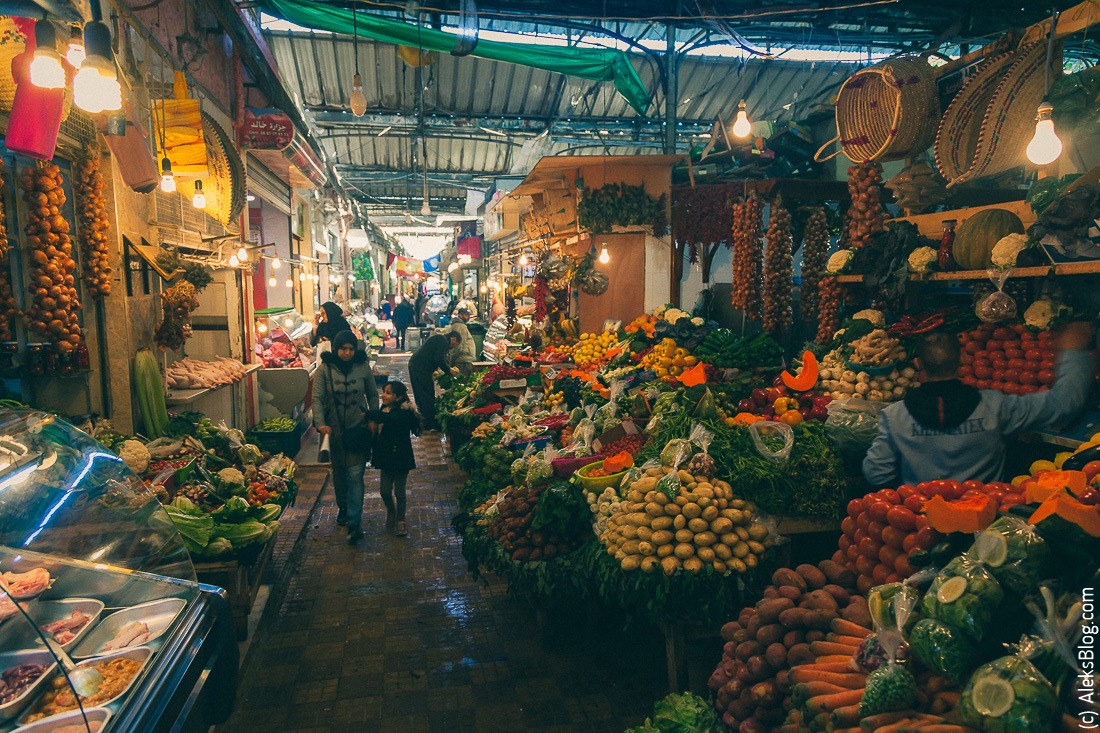
You should buy fruit at the market in the Medina. There are no prices posted anywhere, so bargain. They don’t understand English either, so bargain with gestures. They’ll still overcharge you. You can stand for a few minutes and watch what the locals pay.
Morocco is the land of mandarins. They are very cheap here and people buy them by the sack. I never figured out exactly how much 1 kg costs. In Marrakesh we bought 2 kg for 5 dirhams, and the seller smiled awkwardly while doing it. In Fes it was 5 dirhams per kilo. In Essaouira, in the old city, we found a whole street selling nothing but mandarins — huge piles on the ground, on pickups, and on trailers, all in their skins. Peaches were 20 dirhams each. In short — eat your vitamins!
Supermarkets
There are large chain stores – Carrefour. They sell everything except alcohol. Alcohol is available in separate sections nearby, but with a separate entrance — in observance of Islamic traditions.
Beer, wine, and spirits — everything is available. In Morocco, you should definitely try gray wine. It’s not sold anywhere else. The wine’s color is not gray but pink. Look for vin gris on the label. The wine is light. Enjoy it chilled, with mandarins and cheese, on the roof of a riad on a sunny day.