Essaouira: Exploring Morocco’s Pirate Fortress

Essaouira is a small city on Morocco’s Atlantic coast that leaves all tourists in indescribable awe. “Breathtaking,” “fell in love forever” — these are just a few of the epithets bloggers shower upon Essaouira in their stories. After reading such reviews, my first thought was to stay here for a week. Fortunately, we limited ourselves to just two days.

How to Get There
The only mode of transportation in Essaouira is buses. The journey from the nearest cities, Marrakesh and Agadir, takes about three hours. We arrived in Essaouira on a Supratours bus from Marrakesh and departed for Agadir on a CTM bus. If car rental is part of your trip, LocalRent worked well for me and might for you too.
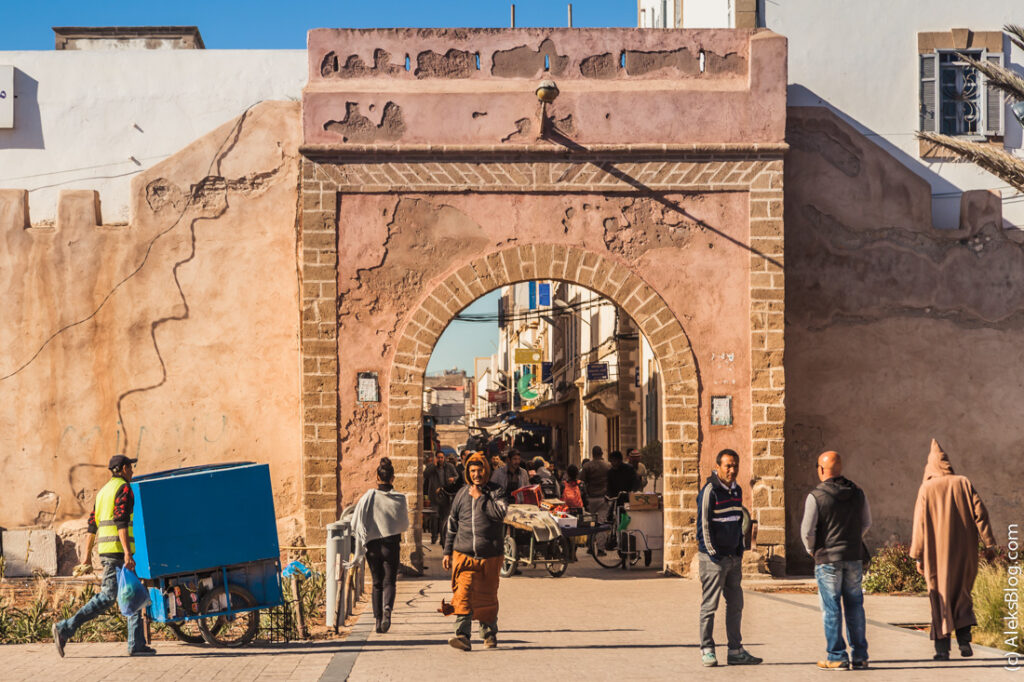
Supratours buses stop right at the Bab Marrakesh gate, while CTM buses stop about a 20-minute walk away. If you’re carrying luggage and find it inconvenient to walk from the CTM station, taxis have a fixed fare of 10 dirhams within the city. Since cars don’t enter the Medina, taxis drop passengers near these gates.

Where to Stay in Essaouira
The Medina of Essaouira is straightforward and not narrow, so there’s no need to hire a guide. Google Maps will easily lead you to any hotel or riad if you’re staying in the Old City. However, I wouldn’t recommend staying there!
Essaouira is a fishing town, and where there are fishermen and fish, there are cats that have occupied the entire center.

We stayed at Riad Ocean Medina. According to reviews and pictures, it’s a gorgeous place. But… the Medina is old, the buildings are very old, and the rooms reek of sewage. In riads, all windows open into an inner courtyard, and the rooms are poorly ventilated.
Yes, the trinkets decorating the riad are charming, but when it’s stuffy and smells, it’s hard to be enthusiastic.
All the noble riads in Essaouira’s Medina have very nice rooftop terraces—perfect for sunbathing, reading, or having breakfast. Even better is to buy mandarins at the market for 10 rubles per kilogram, cheese, and wine at Carrefour, and watch the sunset.

But there’s a catch! Cats roam everywhere, and they’ve peed on everything. Yes, I don’t like cats.
These ubiquitous cats aren’t just in this riad; they’re everywhere. They visit each other’s terraces. Plus, there are also flying bombers — cormorants — that occasionally try to steal something from the table.
So, don’t stay in the old town. Choose any accommodation outside the Medina, along the beachline.

At low tide, with the Medina in the background, hotels like Le Medina Essaouira Hotel, Atlas Essaouira, and others line the promenade. Yes, they’re not exotic riads, but modern accommodations with a magnificent view of the Atlantic, a pleasant breeze, and just a 10-minute walk to the center.
What to See in Essaouira
Long ago, in the 15th century, Portugal captured six cities on the Atlantic coast, one of which was Essaouira. The Portuguese named it the Royal Fortress of Mogador. They held this wealth for only four years before Berber tribes conquered the fortress. For two centuries, Mogador became a stronghold for smugglers and pirates.

In the 18th century, Mohammed III decided to make Mogador the largest port in Morocco.

That’s when the city’s name changed. First, Souira — fortress, and then Es-Saouira — beautiful fortress. In various sources, Essaouira is written differently — Es-Suweyra, Essaouira.


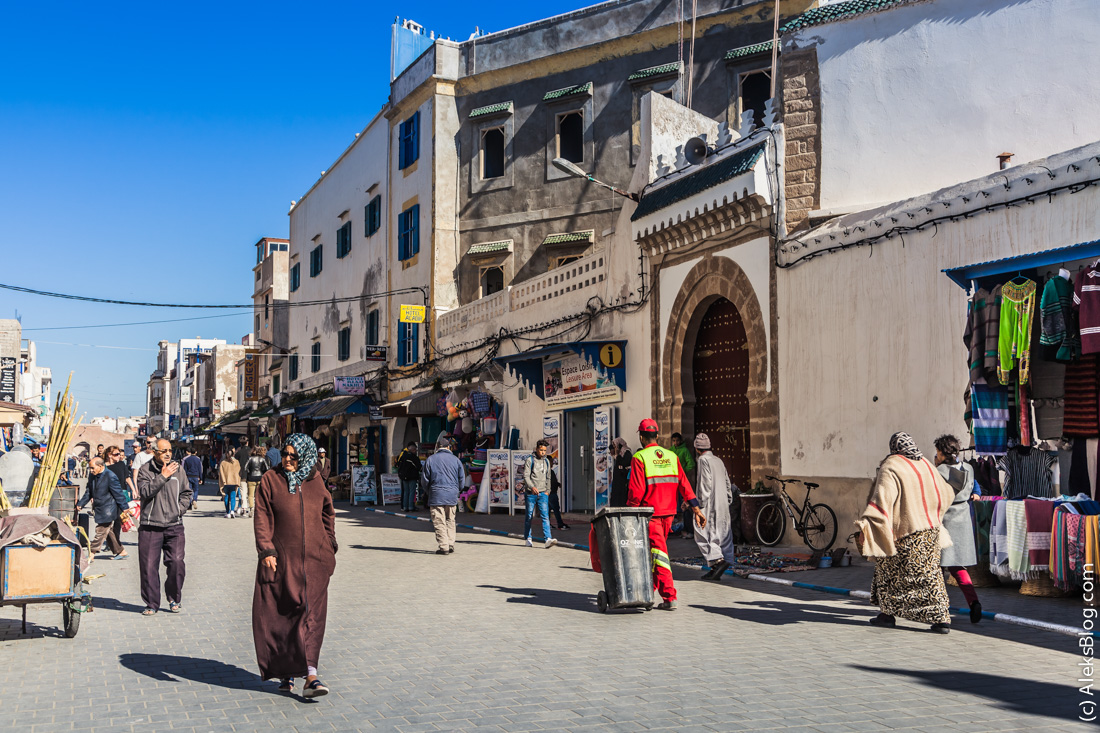
If you walk north along the central street of the Medina and turn right after the gate, you’ll find a street where only mandarins are sold. Carts, trailers attached to cars, just piles on the floor—all filled with mandarins. No matter how hard I tried, I couldn’t understand the price at which locals buy them. They buy several kilograms at once; no one sells just a couple. They took 2 kg for 3 dirhams. In Marrakesh, it’s 2 for 5.
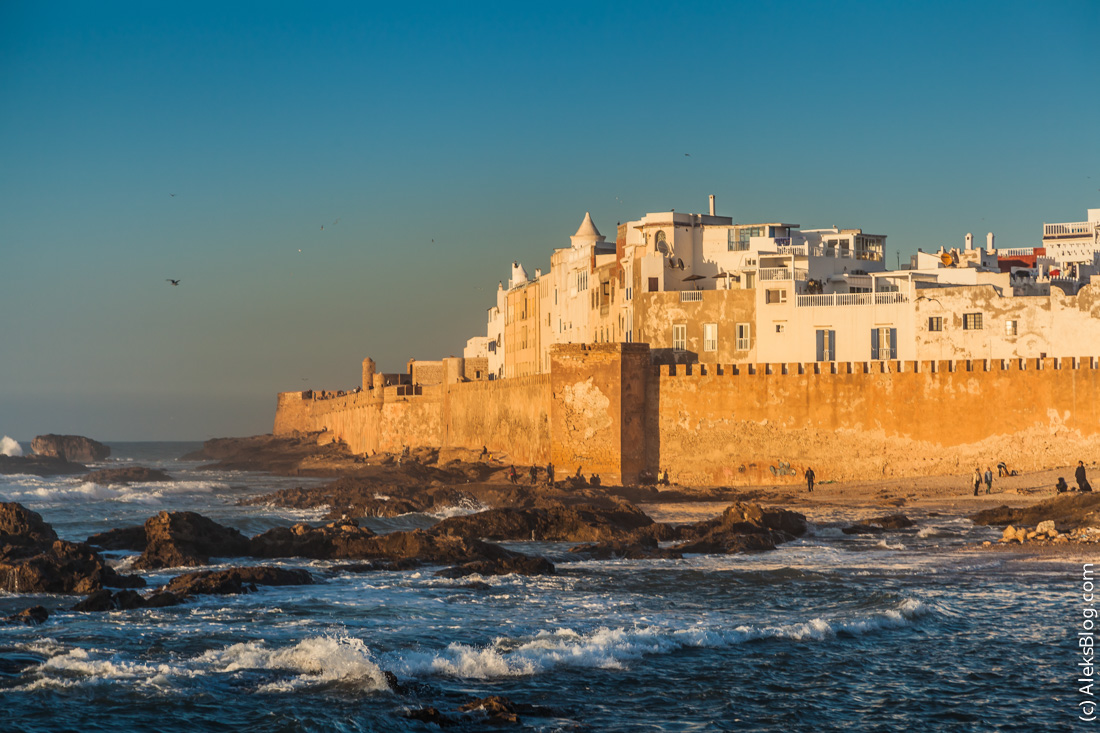
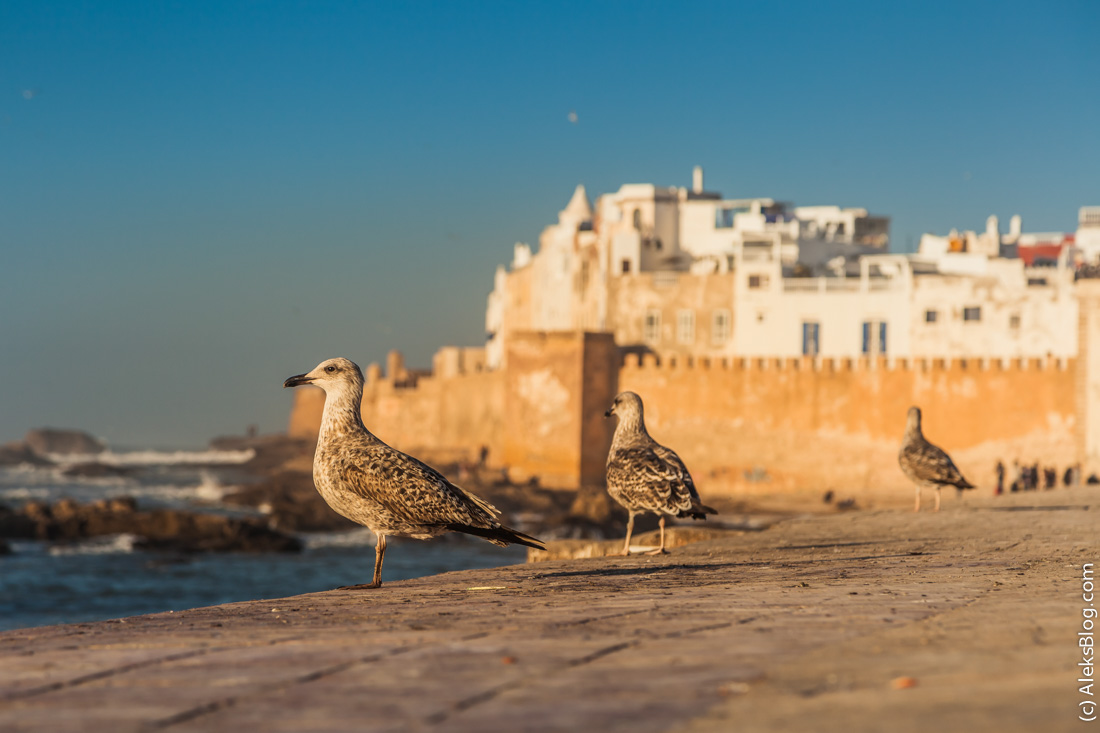
On the ocean side, the city is protected by the defensive wall Skala de la Kasbah. You can take a walk along the top of the fortifications. On the esplanade, there are cannons brought from Spain and Portugal.
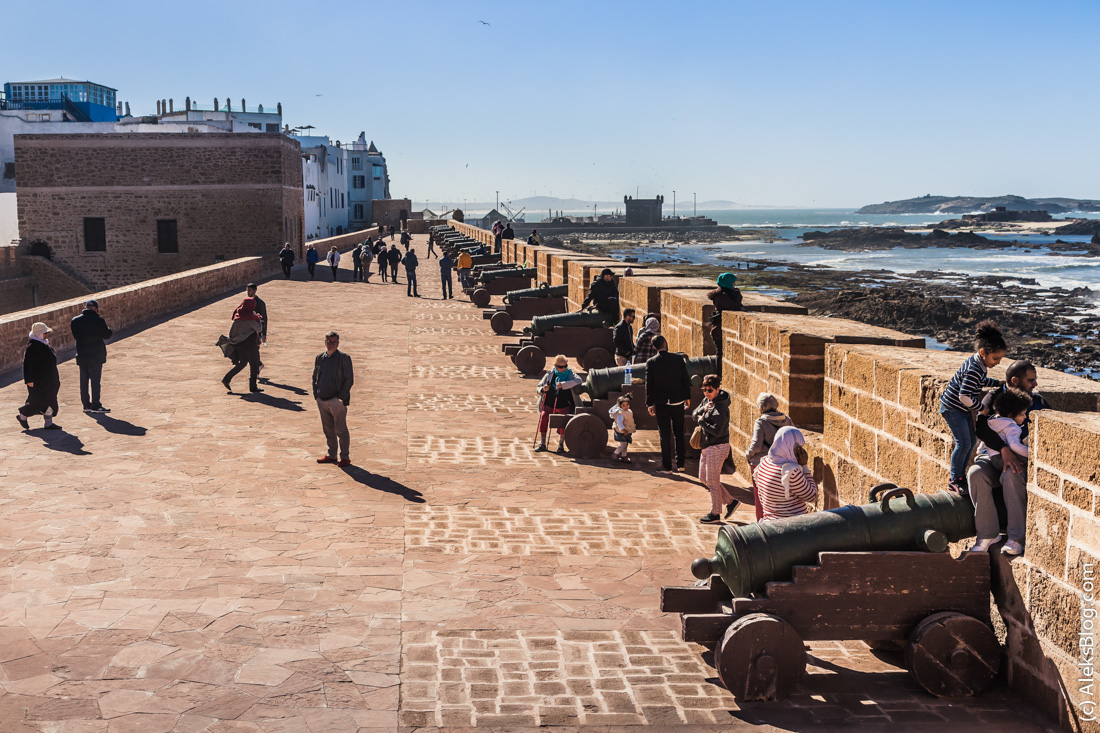


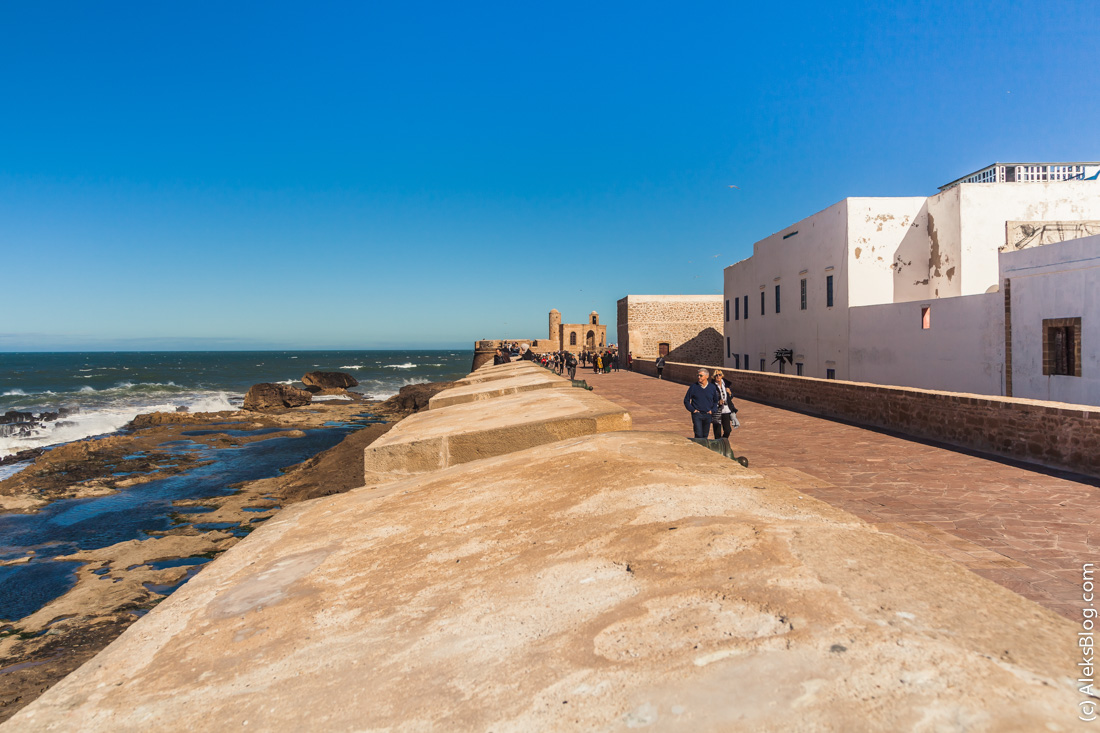
During the day, Essaouira is very crowded; tourism is the city’s main source of income. Therefore, dozens of excursion buses arrive in Essaouira from Agadir and Marrakesh for day trips.
Here some best of them:
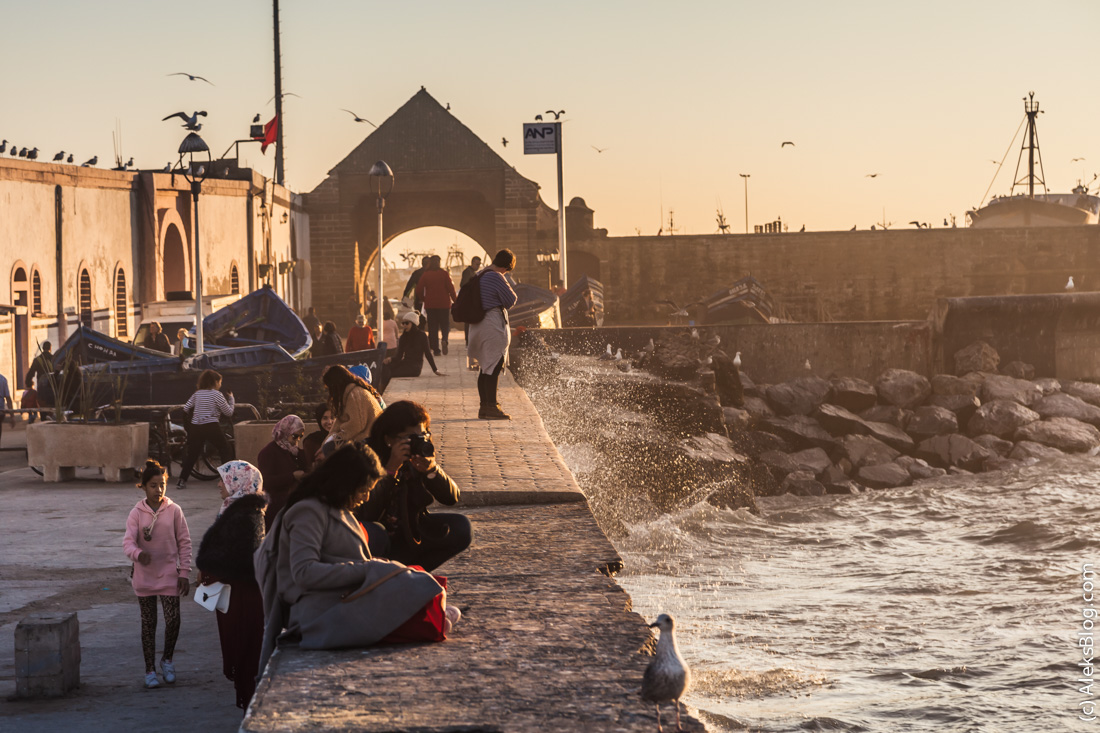
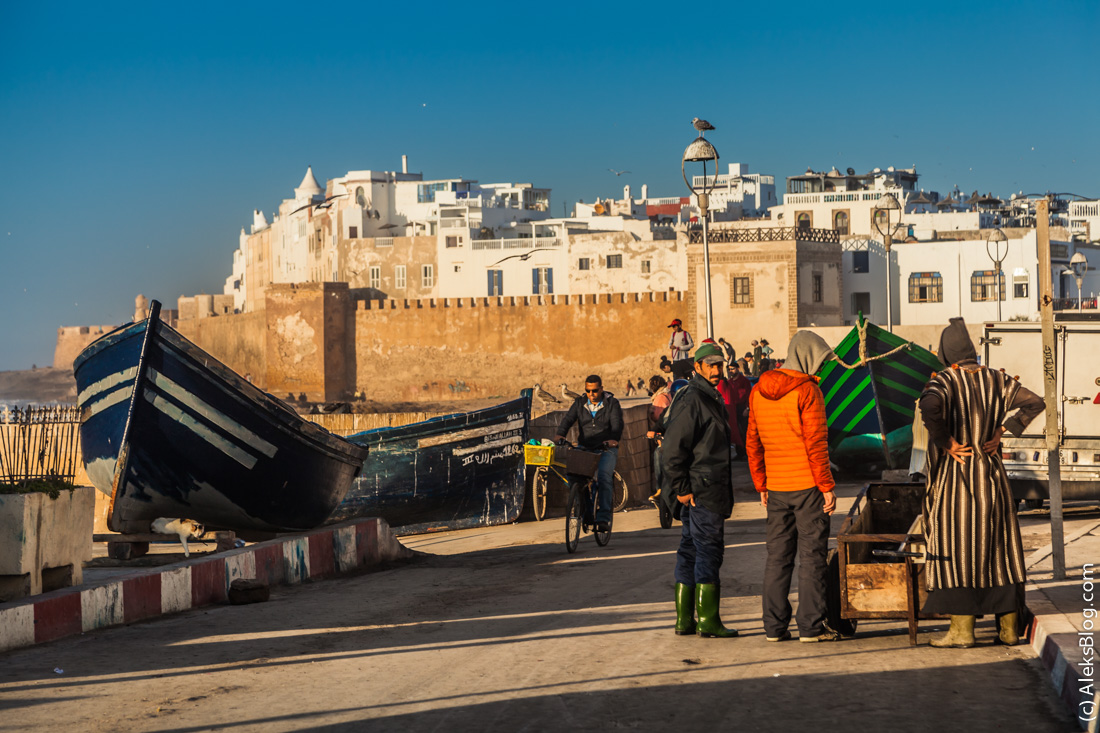
Walking along the wall and descending, you reach a square that separates the fishing port from the Medina.
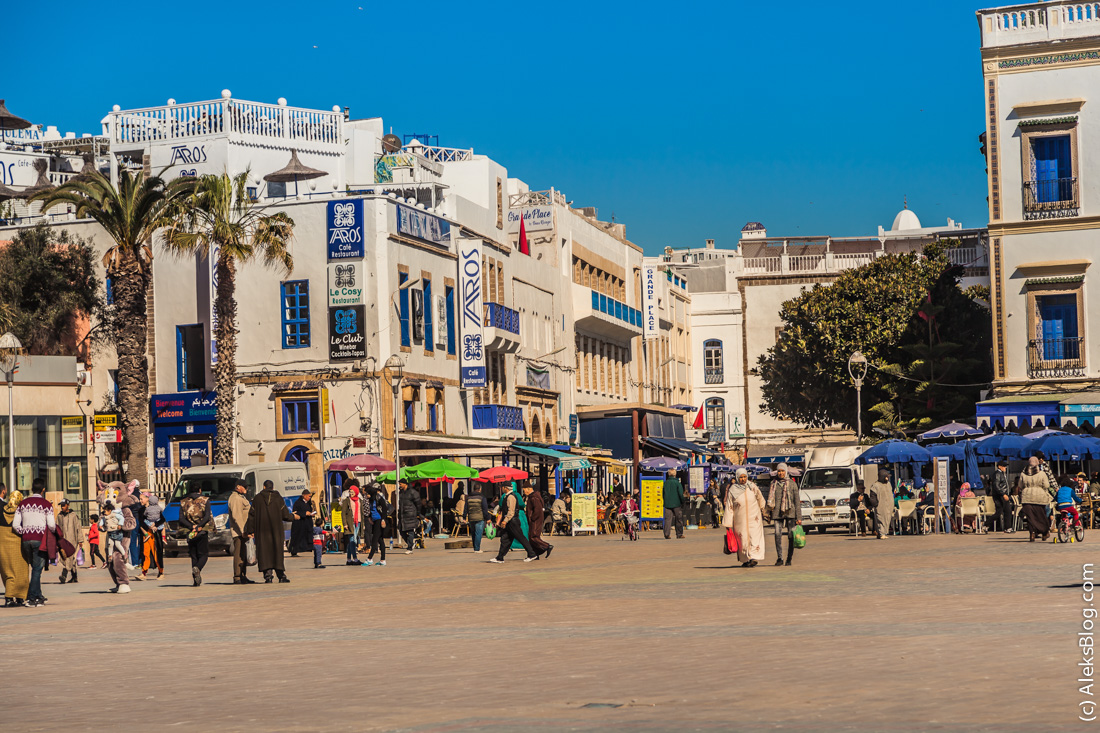
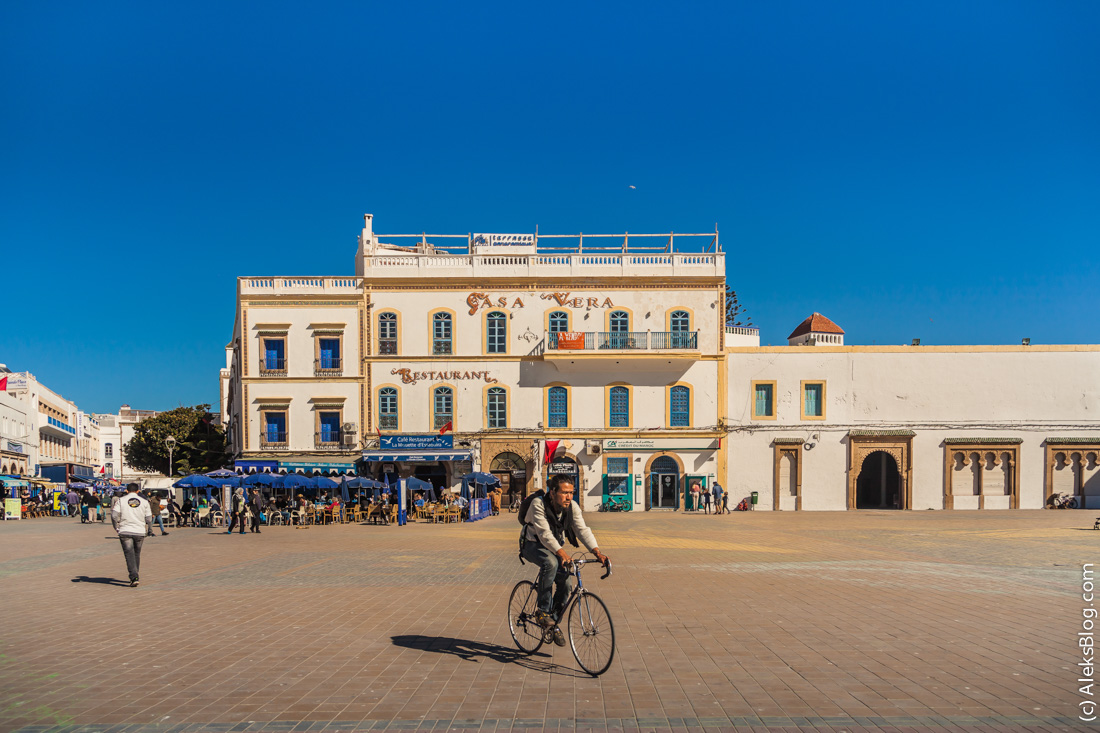
Eating in Essaouira isn’t a problem. There are many tourists, so there are plenty of places for every taste and budget.
For example, on the square, if you look at the cyclist, on the right, you’ll find “fish rows,” as I call them. A row of identical restaurants where you approach, choose seafood laid out, and they immediately grill it for you. Everything is very civilized, no trash. The prices are touristy, but you can bargain. For two small doradas, several other fish, a handful of small fish, two squids, langoustines, a fresh vegetable salad, fries, and two sodas, we paid about 15 eur.
You can also go to the port; in the evening, under neon lights, they also sell and grill, but it looks far from appetizing, unlike in Vietnam.
All the most postcard-like views of Essaouira are taken from this spot.

Here, you’ll also find the blue fishing boats, which are one of Essaouira’s trademarks.

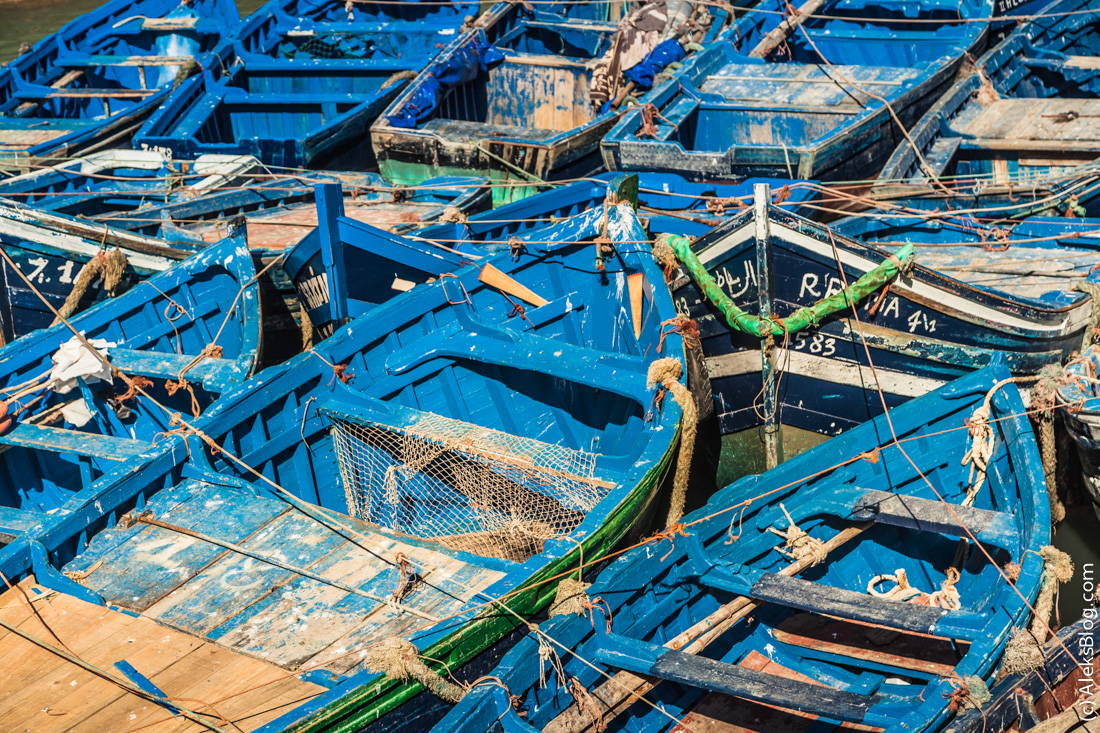
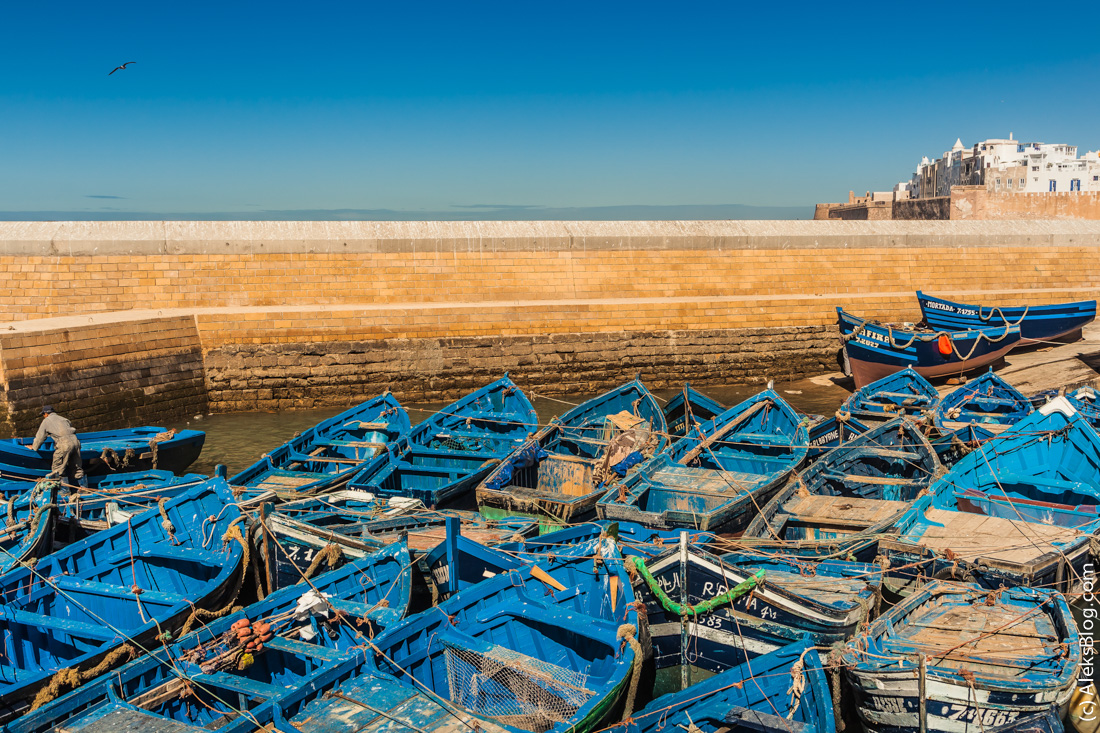
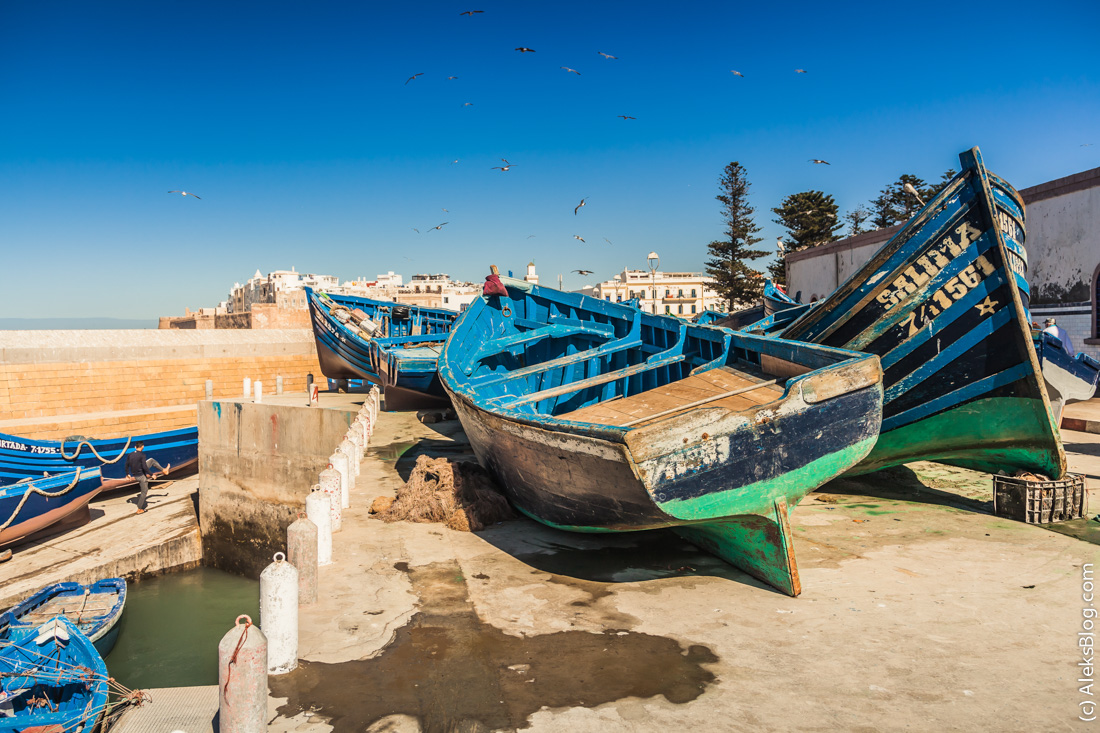
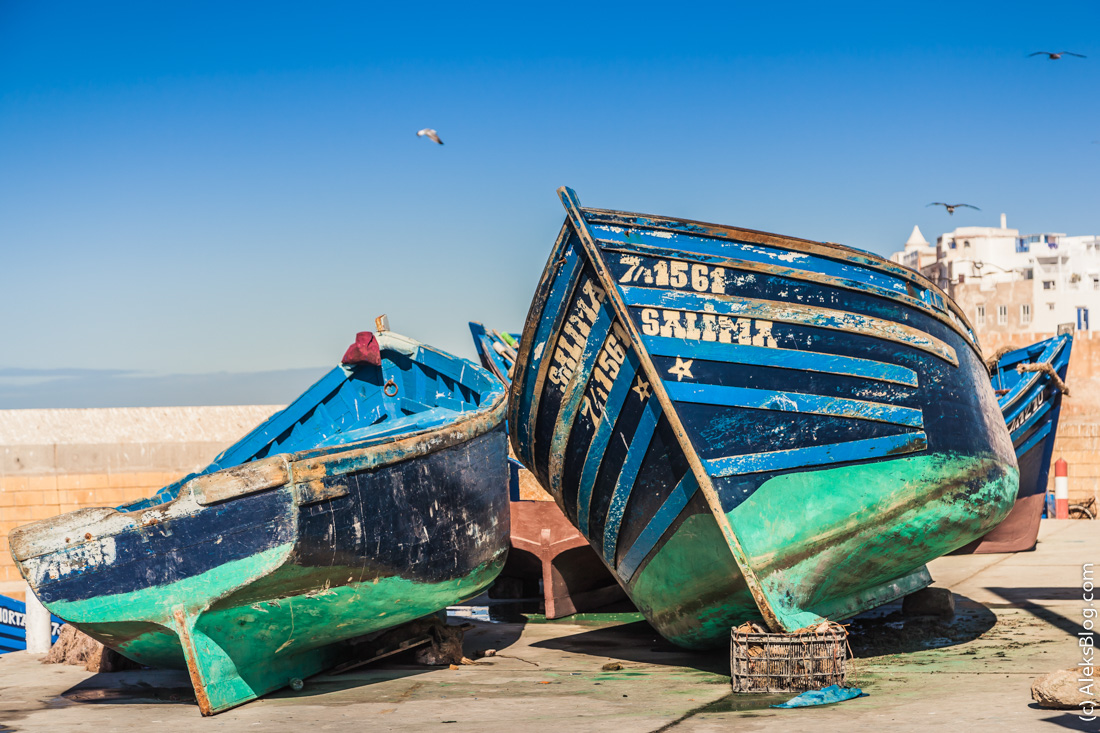
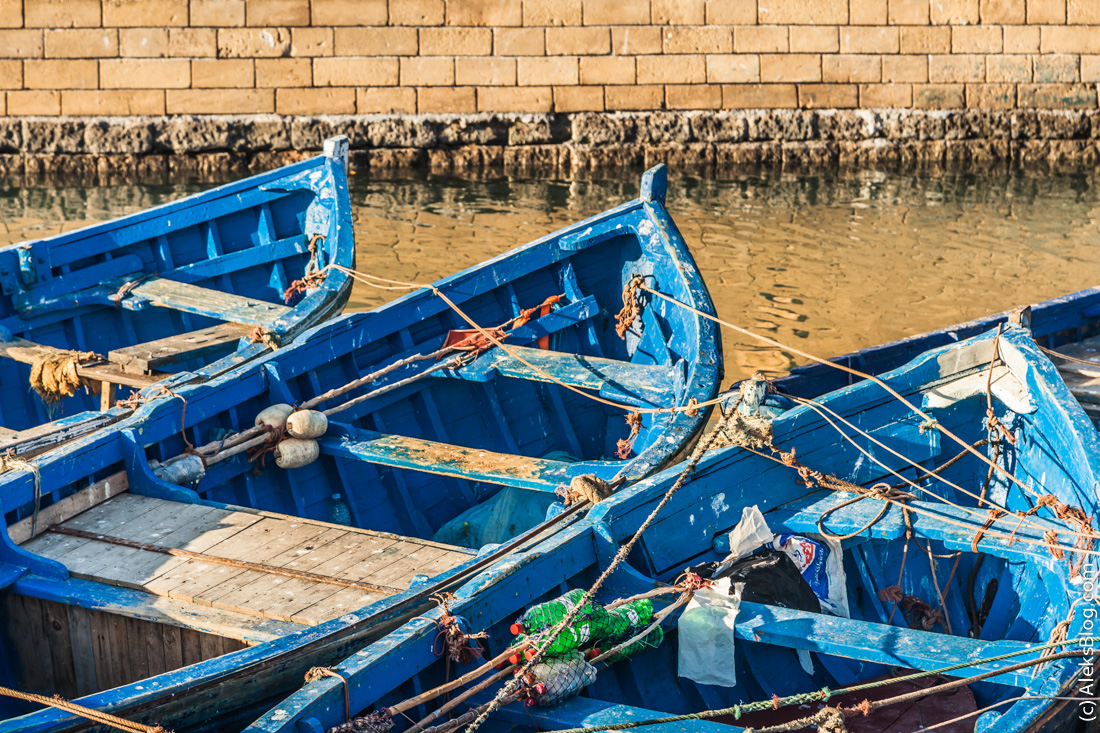
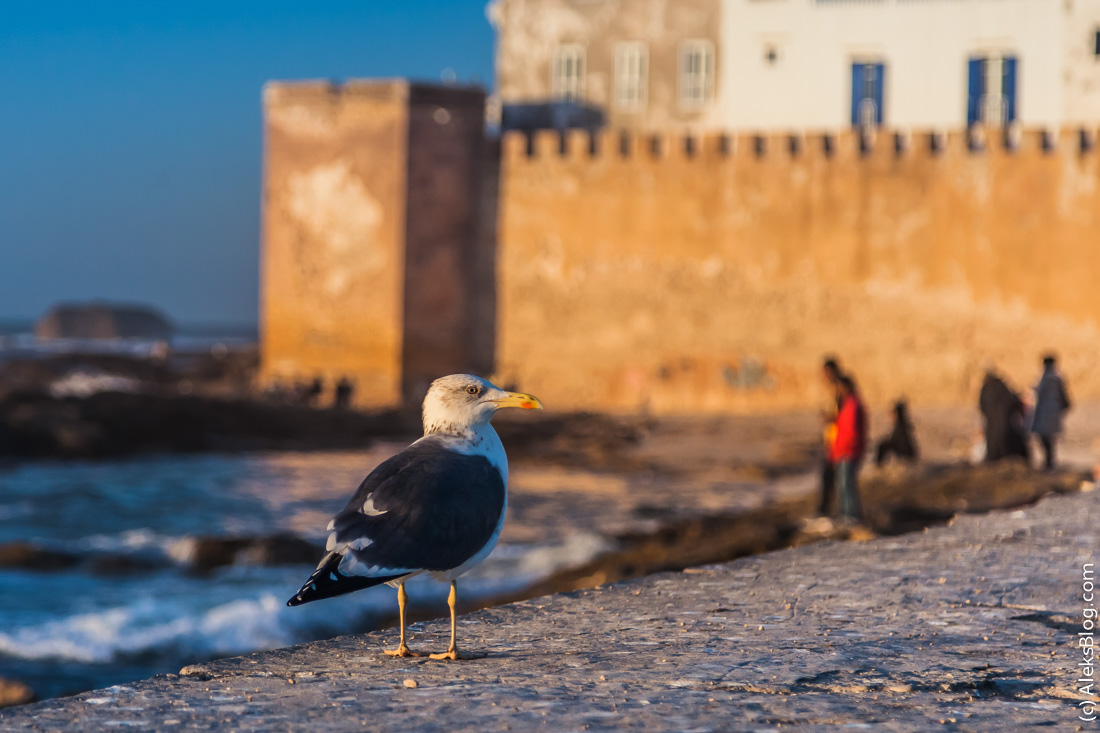
The port is nearby; just pass through an arch, but there’s nothing beautiful or interesting there. Seagulls, a view of the Kasbah, boats — it’s better to view them from here, especially at sunset.

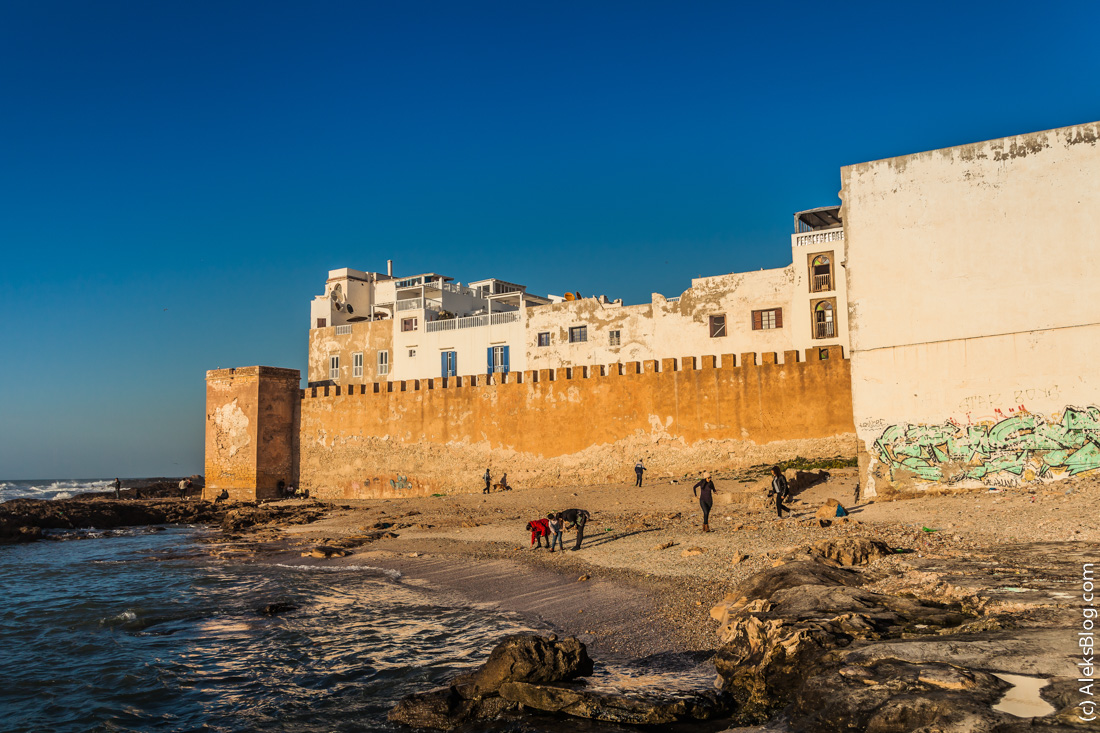

Most of the time in Essaouira can be spent on the beach because there’s nowhere else to go.
A typical day for the French who come to Essaouira for a few days: breakfast, beach, a trip to Carrefour for alcohol, a book plus cheese and wine on the terrace, an evening promenade to watch the sunset, dinner, and an evening walk beyond the Medina in search of a local café to sit with a phone and mint tea.