Marrakech Travel Notes: My Stories From the Red City

Of all the cities in Morocco, Marrakech and Tangier were my favorites.
Marrakech boasts the most pleasant medina (the old historical quarter) — it’s spacious, not overcrowded, with intriguing market rows and, of course, the constant hustle and bustle of the vast Jemaa el-Fnaa square.

How to Get There
We arrived in Marrakech by CTM bus from Agadir. The CTM bus station is about 1 km from the Marrakech train station, while the Supratours bus station is adjacent to the train station. Since we were planning to take a train to Fes in two days, we decided to walk to the train station and purchase our tickets in advance.
For those planning to drive around Morocco, I found LocalRent to be a reliable option.
Alternatively, you can fly directly into Marrakech. There are numerous Ryanair flights available.
From the train station, we took a taxi to the medina. After some negotiation, we agreed on a fare of 20 dirhams. Inside the medina and on Jemaa el-Fnaa square, cars aren’t allowed. We were dropped off near one of the gates and walked to our hotel, which took about 10 minutes.

Where to Stay in Marrakech
I’ve been to Marrakech twice. The first time I stayed right in the center, in the pedestrian part of the medina. The second time, I stayed near Jemaa el-Fnaa square, but in the part you can reach by taxi.
The first time we booked Riad Tamazout. A good riad—small but clean and cozy rooms, hot water, we were there in January and it was warm, with the AC used for heating, Wi-Fi worked fine. Breakfast was served on the rooftop terrace, quite filling. The hosts were excellent—no scams, and the owner spoke good English. I recommend this riad, or look for something nearby. The riad is located just 100 meters from Jemaa el-Fnaa, which makes it a great choice for those coming to the city for a few days.
We found the riad on our own. Google Maps locates everything perfectly. The main thing is not to panic and not to give in to “helpers,” who will definitely pester you with offers of assistance. The GPS may glitch for a short while, but it will eventually reposition you. I described all this in detail in my post Morocco Without Worries!
The second time, I decided I didn’t really want a full immersion in authenticity, but I still wanted to be close to the center. I stayed at Chems Hotel. It’s just a five-minute walk to the Koutoubia and the main square. The location is excellent — quiet, with a closed-off area and a swimming pool, and you can call a taxi right up to the entrance. The rooms have balconies. But there’s a small nuance… The rooms are rather worn out. Not terrible, just old. But it’s cheap.
So if I come to Marrakech again, I’ll look for accommodation in this area or stay here again.

What to See in Marrakech
Marrakech is the fourth-largest city in Morocco after Casablanca, Rabat, and Fes. It sits at the foot of the Atlas Mountains. Throughout its history, starting from the 11th century, Marrakech has competed with Fes for the right to be the country’s main city. Even the name of the country, the toponym “Morocco,” comes from the Spanish pronunciation of Marrakech (Marruecos). To this day, Morocco is still called Marrakech in some Eastern countries—Iran, Tajikistan, Azerbaijan, and Uzbekistan.
There were periods in history when the country split into two parts, with Fes as the capital in the north and Marrakech in the south. Perhaps Rabat, the modern capital of the kingdom, was chosen as a compromise between these two imperial cities.

Main Attractions
- Bab Agnaou Gate
- Koutoubia Mosque
- Saadian Tombs
- El Badi Palace
- Bahia Palace
- Ali Ben Youssef Medersa
- Dar Si Said Museum
- La Mamounia Hotel
- Jardin Majorelle
- Jemaa el-Fnaa Square

All of these attractions can be visited on foot in a single day. The only exception is the Majorelle Garden, which requires a taxi ride.
Right now, I’m going to save you a lot of time and money! There’s really no point in going inside all these palaces. But the main issue is that the entrance fees are ridiculously expensive. Everything costs roughly €10. In the past, entry to each palace was just 10 dirhams. Now the price for foreigners has been increased, and to see everything as a couple, you’ll have to pay a solid sum. And honestly, there’s nothing much to see inside.
For example:
- El Badi Palace – the gates are open, and the ticket office is nearby. Just walk up to the gates and look at the ruins—you definitely won’t feel like buying a ticket and climbing over stones under the sun. Only for hardcore archaeology fans.
- Saadian Tombs – you can’t get close to the actual tombs, only view them from a distance.
- Bahia Palace – this isn’t a palace in the way we normally think of one. It’s more like the courtyards of a large house, plus a big area with a non-functioning fountain. It’s very cramped and crowded with tourists. If you want to take photos with an “Oriental” vibe, it’s fine—you’ll find pretty doors, windows, and mosaics. Entry costs €10.
- Majorelle Garden – famous because Yves Saint Laurent once restored it. Today there’s a small museum dedicated to him and a shop with cosmetics priced sky-high. The garden itself is a small plot with bushes, a few cacti, and palms. Basically, it’s what you’d find in the free park near the Koutoubia Mosque. Entry to Majorelle Garden is €15.
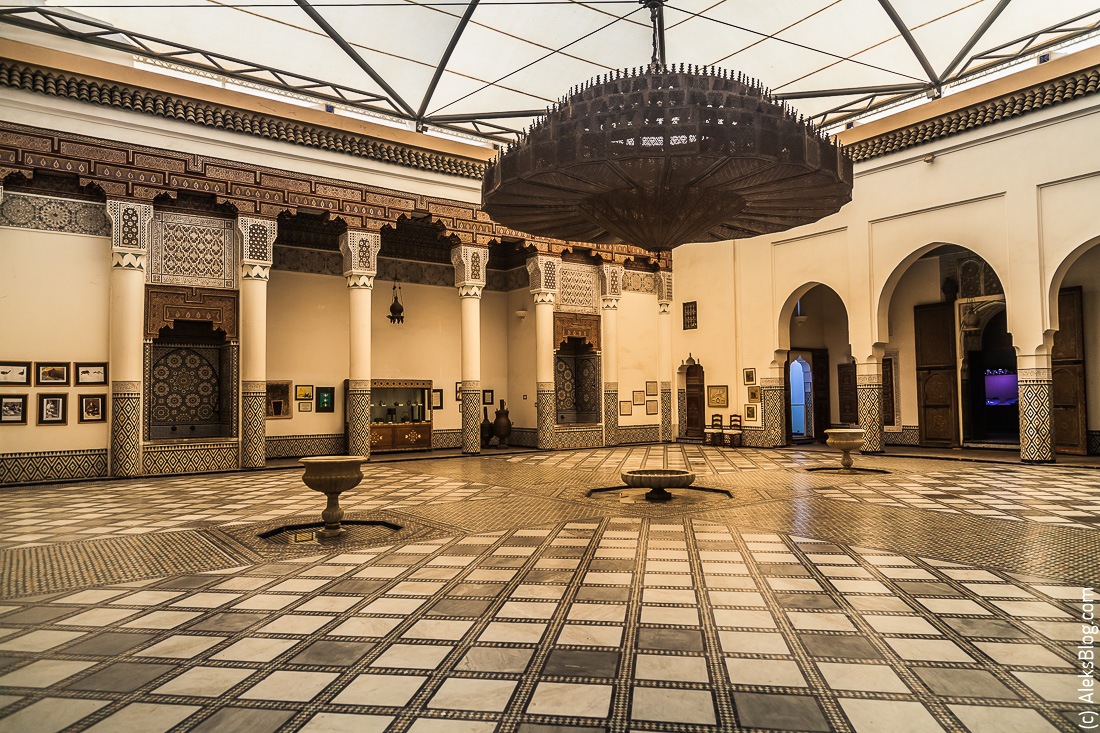
We also went to the Marrakech History Museum.
Here’s basically what you can see there: a few small rooms with paintings.

According to pictures and descriptions, the Ali Ben Youssef Medersa (a religious college) should be interesting with its beautiful wall and door ornaments, but it’s closed for renovation—at least that’s what the banner says.
Now let’s go through the places I liked and would recommend visiting.
Jemaa el-Fnaa Square
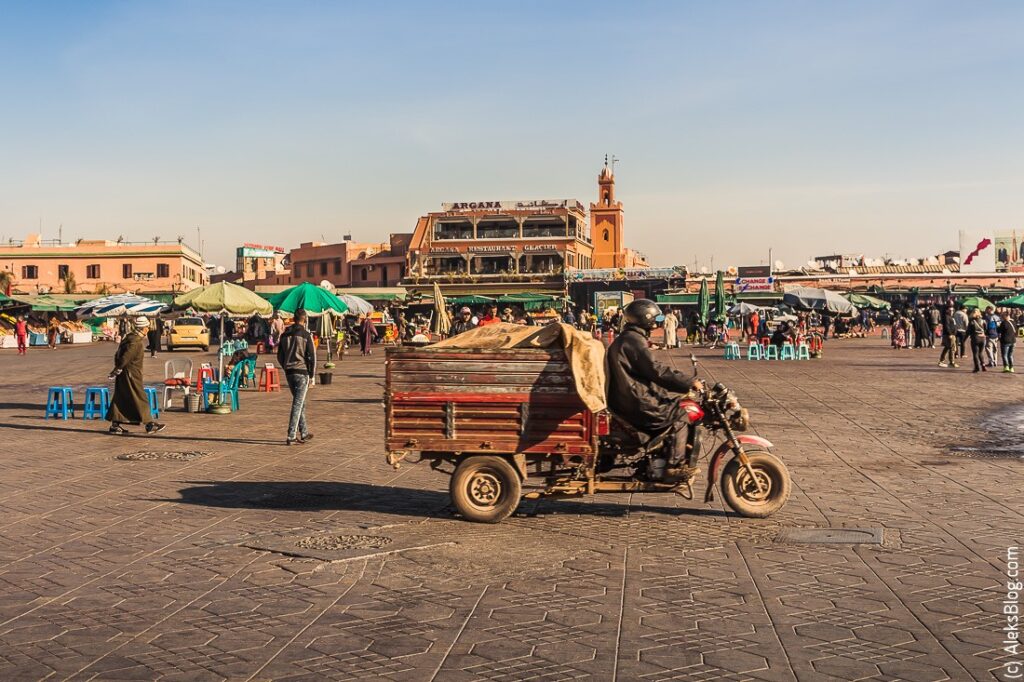
The main square of Marrakech.
It’s listed as a UNESCO World Heritage Site and appears on many “must-see” lists.
In the morning, there’s nothing particularly interesting here. But at sunset, it transforms incredibly. Take note of the view now and compare it to the evening.

The name Jemaa el-Fnaa means “square without a mosque.” Until the 19th century, the square was used for slave trade and executions, so another meaning is “assembly of the dead.”

We walk across the square toward the Koutoubia Mosque, visible in the distance.

Between Jemaa el-Fnaa and the mosque, there’s a parking area for horse-drawn carriages. They sleep and relieve themselves there, so the smell is exactly as expected.

Koutoubia Mosque
This is the largest mosque in Marrakech, with a 69-meter minaret, built in the 12th century. Inside the tower is a staircase wide enough for the muezzin to ride up on a horse. The name of the mosque translates as the “Booksellers’ Mosque,” probably because books were once sold on stalls in the square nearby.
You can’t enter the mosque, but it’s worth seeing from the outside and walking around to sit in the park for a while.

Bab Agnaou Gate
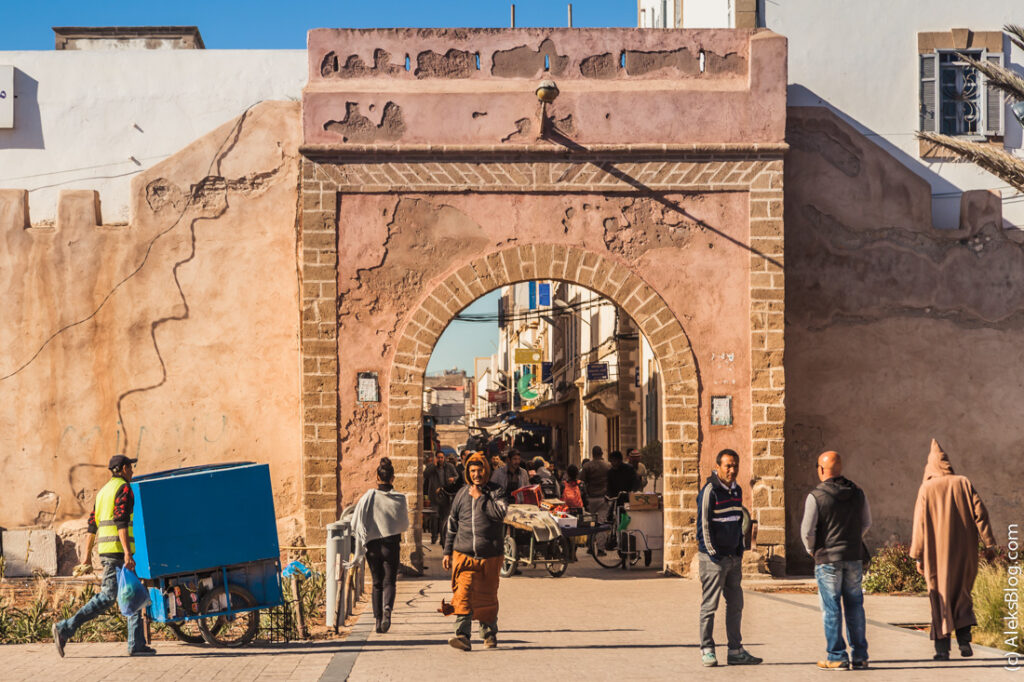
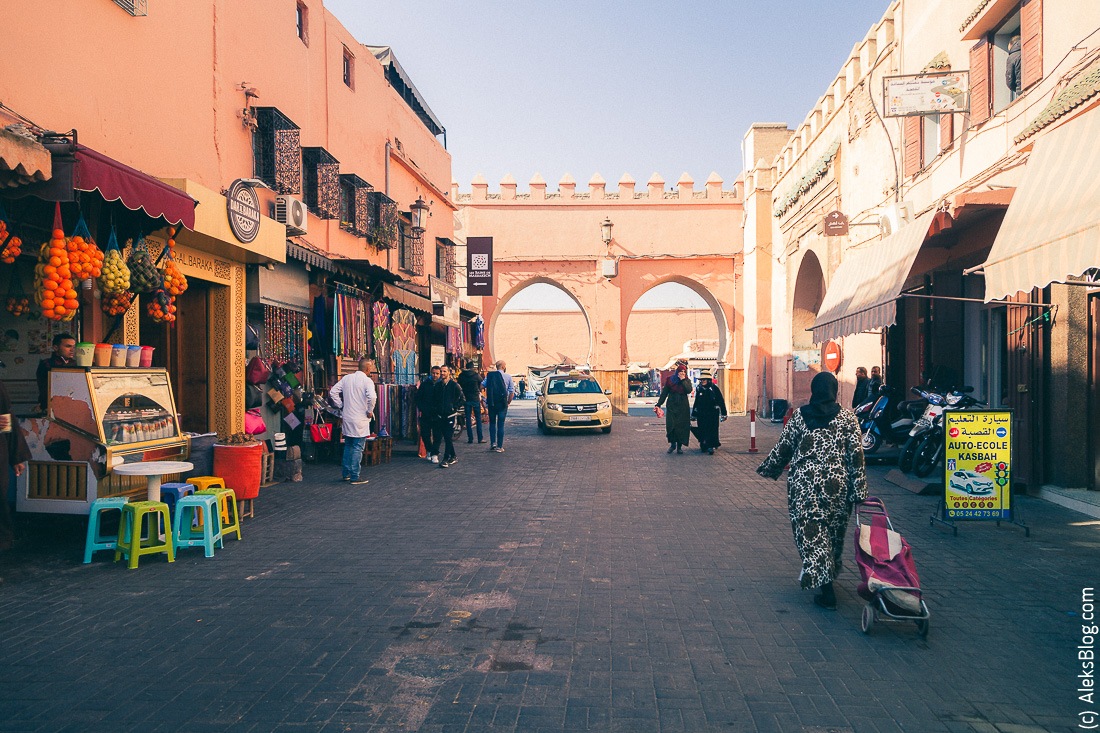
All routes into the medina—the old part of Marrakech—lead through gates. One of them is Bab Agnaou, built in the 12th century. It served as a ceremonial entrance to the fortified city.
In Berber, Bab Agnaou translates as “hornless ram.” Originally, there were two towers on the gate, which were later destroyed. This left a “hornless ram.” Do you see the ram?

A short walk from the gate brings us to the Moulay el Yazid Mosque and the Saadian Tombs. From there, you can either visit other attractions or finally start exploring the locals.

Bahia Palace
Built in the 19th century for a vizier, at the time it was a true symbol of luxury. There are many halls, inner courtyards, wood carvings, tiles, and mosaics. As I mentioned, if you arrive early before the crowds, you can take a photoshoot (don’t be shy, my little Instagram lovers) in the style of an Oriental fairy tale.


Medina and Marrakech Market
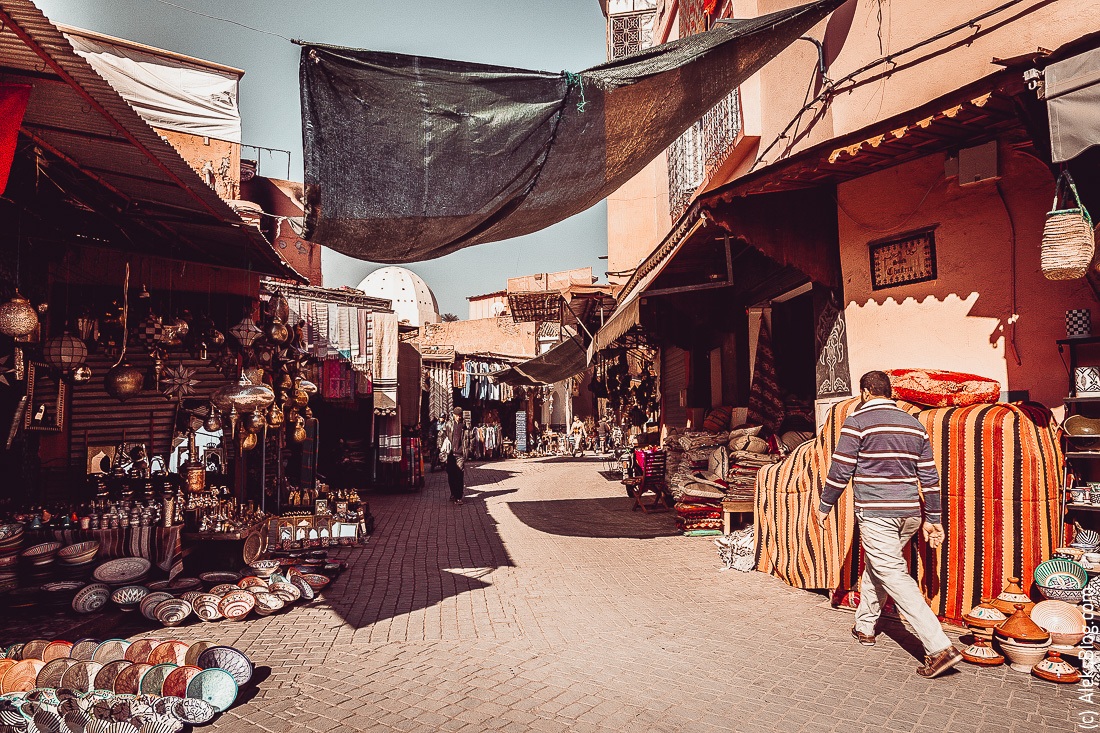
The most interesting part is, of course, the market. A huge bazaar where you can wander for hours. I love this. Since it was my first market in Morocco, it was especially fascinating—Fes was less interesting, and later I didn’t feel like seeing others.

As with all such markets, items are grouped by category—not all mixed together. Separate rows sell carpets, then leather bags, fabrics, pottery, etc.
What to Buy in Morocco
Morocco is the first country where I didn’t buy anything :).
- I intended to buy a bag, but all leather goods looked like they were made following fashion from 1756.
- Carpets and cushions are beautiful, but I don’t have a palace at home.
- Plates and dishes are cute, but how to carry them back?
- Babouches – colorful leather slippers with pointed ends, for men and women. Look good in pictures, but feel awful in hand. Best as a gift.
- Djellaba – traditional Berber robes with a hood, usually made of thick, warm fabric. I tried a few on but realized I wouldn’t wear them outside Morocco, and my closet isn’t endless. Only buy as a gift.
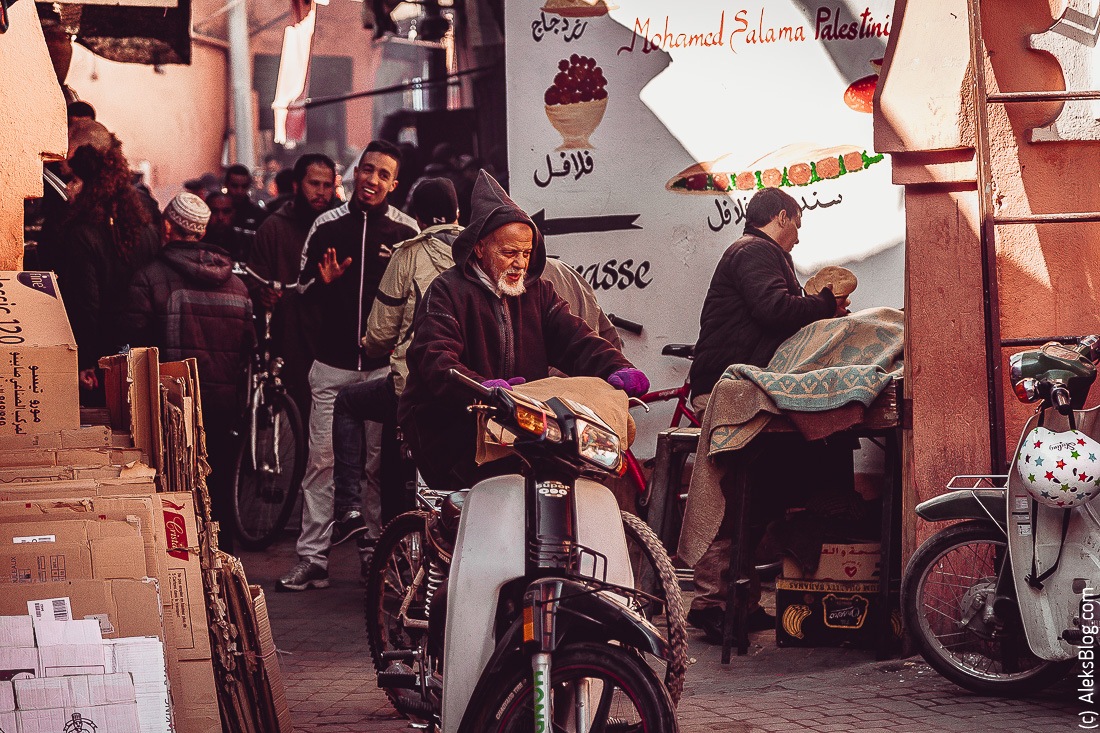
If you plan to shop, Marrakech is the best place—selection is bigger than in Fes, and markets in other cities are much smaller. In Tangier, for example, you won’t find as many djellabas.
The most interesting thing at the Marrakech market is watching the locals.


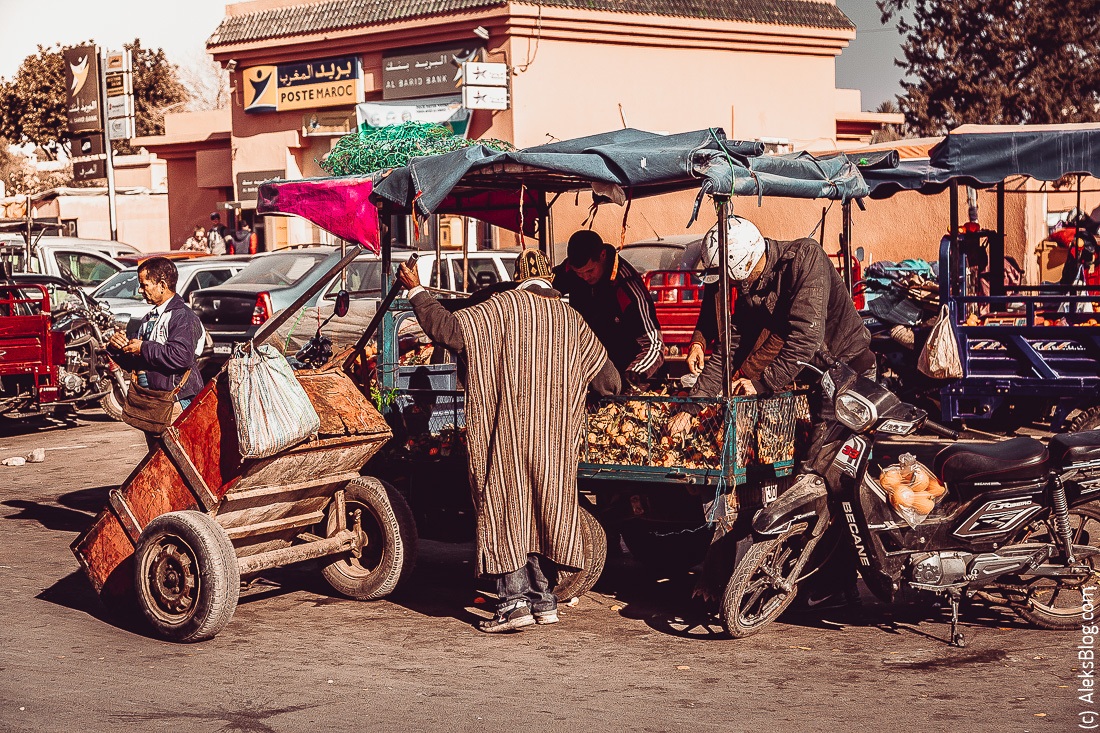
We exited the medina unnoticed; the surroundings are interesting too. We decided to snack on mandarins—a vendor gave us 2 kg for 5 dirhams. How they sell them to locals, I never figured out. For tourists, the price varies. And, of course, we bought some spices.
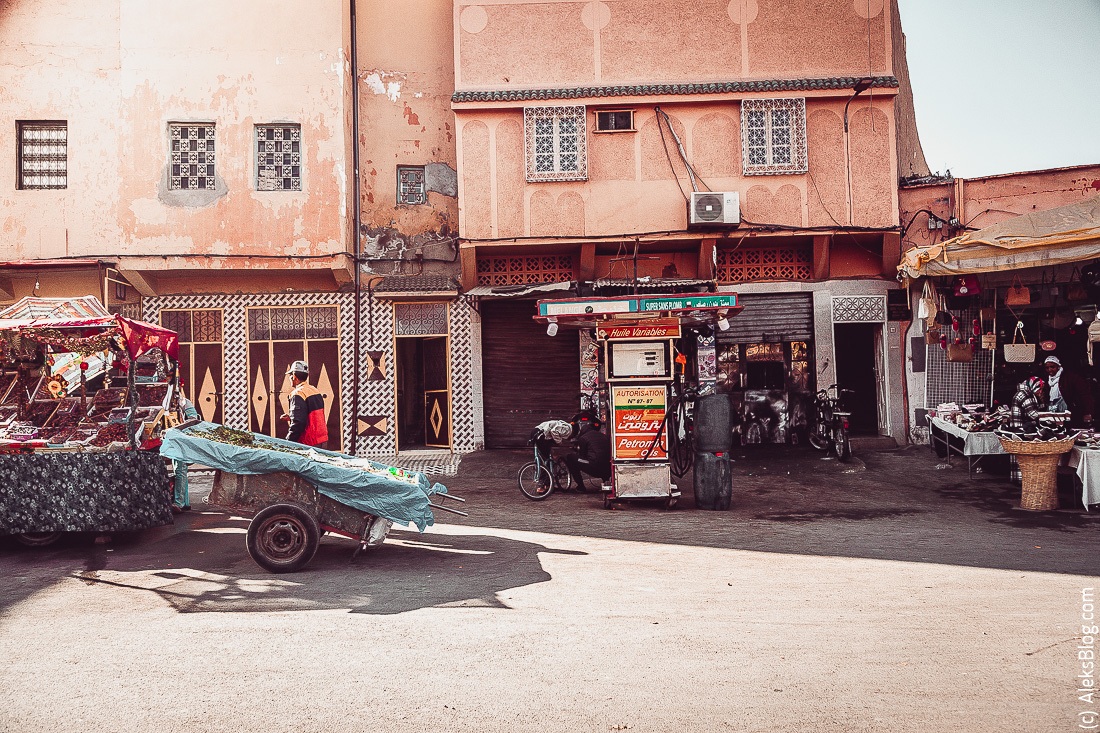
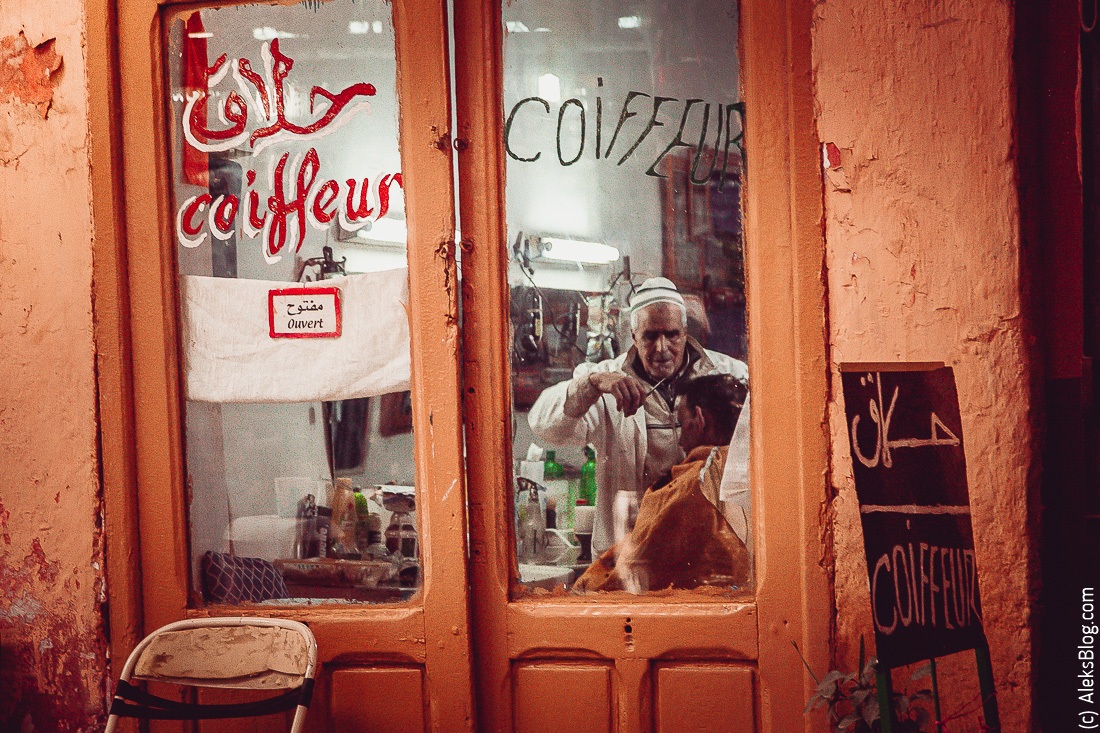
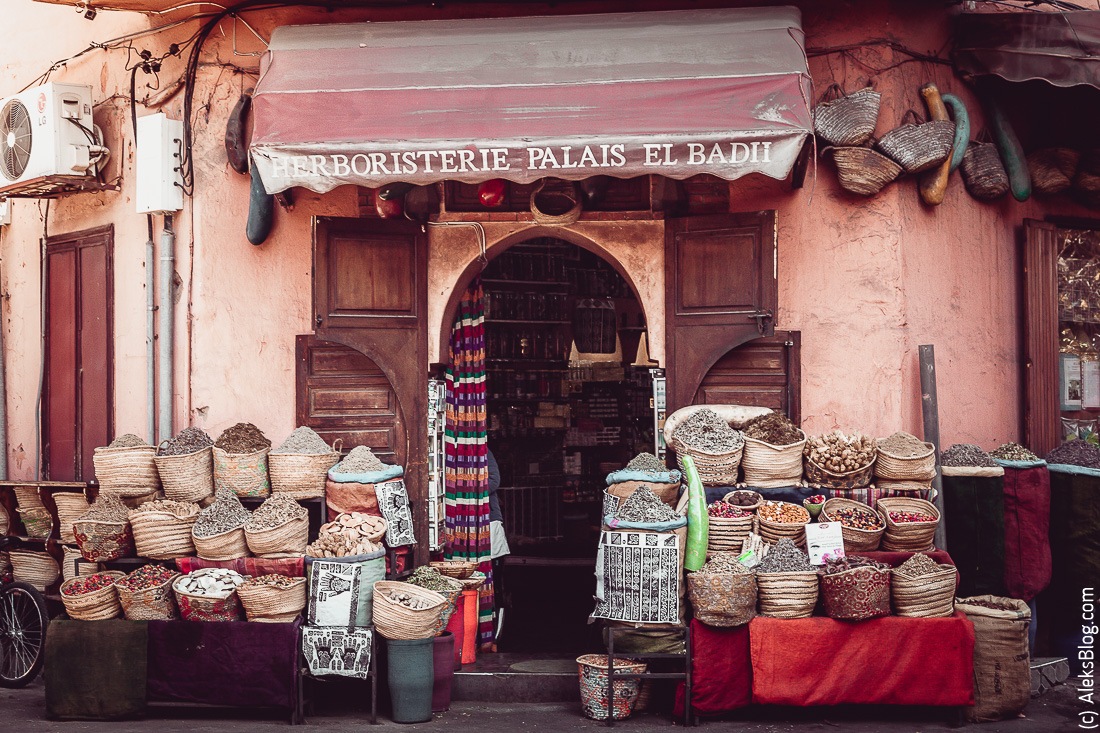
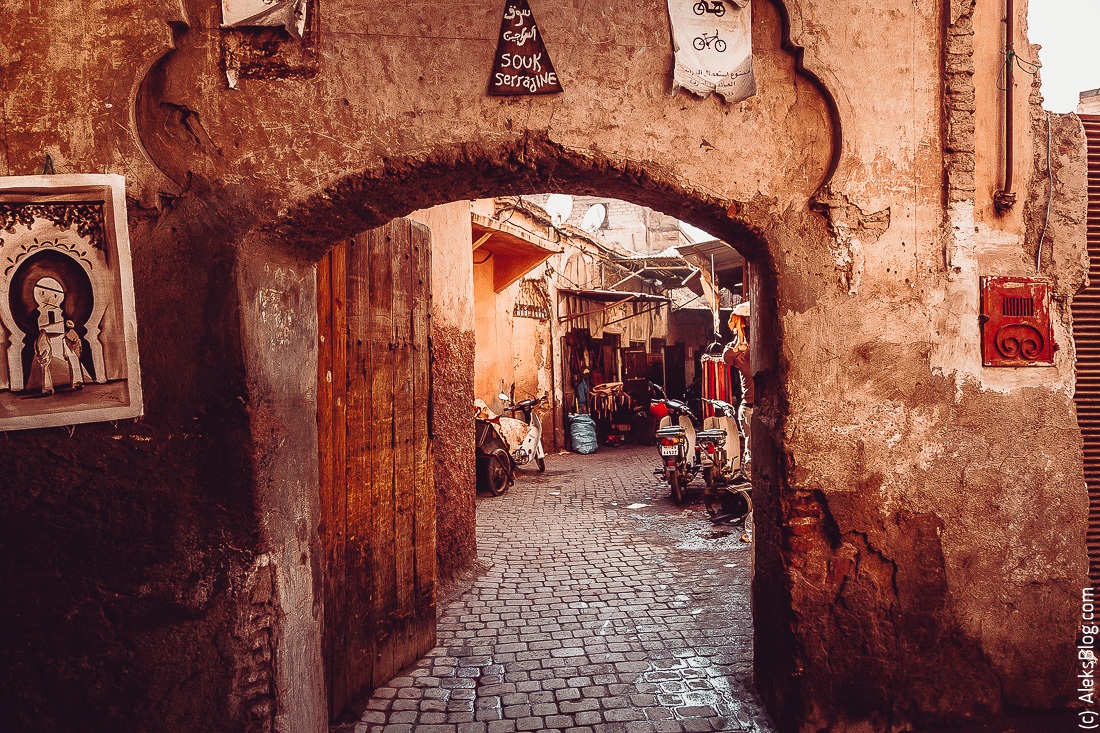
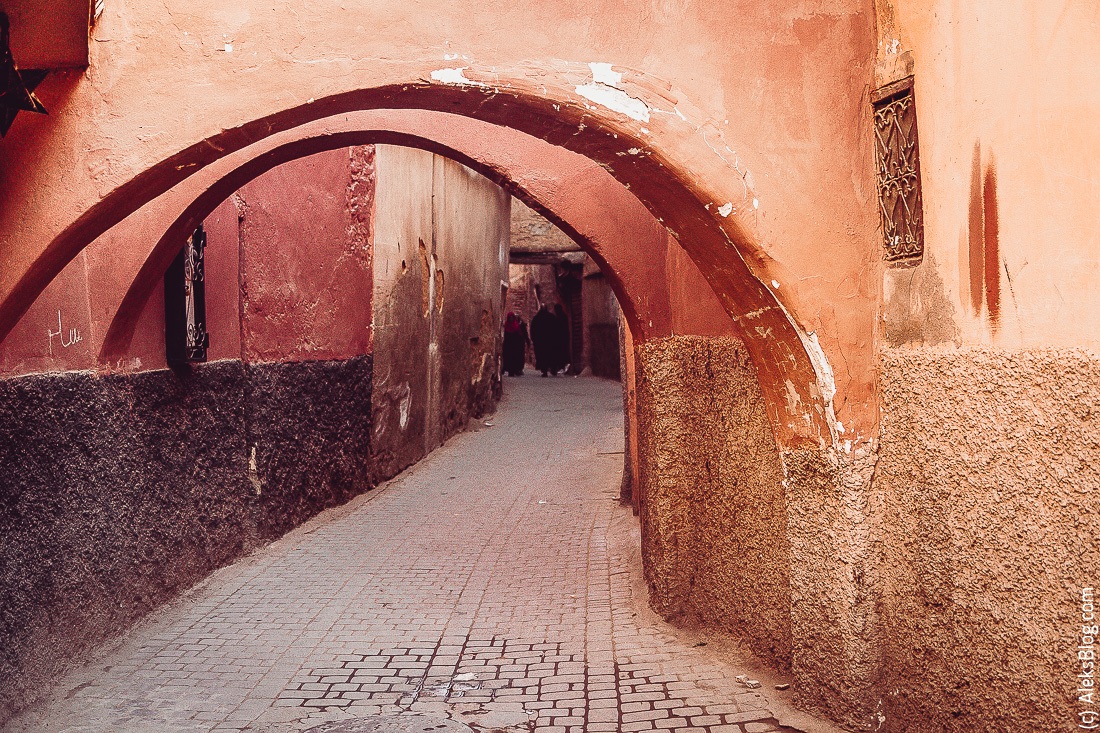
We wandered back through the narrow alleys of the medina. Local teenagers started trying their “scam” routine: “Where are you going? There’s nothing there, the market’s the other way, I’m your guide now.” They were promptly rejected, but followed us for another 50 meters, mumbling, before realizing they wouldn’t get paid and leaving.
After a while, I noticed some local had been following us. We stopped, and he did the usual spying thing from a distance like in a bad spy movie. His intentions were unclear. I didn’t want to play along, so I approached him, photographed him on my phone, and pretended to make a call. The Moroccan immediately ran off. After some more wandering in the maze of streets, we turned on navigation and returned to the market and the square.
Where to Eat in Marrakech
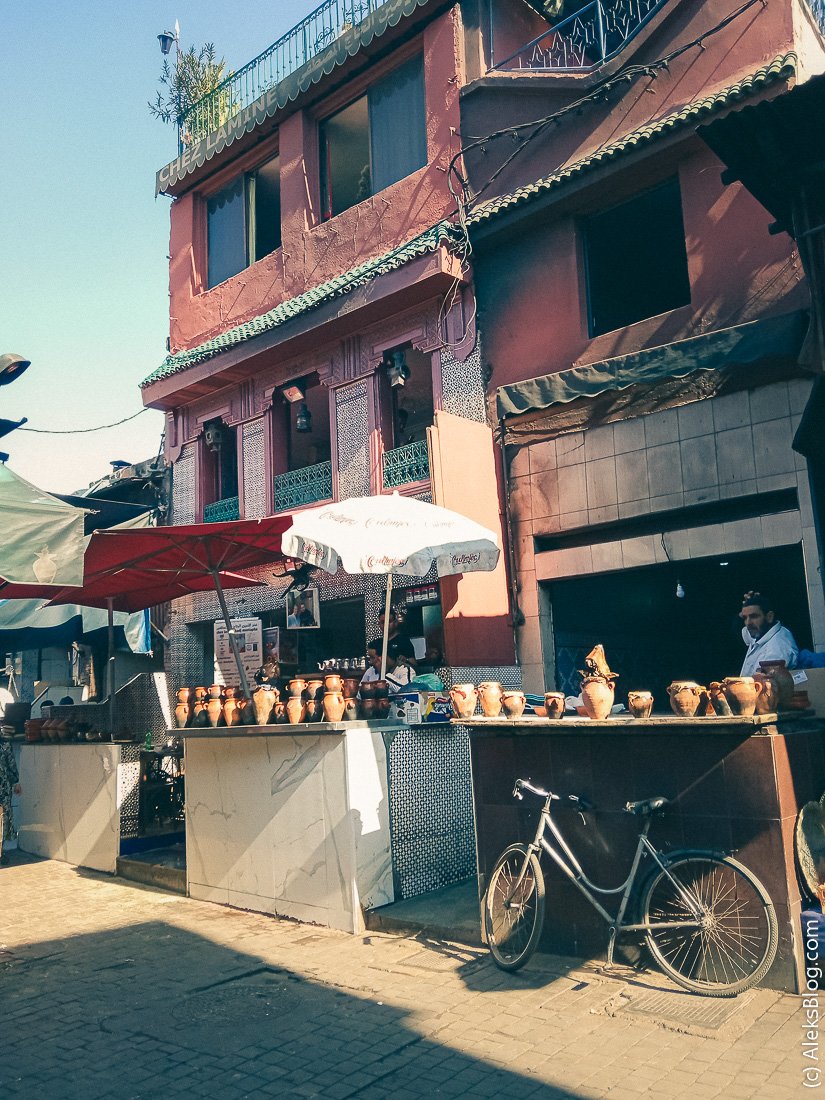
By chance, we found a really great restaurant. We went there twice. It turned out to be the tastiest place of our entire trip in Morocco!

Chez Lamine Hadj Mustapha
No menu, staff don’t speak English, but it’s very simple. Main dishes include tanjia, minced meat, and sheep heads. Everyone eats them. For starters, there are olives.
All food is displayed at the entrance. You can point at the tanjia pots or at tables where locals are sitting and show the staff what you want. The staff is friendly and will guide you.
Chez Lamine Hadj Mustapha has four floors; if there’s no space on the first floor, go up. The restroom is on the third floor.
Tanjia is served everywhere in Morocco, but at Chez Lamine, it’s a different experience. Meat is placed in a clay pot with spices, salt, olive oil, herbs, filled with water, and cooked for 8 hours.
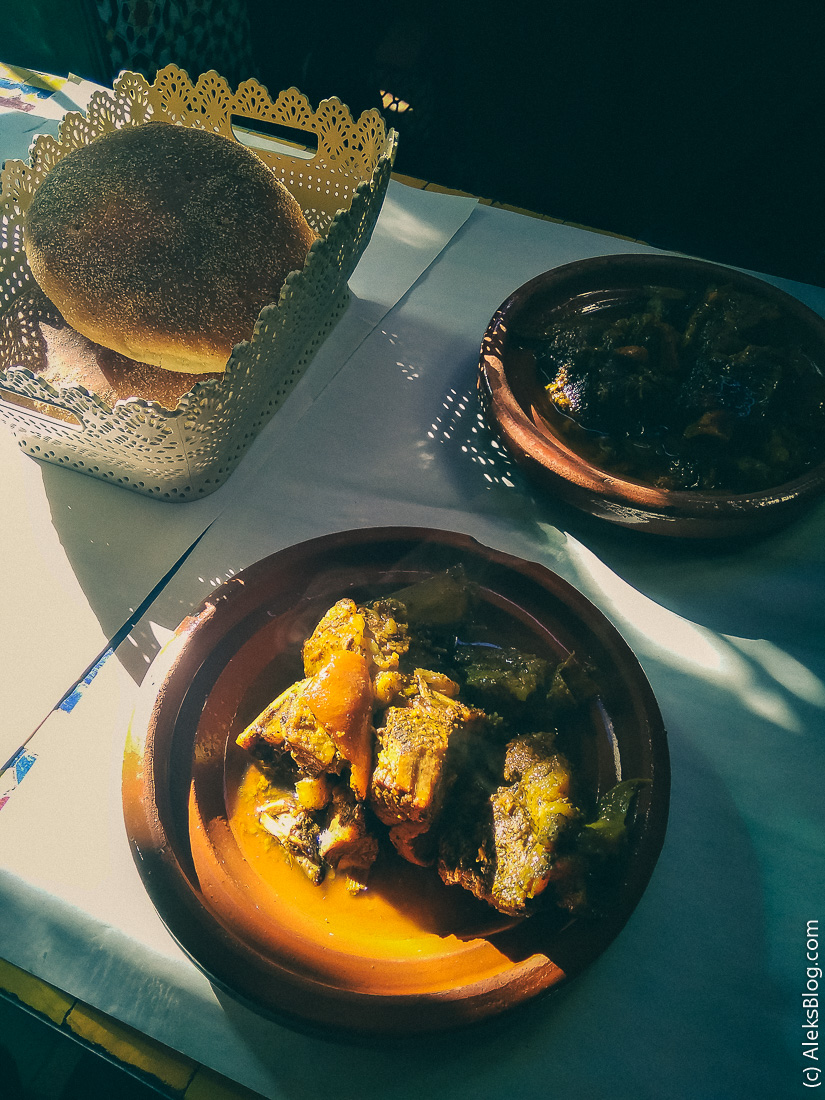
The meat comes out incredibly tender and juicy—it melts in your mouth. Dip bread in the sauce—om-nom-nom, delicious!

Jemaa el-Fnaa in the Evening
Returning to the square: empty in the morning, by evening it’s filled with food stalls. This happens every day, not just Fridays or Saturdays.
Under hundreds of tents, food is grilled and prepared until almost morning. But don’t rush to eat—this is Morocco, where they try to trick tourists at every step.

Each stall has its own touts, who may grab your hands to pull you inside. Avoid “free drink” offers—they only apply with large orders. Once seated, small snacks like olives and sauce are brought for an extra charge. Bread on the table also costs extra. Check the menu for prices. If you don’t eat, insist that it’s removed. Couscous, tagine, and other dishes aren’t great here. Cooking takes a long time, and there’s usually a mandatory service fee.
Try something unusual — snails, sheep heads, or sweets. For a proper meal, it’s better to eat at a regular restaurant. Or treat this as an entertaining attraction.

All the action in Marrakech begins in the evening around the food tents. Every day, locals perform small street shows: fortune-telling, spirit sessions, shell games, and more.
Crowds gather around the first “show,” and as night falls, more appear across the square.

Understand that everything is meant to make money. If a group in traditional costumes is singing and you want to record them, you must pay. No exceptions. Water sellers in traditional clothing may offer photos for 5 dirhams—then the next photo costs 100. Even selfies can trigger complaints. So either don’t provoke or be ready to pay.
Always have small change—keep 1-dirham coins in your pocket. People will bother you near various shows; don’t be stingy 😉 But don’t pay water carriers!

The best viewpoint is the second floor of Le Grand Balcon, where we sat. To get in, everyone must buy mint tea, café noir, or a soda for about 50 dirhams.
Alternatively, you can dine at Argana Restaurant, near the tower. It’s known for the tragic 2011 incident when a terrorist left a guitar with explosives inside. Seventeen people died.

But don’t linger too long—the street performers start gathering below!

One full day in Marrakech is optimal.
On the second day, you can rent a car or take local tours to Ouzoud Falls, or the most popular destination—the Merzouga Desert (3-days trip).
None of that particularly interested me — I’ve seen waterfalls and deserts before. Instead, I chose something closer to Marrakech: the Agafay Desert. I booked a tour that included transfer from hotel, a short camel ride, dinner under the open sky, and, once it got completely dark, traditional Berber songs and dances around the fire. It was a great way to experience the Moroccan atmosphere without a long journey.
So the next stop was Fes!