Why Tangier Stole My Heart

I had planned to spend half a day in Tangier. On all forums, I was advised to either skip it entirely or, at most, spend a couple of hours there and leave, because there’s nothing to do.
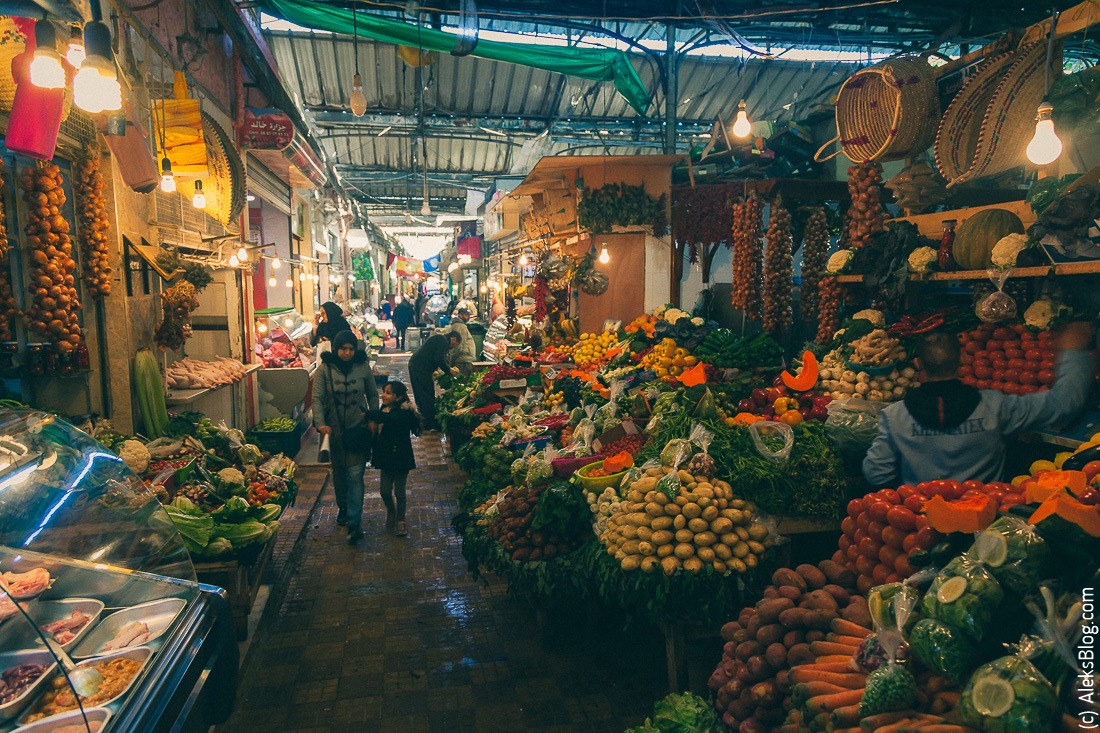
People come to Morocco for the eastern charm of bazaars, for the winding alleys of the Medina, endless beggars and street vendors, djellabas and grandmothers, thousands of identical dreadful leather goods, donkeys loaded with goods, and other postcard views.
But this is not about Tangier. Perhaps that’s why many are disappointed by the city. They expect to see another Marrakech or Fez, but here it’s completely different, not even Morocco at all.
I had the opposite experience. Tangier enchanted me incredibly, and I will definitely return.

How to Get There
I’ve lost count of how many times I’ve traveled on Moroccan trains. But this was definitely my first time on the high-speed Al Boraq. At 300 km/h, we reached Tangier in just over an hour and a half.
- All you need to know about transport in Morocco
- If you need a car while exploring Morocco, LocalRent is the service I personally trust.
By the way, Tangier can be an excellent starting point for a trip around Morocco. The city has an airport served by Ryanair from various European cities.
Only 15 km of the Strait of Gibraltar separates Tarifa – the southernmost point of Spain – from Tangier. There is ferry service between these cities. In just an hour, you can be on another continent! This is especially convenient for those vacationing in Malaga. You can rent a car, drive 160 km to Tarifa, enjoy the view of Gibraltar along the way, then take a one-hour ferry ride, and hello, Morocco!
Tickets and schedules can be found on frs.es. In addition to Tarifa, there are also ferries from Gibraltar and Algeciras, but I wouldn’t recommend them because they arrive at a port that’s 40 km from Tangier.
Where to Stay
The Continental Hotel — and only it! You must stay at the Continental Hotel.

Hotel Continental Tangier
Here are a couple of reasons why the Continental is the place to stay. The hotel itself is one of Tangier’s main attractions. It’s located on a cliff above the sea, just a few minutes’ walk from the Kasbah and Medina. Founded in 1870, it has hosted various celebrities: Edgar Degas, Tennessee Williams, Albert Camus, Paul Bowles, Winston Churchill. Bernardo Bertolucci filmed “The Sheltering Sky” with John Malkovich here.
The rooms are very simple, but (I don’t like this expression) they are steeped in history. In the Continental, this is truly the case. Add to that the stunning view—be sure to request a sea view room. Excellent Wi-Fi and hot water. The best breakfasts you can imagine in Moroccan hotels. A buffet with various delicious Moroccan treats.
update. from end 2025 closed for renovation. Well, as an alternative, you can stay at the Grand Hotel Villa de France. 5 star hotel in historic center. No less historic than the Continental. Later I’ll tell you who lived there.
After dropping off our things, we set out to explore the city.

Tangier’s History and Atmosphere
Tangier is one of the oldest cities in North Africa. Founded by the Phoenicians, it was later conquered by the Vandals, then the Byzantines and Visigoths, and came under Arab rule. For five centuries, it belonged to the Spanish, Portuguese, and English. After the country’s division and the establishment of the French protectorate in the south and the Spanish protectorate in the north of Morocco, in 1923, Tangier became an “international zone.”

For the next 30 years, the “gateway to Africa” was controlled by a dozen countries and became a haven for smugglers, spies, arms dealers, drug addicts, and prostitutes.
However, the special allure of Tangier can be described in one word: liberation. Liberation from foreign interference, official or otherwise. Your private life here belongs to you. Do absolutely everything you please. Of course, people will gossip about you. Tangier is a city of gossip, and everyone knows each other here. But that’s all. No official pressure, no public opinion will limit you. The policeman stands on the corner, hands behind his back, and his duties are reduced to one—to maintain order. That’s all he does. He is the complete opposite of what we imagine the police of police states to be and our own malicious consciousness. Tangier is one of the few remaining places in the world where—if you, of course, don’t continue to rob, kill, rape, in general, behave immaturely and antisocially—you can live as you wish.
/William Burroughs, “The Place of Dead Roads”

Imagine the cultural blend that resulted — Islam and Christianity, four languages — Spanish, French, Arabic, and even some English, bandits from all over the world, hippies, creative individuals, seekers of inspiration, easy money, and millionaires.

Barbara Hutton, the eccentric millionaire and heir to Woolworth, moved to Tangier and dreamed of turning Morocco into Monte Carlo. In 1936, Paul Bowles wrote the novel Under the Sky here. And William Burroughs wrote Interzone.
In 1956, Francis Bacon visited Burroughs and Allen Ginsberg with his new lover Peter Lacy.

As you can see, the beatniks (The Beat Generation — the literary bohemia of the 1940s–60s) settled here densely — Bowles, Burroughs, Kerouac, Thompson.

In 1912, the artist Henri Matisse worked on the Moroccan Triptych in room 35 of the Grand Hotel Villa de France.
Interestingly, when Henri Matisse first arrived in Tangier, he was greeted by a downpour that lasted an entire month. Matisse, in despair, locked in his hotel room, decided to start painting portraits of Moroccans and still lifes. Basket of Oranges was purchased for his collection by his friend Pablo Picasso.

In 1989, the owner of Forbes Publishing — Malcolm Forbes — threw the party of the decade in Tangier. For his 70th birthday, the richest and most influential people in America, the entire aristocratic elite, gathered in his palace.
In Tangier, you can be anyone. You can reinvent yourself, rewrite your story, change or deform yourself, indulge your ego, go with the flow, or simply start over.
/Josh Shoemake, Tangier: A Literary Guide for Travelers
Modern Hollywood loves Tangier — Jim Jarmusch filmed Only Lovers Left Alive, James Bond appeared in Spectre, and Matt Damon in The Bourne Ultimatum.
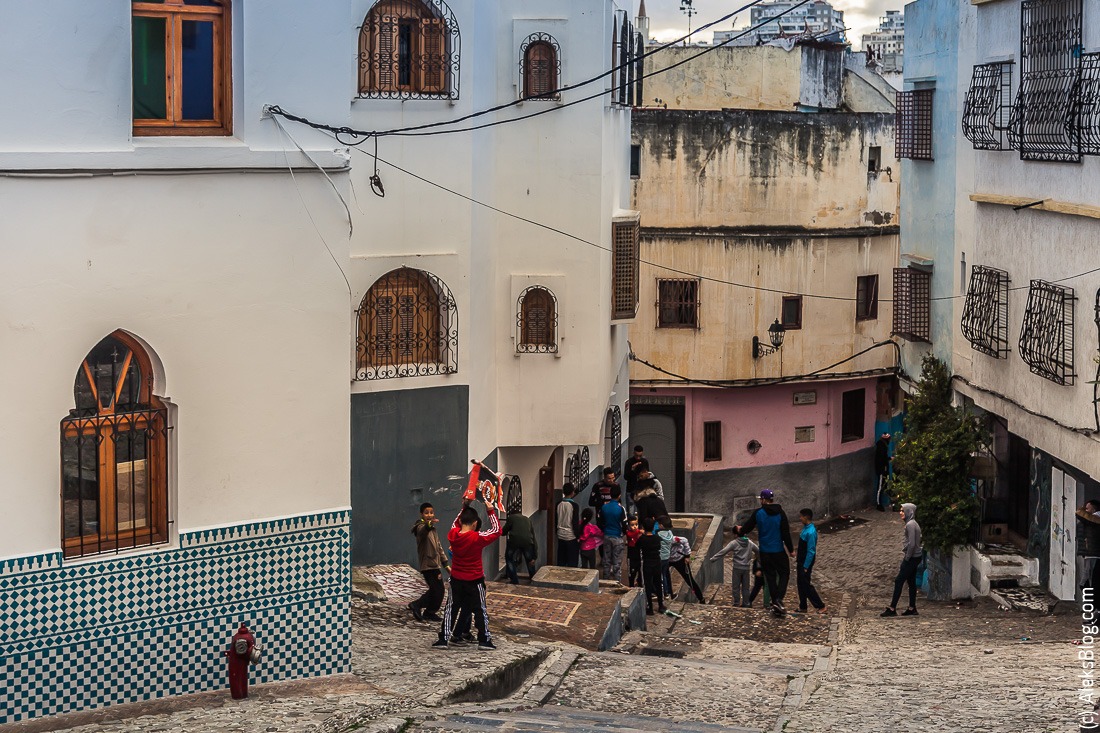


The old part of Tangier is on a hill; to get there from the promenade, you just need to walk uphill all the way, following the Kasbah (fortress).
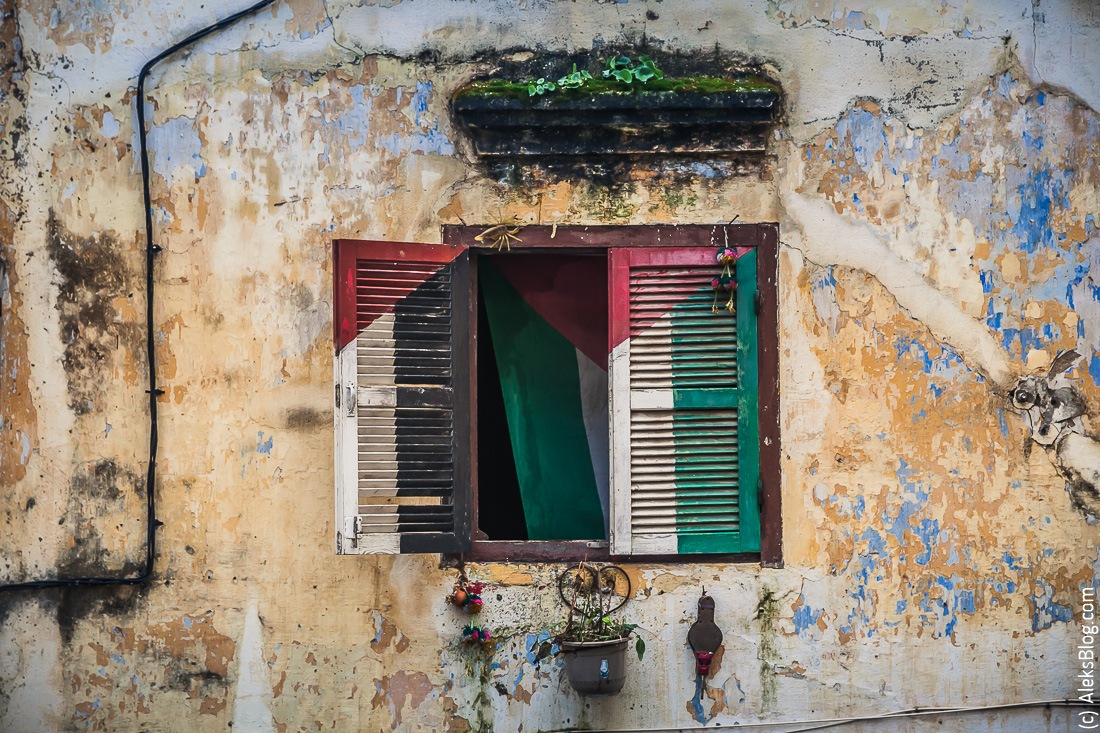
The Continental Hotel is nearby, so we take a slightly different route than the others. Already on approaching the Kasbah, you get the first dose of delight. Here there are no dirty walls or simply painted white and blue surfaces. Every courtyard is a piece of street art, and you want to dive into every alley to find a new masterpiece.


The narrow streets don’t allow you to step back to take in the whole picture, and it is very difficult to capture a frame.
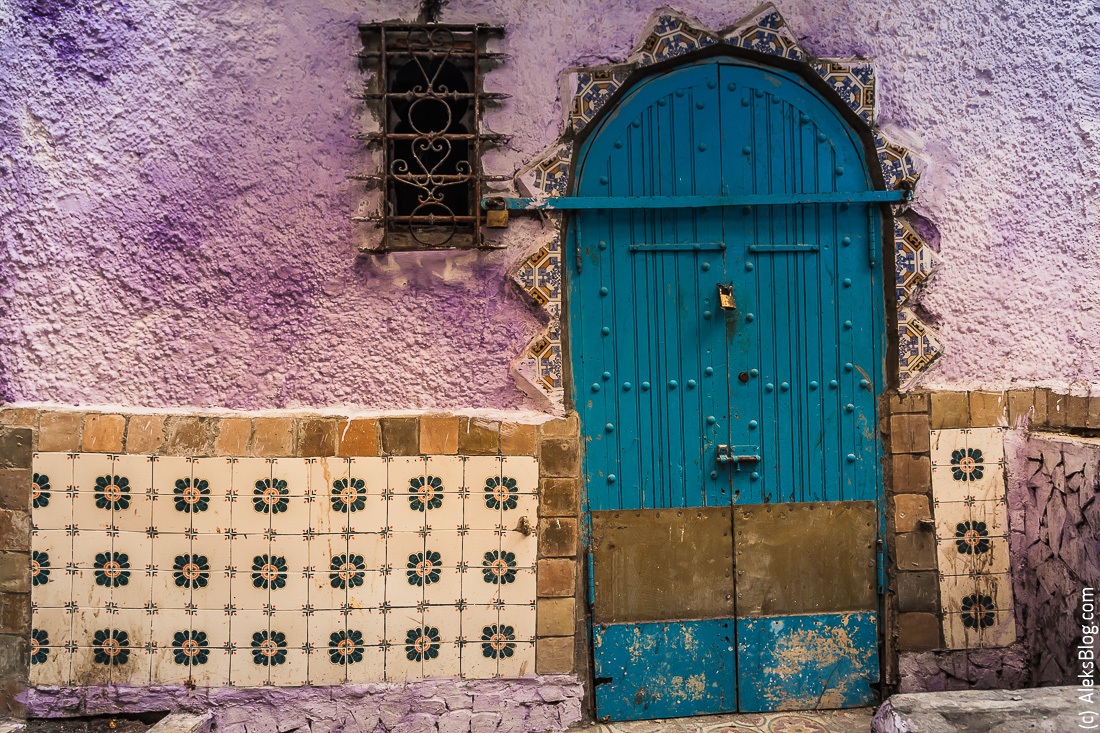

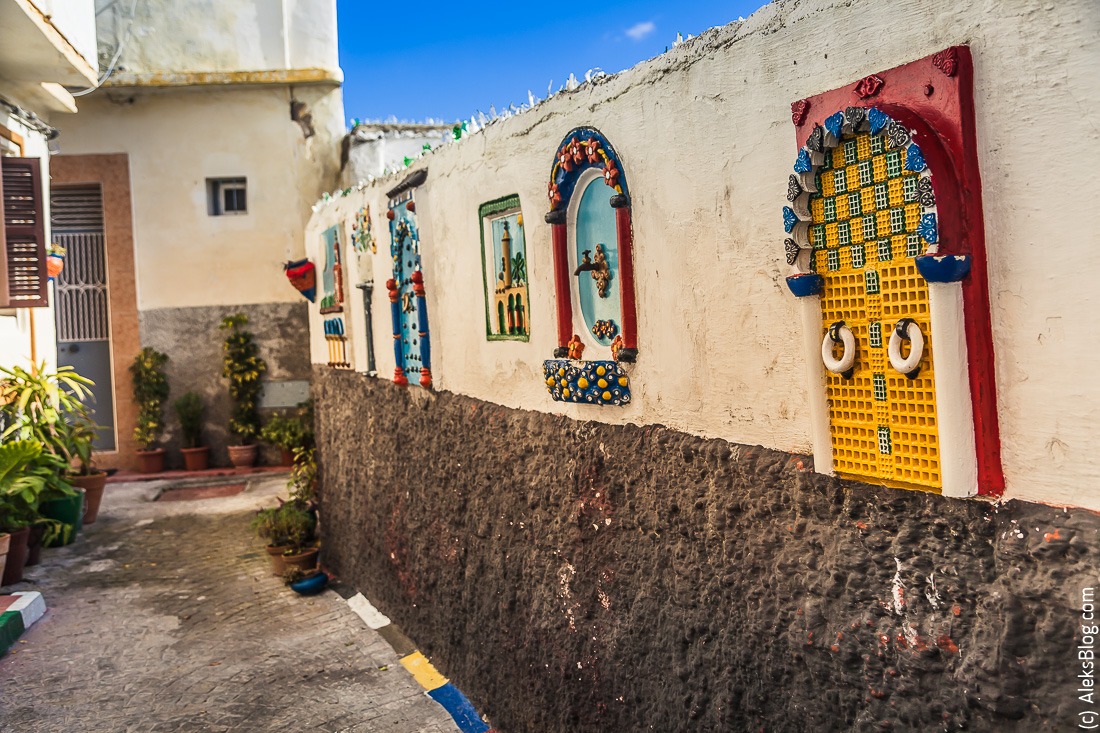
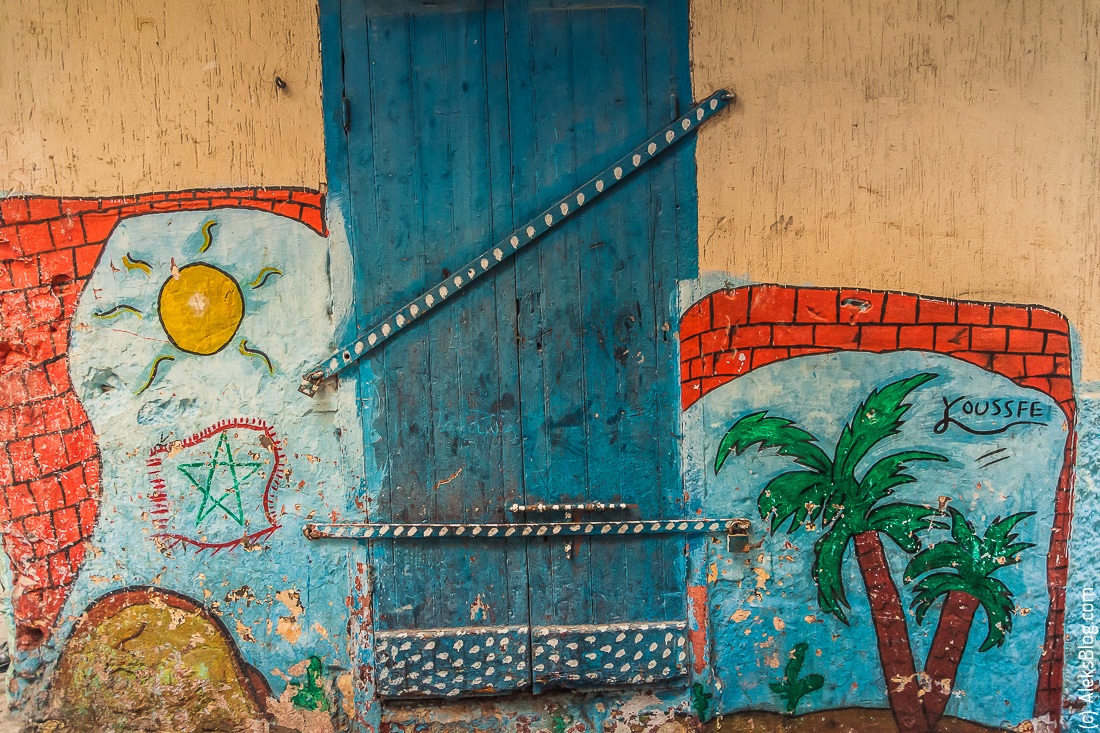
Cafe Baba is a small establishment in the Medina of Tangier, operating since 1943. Today, it mainly attracts young people. In the 1960s, Baba was frequented by the artistic bohemia, hippies, and adventurers from all over the world.
Surprisingly, over all these years, the most famous people from all over the world have visited this unassuming café. Kings and queens, rock musicians, the UN Secretary-General, and many others have been here. Throughout all these years, the café has been owned by a single person.

At the very top of the Kasbah, there are views of Gibraltar. In good weather, it is possible to see the other continent.


Along Rue de Kasbah and Rue d’Italie, we descend down to Grand Socco Square. The main mosque of Tangier is Sidi Bou Abib. The entrance is closed.

Nearby is the Rif Cinema.

On the site of the market used to be the forum of the Roman city Tingis.

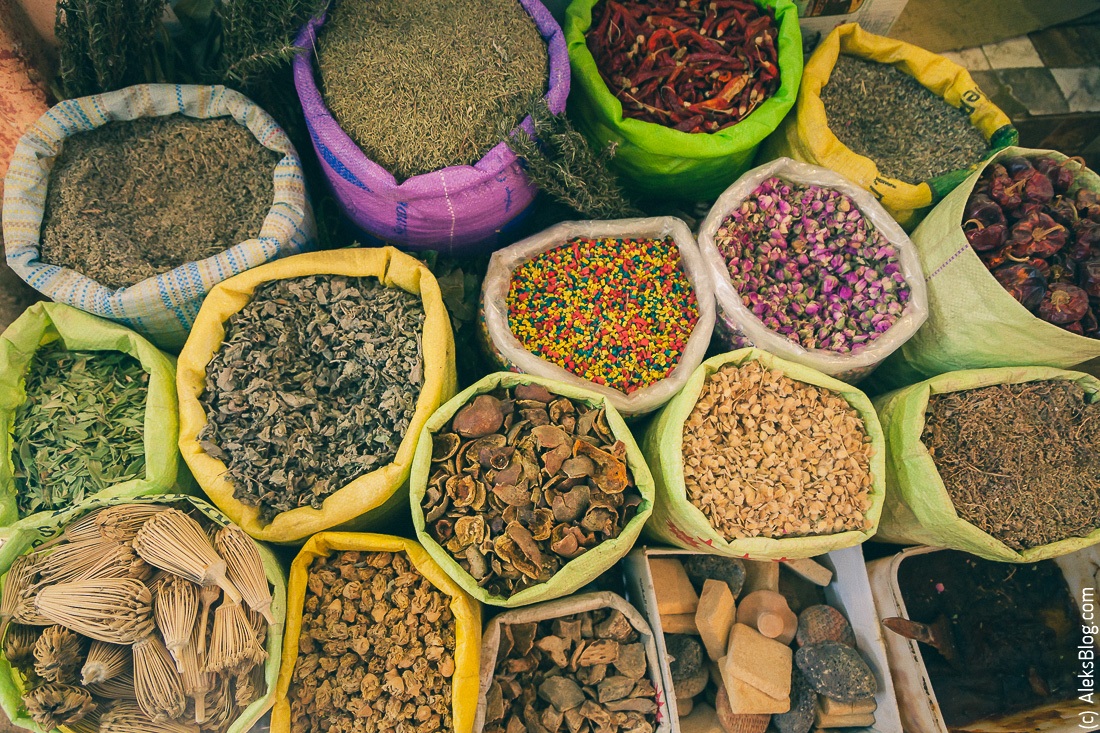

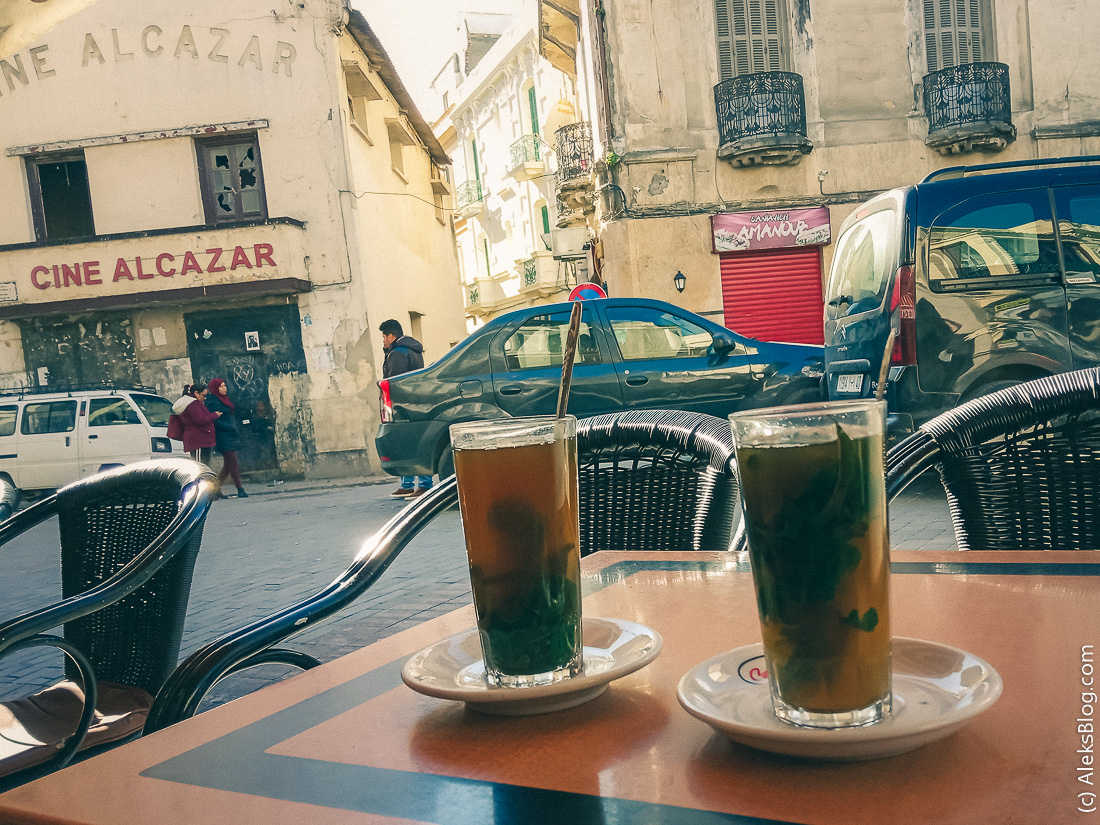
In Tangier, you don’t feel like running around the city between attractions — there aren’t any. The greatest pleasure comes from observing the life of the city while sitting with a glass of Moroccan mint tea in one of the countless cafés.
Every café has WiFi! Ask the waiter for the password along with your mint tea or café noir.

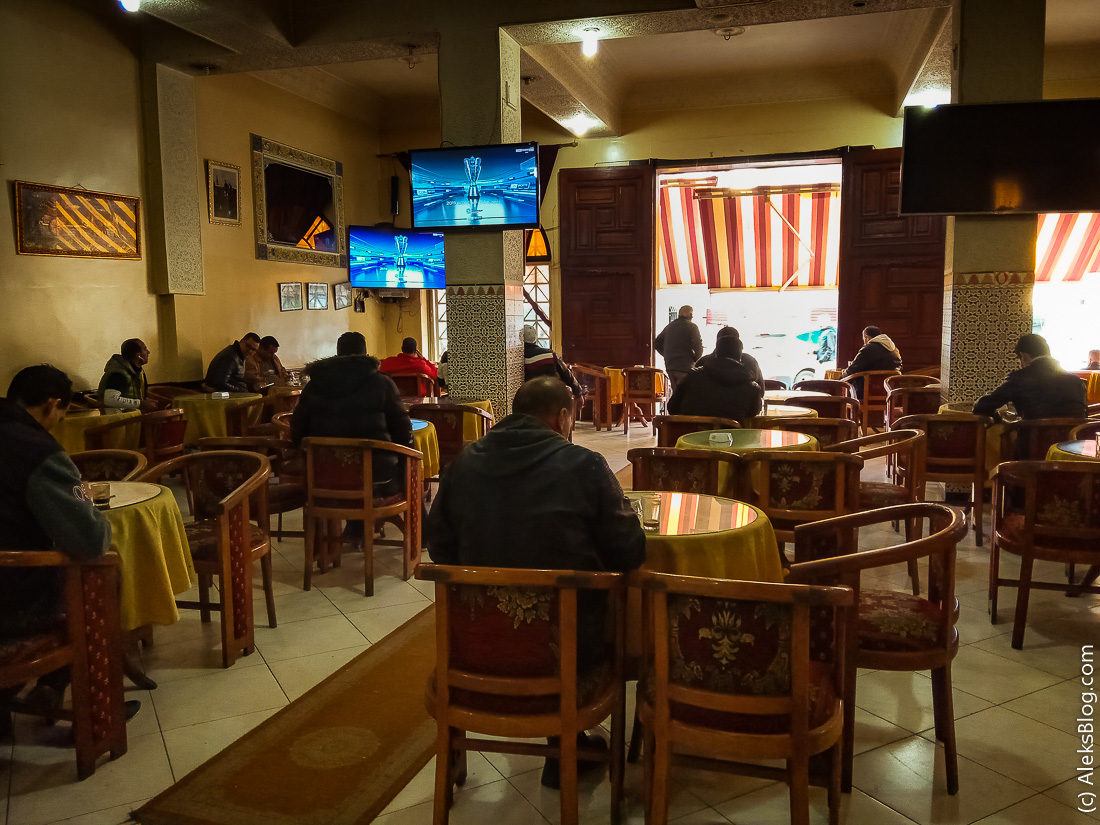
But not inside. Since I quit smoking, being in heavily smoked rooms is too much of a trial. And Moroccans smoke everywhere and a lot.
In the evening, you can have dinner right here on Grand Socco. As the sun sets, restaurants around the square start operating, quickly setting up tables, benches, and tents.
Compared to Marrakesh, the prices are quite reasonable, as evidenced by the many locals at neighboring tables.
If such authenticity doesn’t appeal to you, you can go for dinner to one of the modest family restaurants — there are plenty nearby.

Mark Twain couldn’t stand Tangier and left the next day. If you are like him, there are a couple of places not far from the city that I recommend:
- Cape Spartel — the extreme point of the African continent. Besides views of Gibraltar, you can visit the Hercules Cave. They say Zeus’s son rested there after his labors. Inside, there are charming grottos. 15 km from Tangier, you need to arrange with taxi drivers or rent a car.
- Tetouan — the “White City.” Nothing special, a small charming town, almost all casa blanca. Only an hour by bus from the Tanger Gare Routière. We planned to stay in Tangier for a couple of hours but ended up staying 2 days. After that, the journey continued to Essaouira.

We planned to stay in Tangier for a couple of hours but ended up staying 2 days. After that, the journey continued to Essaouira.
In Tangier, we experience the breath of sun-filled calm, silence, and living space. It captivates a person with its secret life, its incomprehensible language, extraordinarily expressive in its silent gestures. It seems that the stones breathe history and speak to us, that the city walls, gazing motionless into eternity, will endlessly recount the stories of past times.
/Konstantin von Barleuven, Galina Naumova, The Book of Knowledge: Conversations with the Great Thinkers of Our Time