Rabat in One Day

Most travelers unjustly skip Rabat, hurrying to get to Fez and Marrakesh. In my opinion, this is completely unnecessary. The absence of crowds of beggars, guides, and tourists, combined with a beautiful Kasbah and clean streets, make Rabat well worth a day of your time!

How to Get There and Where to Stay
Many begin their journey through Morocco from the capital’s international airport. Ryanair offers many flights to Rabat from various European cities, and you can check all flights to Morocco on Aviasale.
We arrived in Rabat by train from Fes. From the train station to our hotel in the Kasbah Oudayas area, there are no direct trams. Therefore, we took a taxi for 15 dirhams, which got us there in 7 minutes.
The hotel Lutece is very conveniently located. It’s a 5-minute walk to the Medina, and from there, another 10 minutes to the Kasbah Oudayas fortress. The rooms in the hotel are very modest, more like hospital wards—everything is white, with nothing on the walls. The bathroom is interestingly designed—with a sliding door and a small space, it felt like entering a wardrobe. On the plus side, the price is low, there’s Wi-Fi, nearby cafes and shops, and it’s close to attractions.

What to See in Rabat
It’s better to start from the top of the Kasbah Oudayas so you can descend rather than climb up.
Kasbah Oudayas Fortress
In the 12th century, Abd al-Mumin, the founder of the Almohad dynasty, built a fortress in the city, which he used for attacks on Andalusia. His warlike grandson, Ya’qub al-Mansur, turned Rabat into an impregnable fort, naming it “Ribat al-Fath” — “Victorious.”
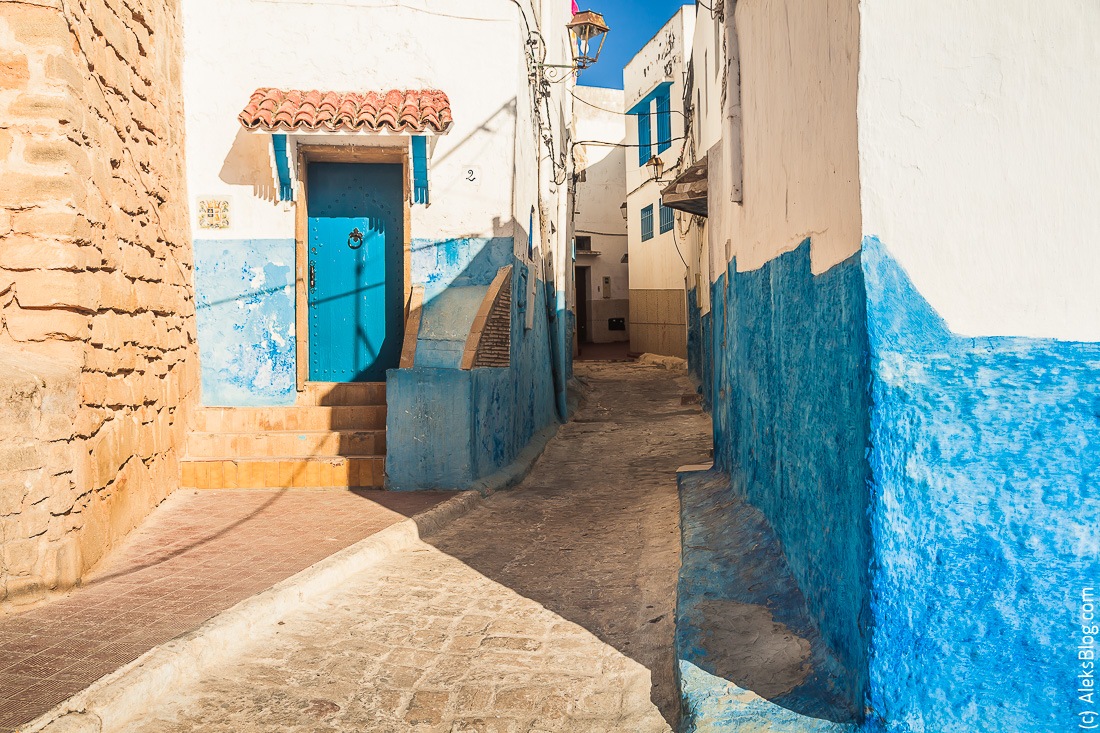
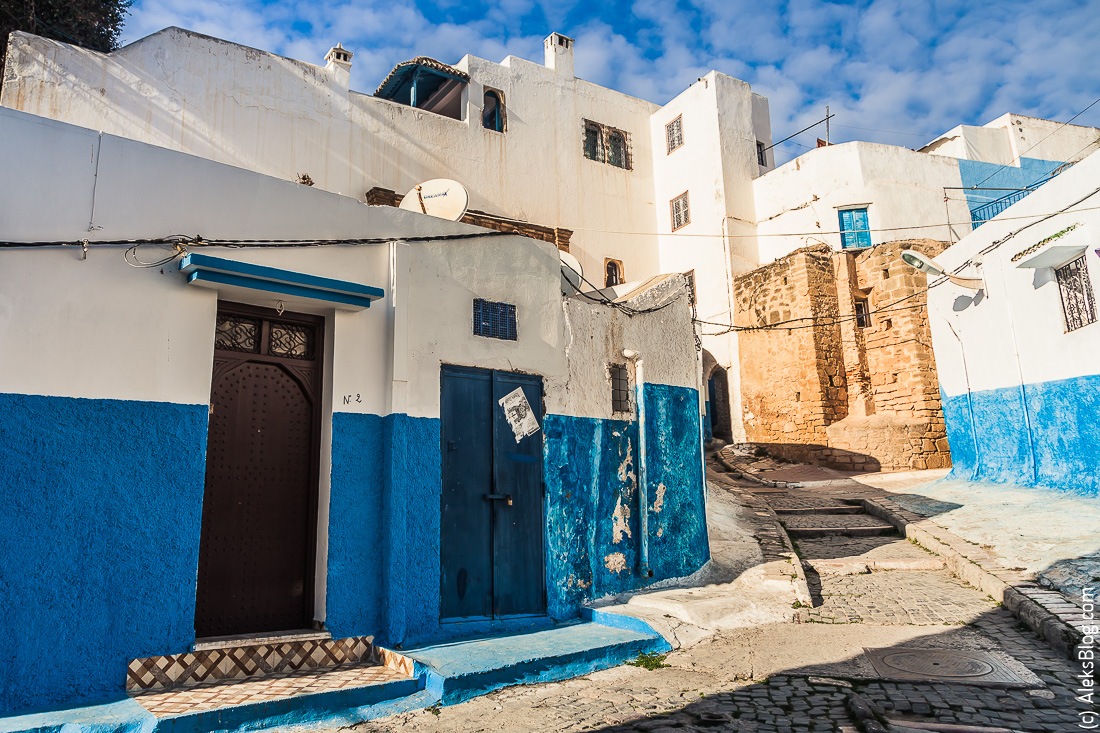
Entry to the Kasbah is free. The entire upper part of the Kasbah Oudayas consists of streets with very picturesque white-and-blue houses.
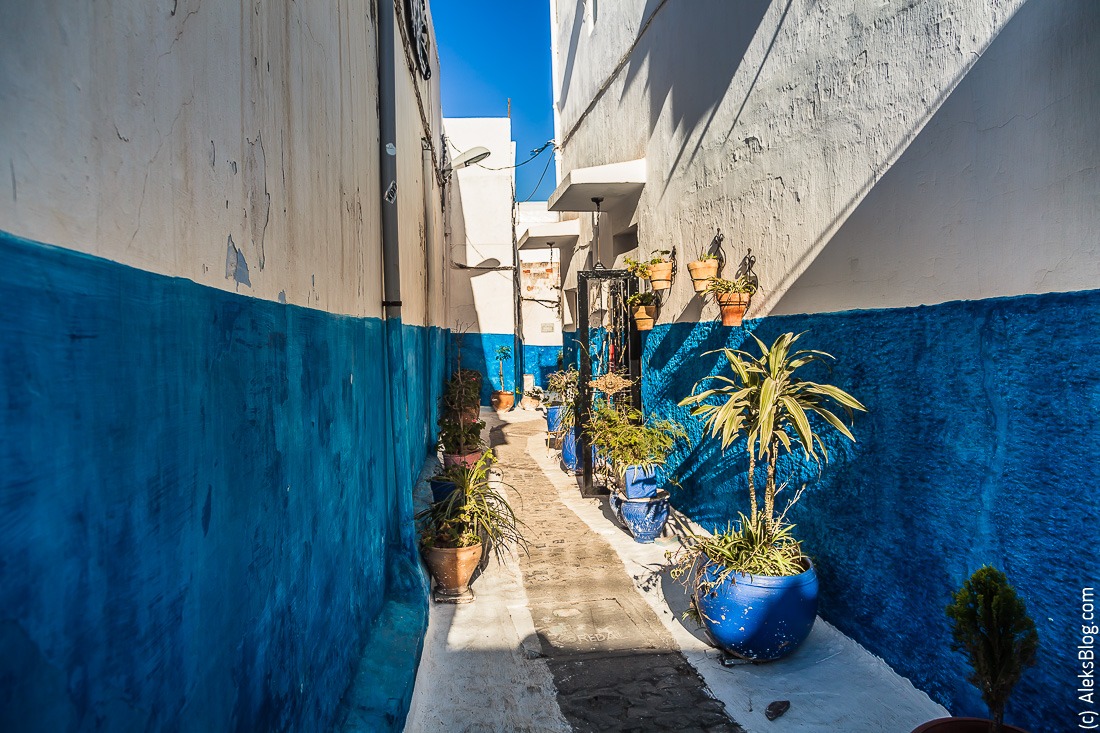
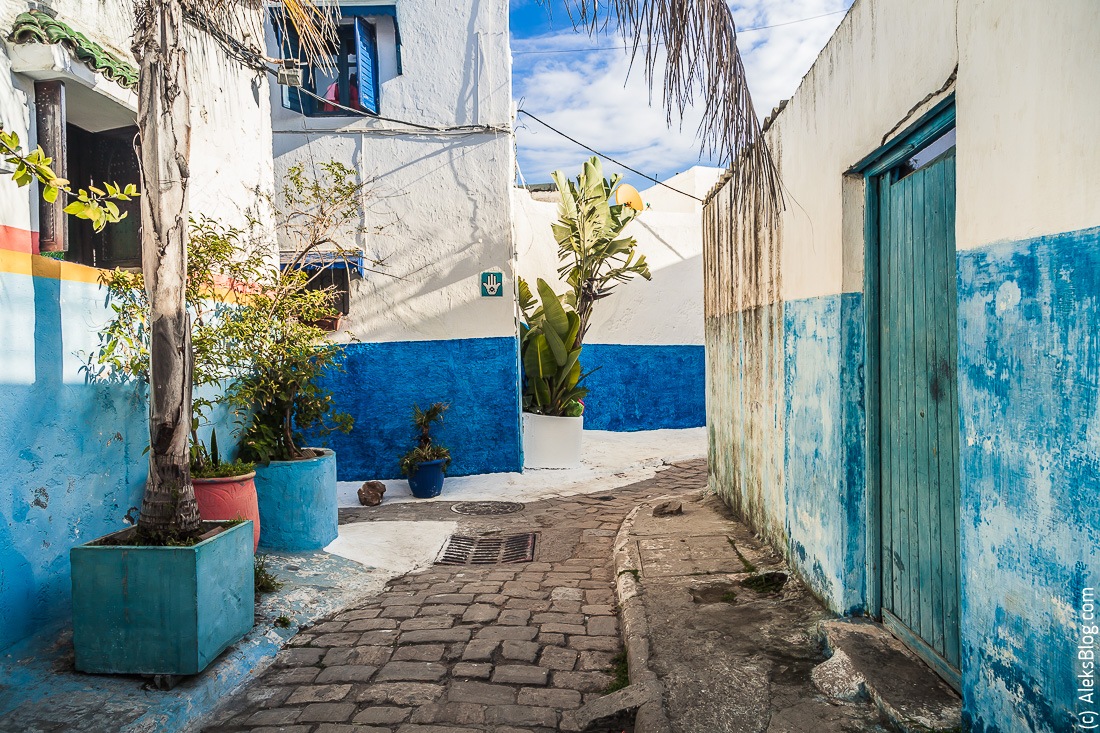
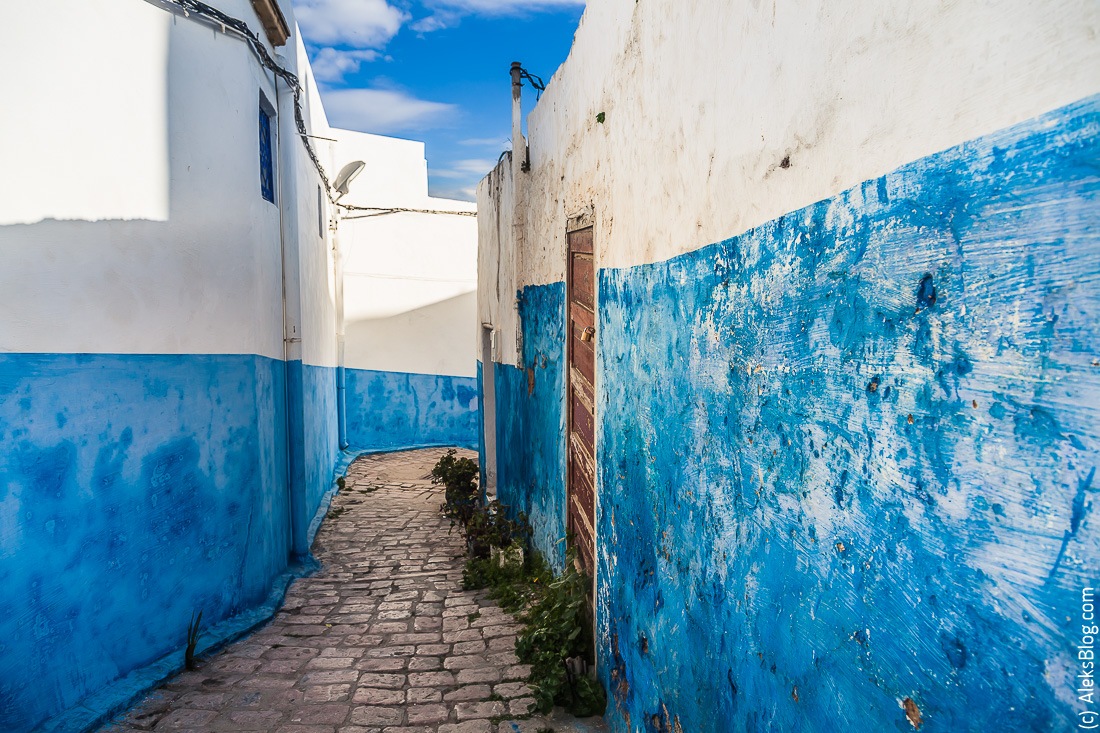
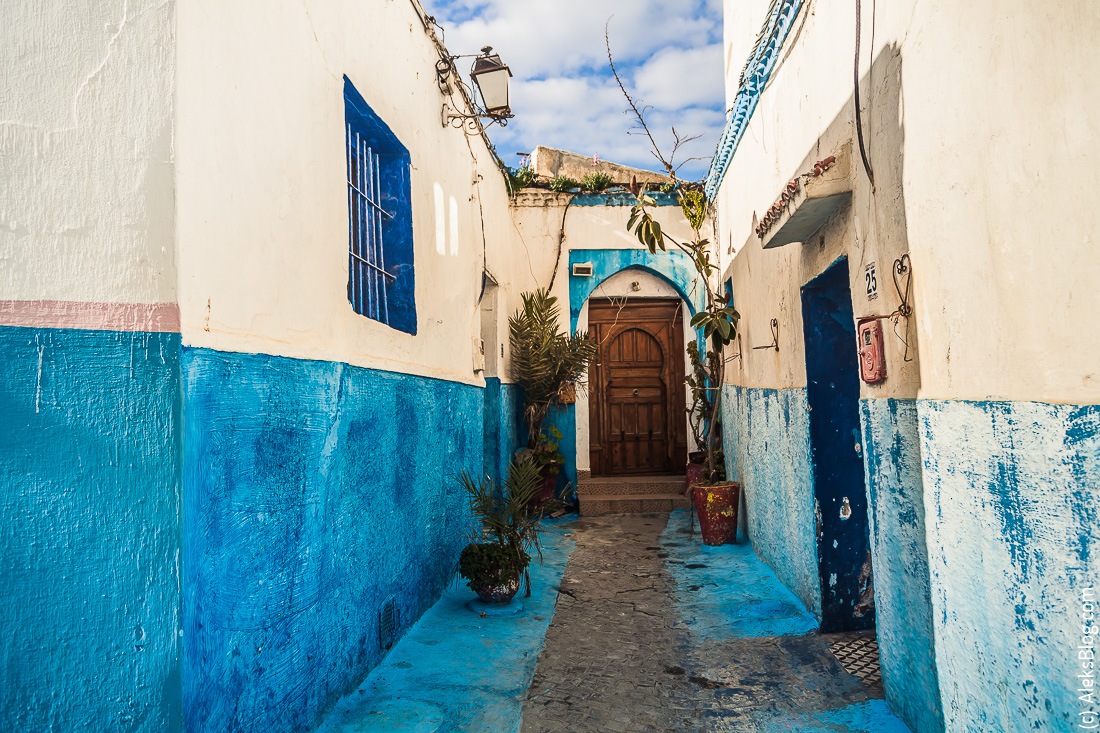
At the entrance, you might encounter a couple of “guides” offering to show you around the fortress, claiming you can get lost (ha-ha-ha). Or they might insist, saying “Kasbah Oudayas? Come, come, I am official guide,” and lead the way.
It’s impossible to get lost there. If they persistently follow you or go ahead, politely stop them and let them go. Do not speak to them.
- Morocco Without Worries – please read this post before going to Morocco.

A street leads through the entire Kasbah, called Jamaa, lined with souvenir shops. It ends at a beautiful observation platform — the Signal Platform.

From the observation platform, there’s a view of the Atlantic Ocean and Salé, which is considered a suburb of Rabat. You can get there by tram in just 1 km.
In the 16th century, Salé was the headquarters of the Moriscos, Moroccan pirates. In Salé, they established the Free Republic of Pirates and successfully plundered the galleons of the Spanish crown.

Descending, be sure to take a break with a cup of mint tea on a terrace with a magnificent view.

From the Kasbah Oudayas, walk along the waterfront and admire the stunning panoramic view of the fortress.


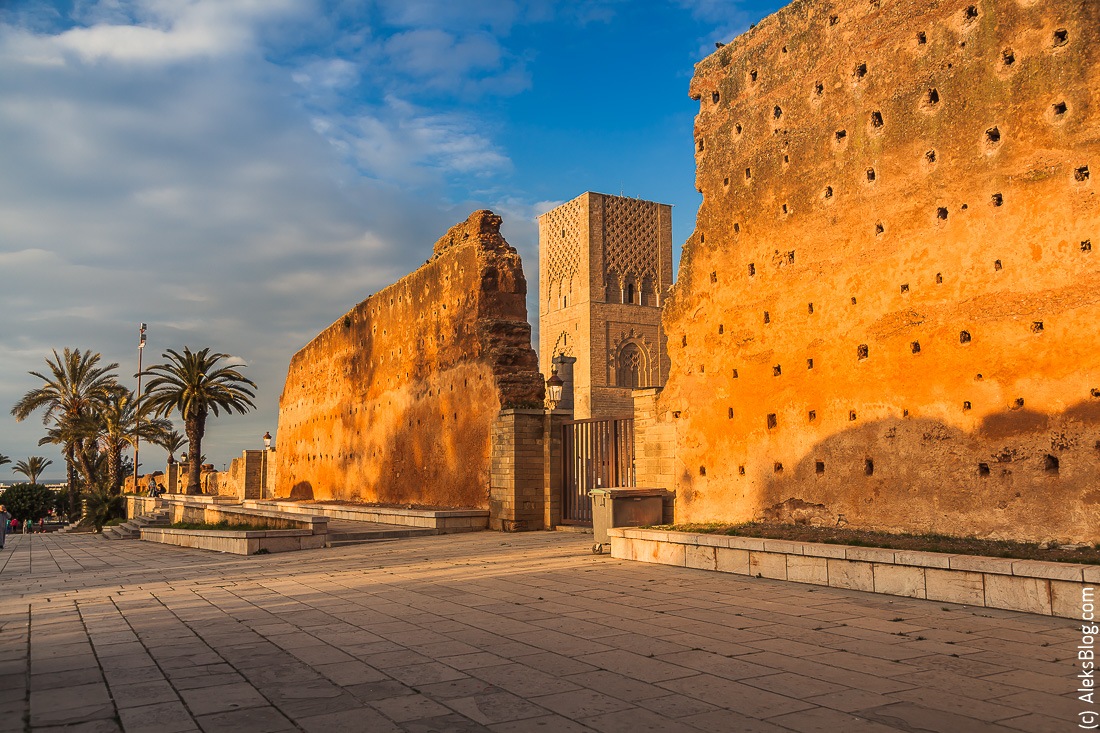
Hassan Minaret
Ya’qub al-Mansur wanted to build the most grandiose mosque in the world, so that all his troops could pray in it simultaneously.
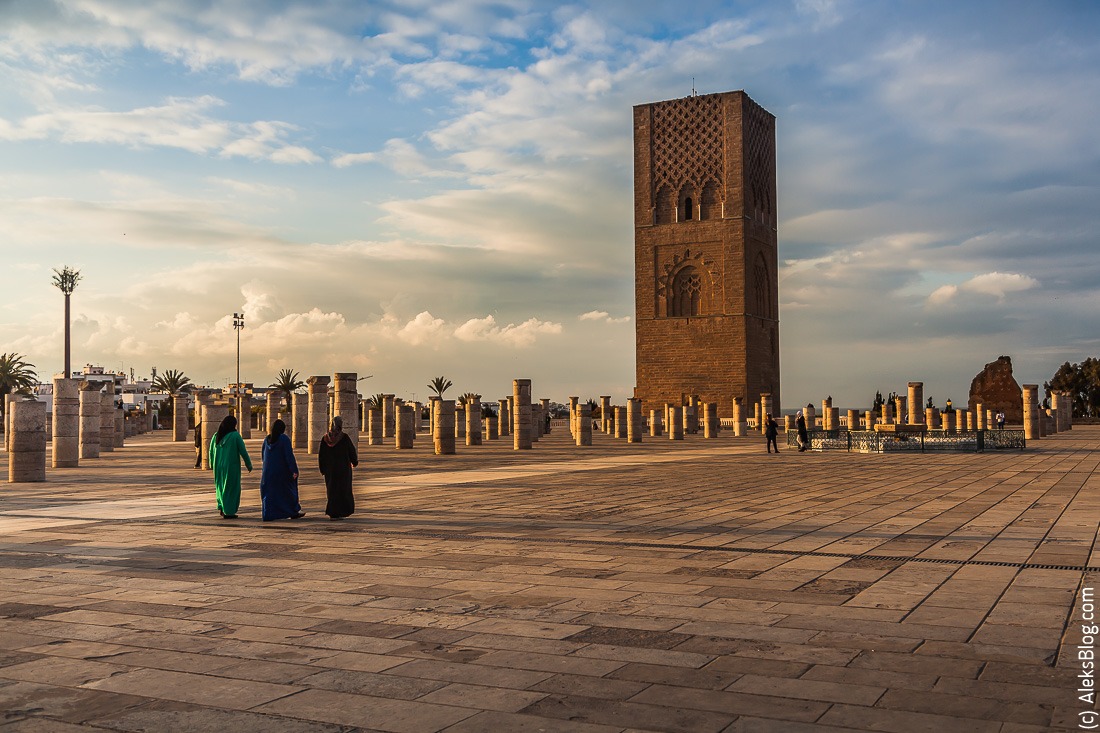
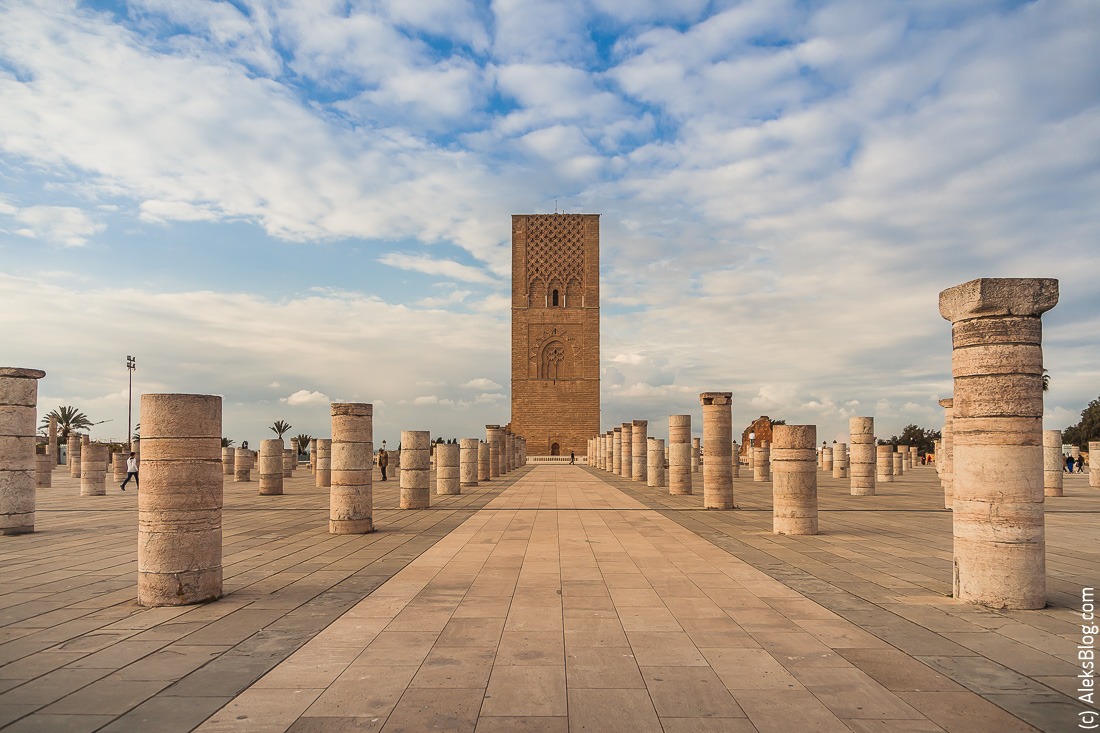
Construction was halted after Ya’qub al-Mansur’s death. By that time, the minaret had risen to 44 meters, and 360 columns had been erected to support the roof. In 1755, an earthquake destroyed much of the structure. Only the minaret remains.
Entry to the site is free. The gates are closed at night.
Mausoleum of Mohammed V
Next to the Hassan minaret is the mausoleum of Mohammed V.
Mohammed V was the King of Morocco until 1961. His name was given to the airport in Casablanca and the largest football stadium in Morocco.

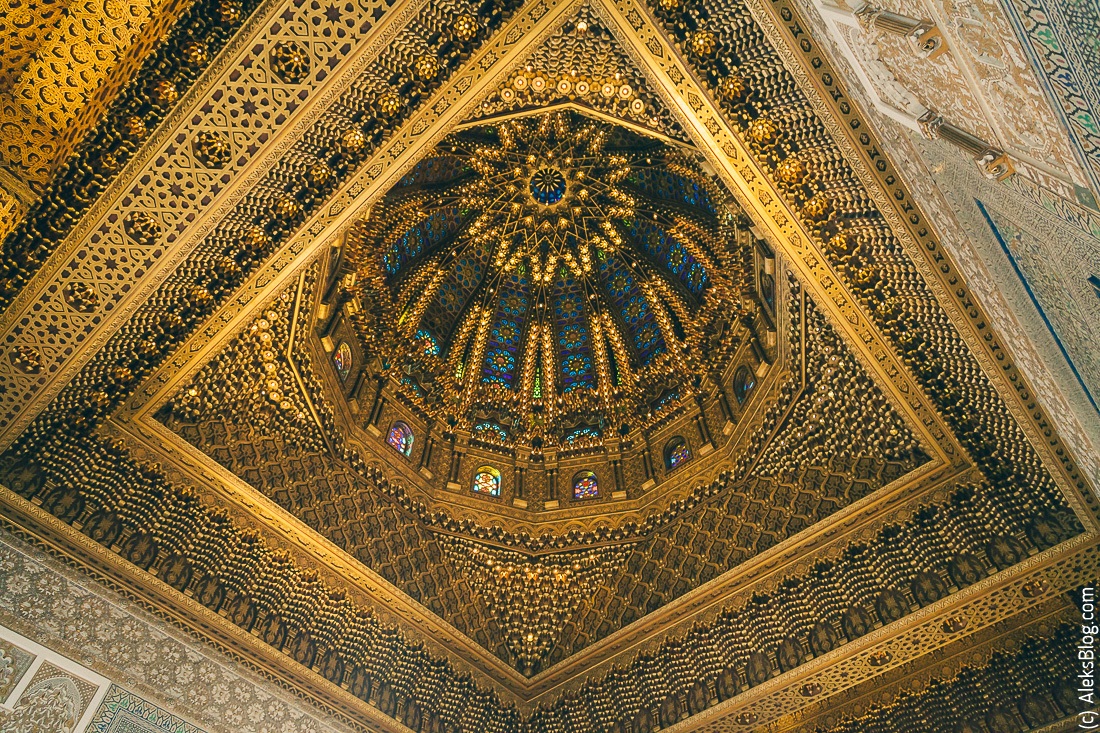
Construction of the mausoleum took 10 years. Its prototype was Napoleon’s tomb in Paris. White marble from Italy was used for its construction. Inside, under the dome, there is a gallery that runs around the entire mausoleum, which is open to everyone. From above, you can view the sarcophagus.
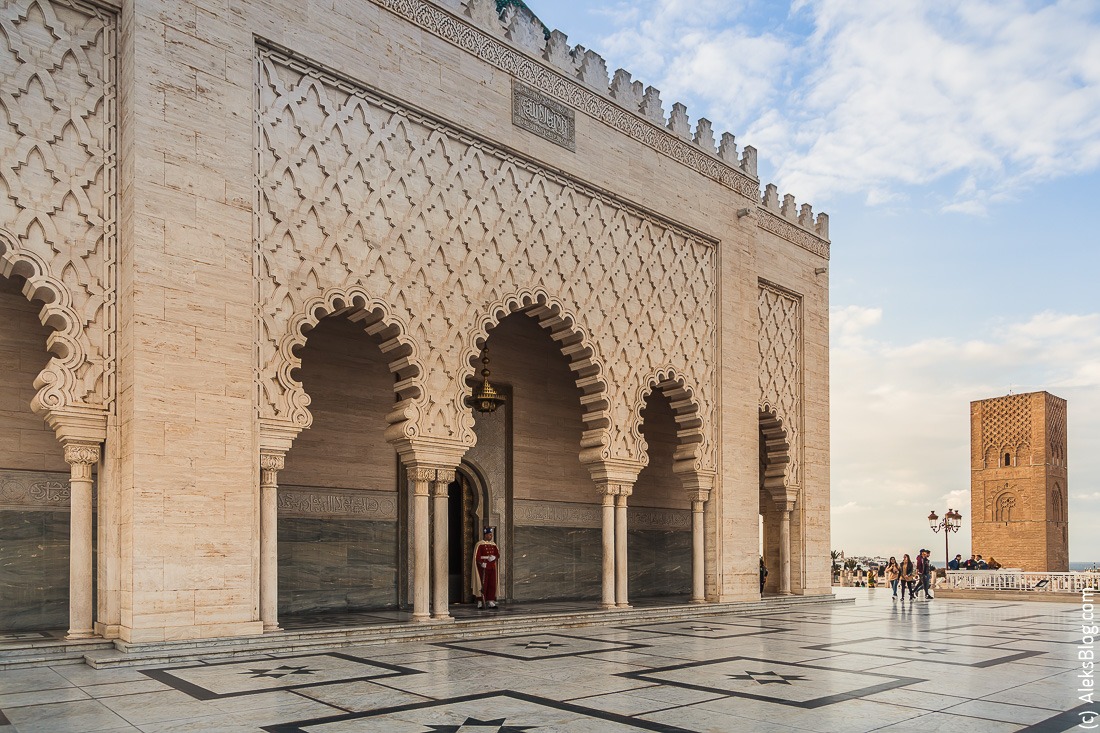
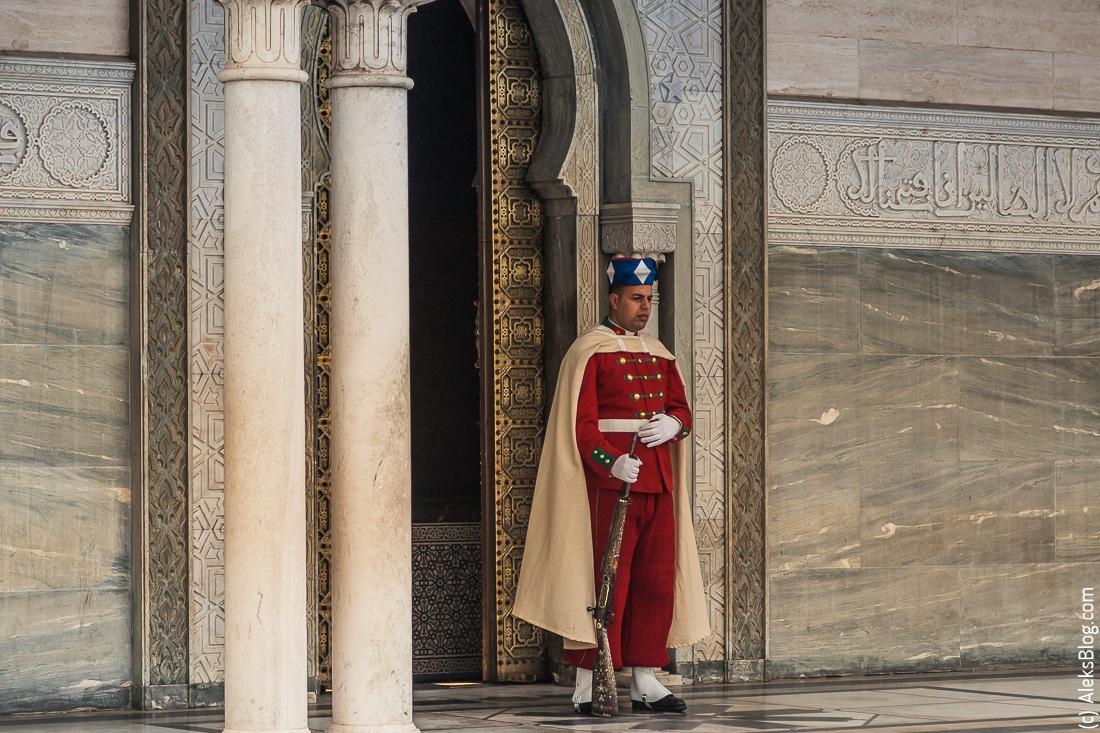

There are several entrances to the mausoleum. At each one, royal guards in national dress are on duty. You cannot touch them, but you can come up close and take a photo next to them.

Next on the plan was the Royal Palace, but after checking the sun and Google photos once again, we decided not to waste time on the unremarkable building, which doesn’t resemble a palace at all, and hurried to the tram stop located right by the entrance to the minaret grounds. We were just in time for the sunset in Salé.
In Rabat there are two lines served by modern trams. You can board any of them and get off at the first stop after the bridge. It is located directly opposite the gates to the Medina of Salé. Tickets are purchased at the machine on the stop.

The sun was already almost below the horizon, so we decided not to walk through the Medina but to go around along the wall. From the very edge there is an excellent view of the Kasbah of the Udayas, with the cemetery in the foreground.
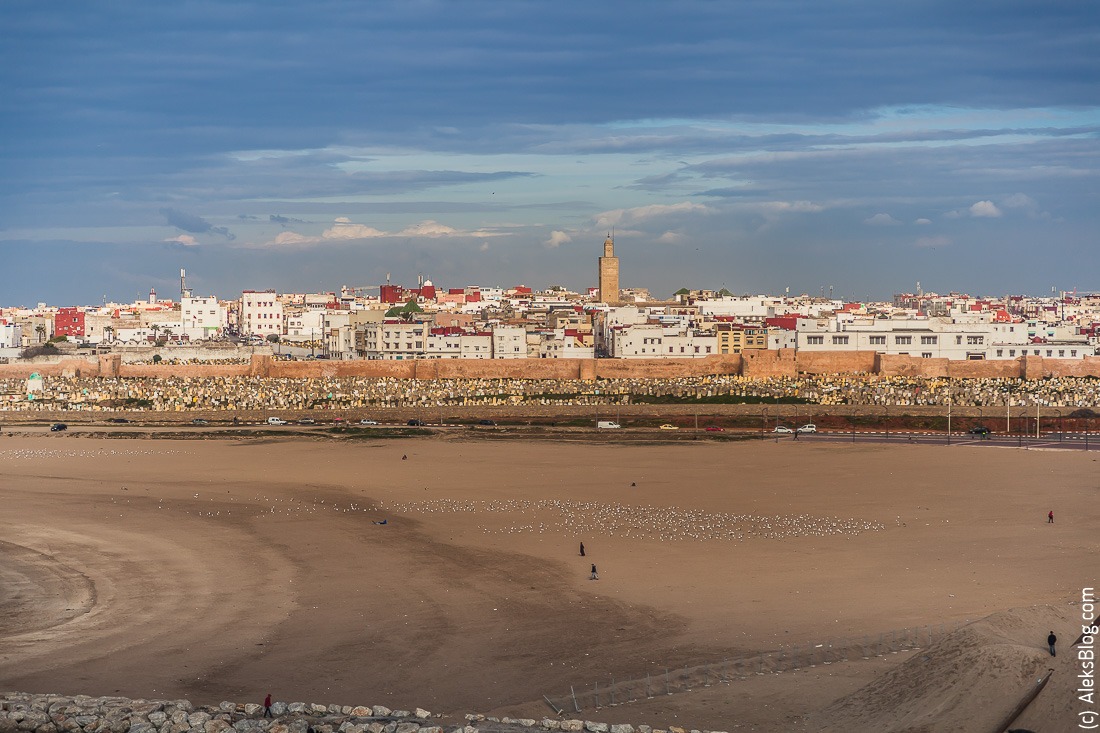
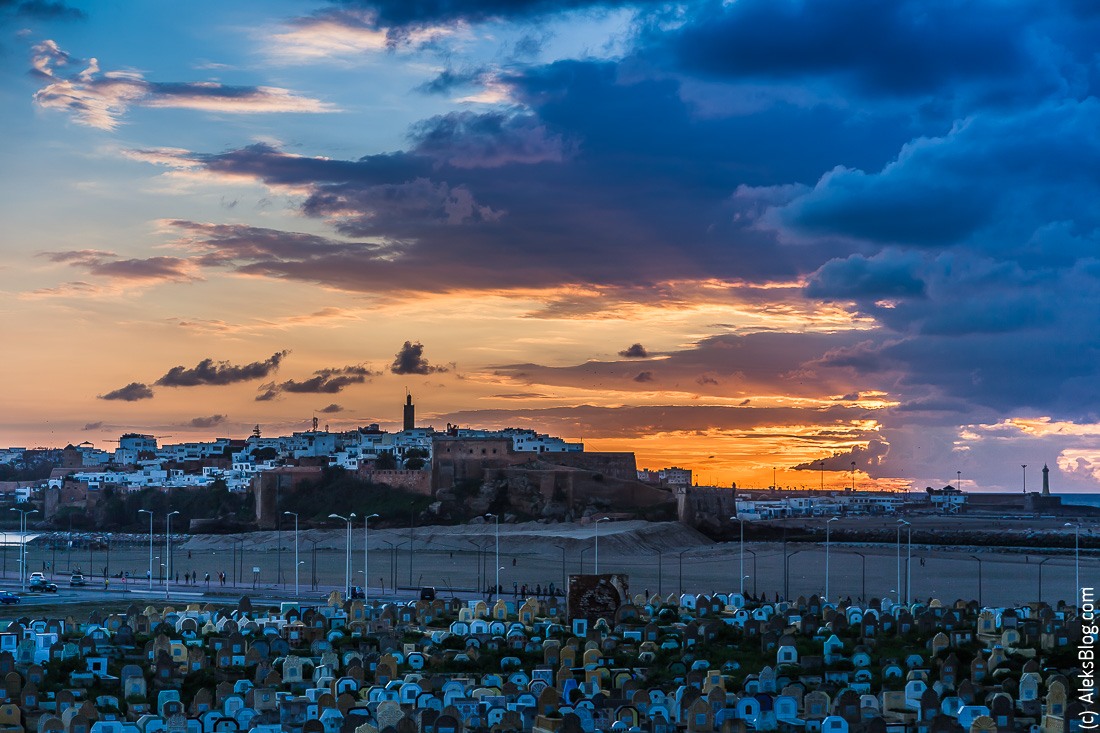
We had dinner in the Medina of Salé. In the evening, there is no one inside, only locals. Afterward, we spent another hour sitting in a teahouse with a glass of mint tea.
From Salé we took the tram to the railway station, bought a ticket for the morning train to Tangier, and walked on foot to the hotel.
From what I didn’t have time to see in Rabat but can recommend: walking through the Medina of Salé during the day — it should be very nice — and visiting the Medersa Abu al-Hassan, located next to the Great Mosque in Salé. If you start exploring the city at 9–10 a.m., you will be able to see everything.
Excursions in Rabat
Already after the trip I found this unusual tour:
- Rabat: cooking class in a family home – according to the description, it sounds very good — going to the market with a local, then cooking traditional dishes in a Moroccan home. The tour and cooking class are in English.
And as I’m foodie also I like this one – Rabat: walking food tour.
I saved both for future trips to Morocco.