Unusual Places in Istanbul: A Sultan’s Secret Pavilion and a Banking Museum

Merhaba!
Eminönü is Istanbul’s most touristy district. All the old mosques, the Grand Bazaar, Hagia Sophia, the Basilica Cistern, the busiest ferry pier, balık ekmek by the Galata Bridge — it’s all there. Crowds of tourists, landmarks everyone knows, and insane ticket prices. Yeah, the Turks have really lost it with these prices.
But… among all that chaos there are plenty of hidden gems — you just need to look a little. Today I’ll share two amazing spots that even a lot of locals don’t know about. And with free admission too!

Hünkar Kasrı: the Sultan’s Pavilion by the New Mosque
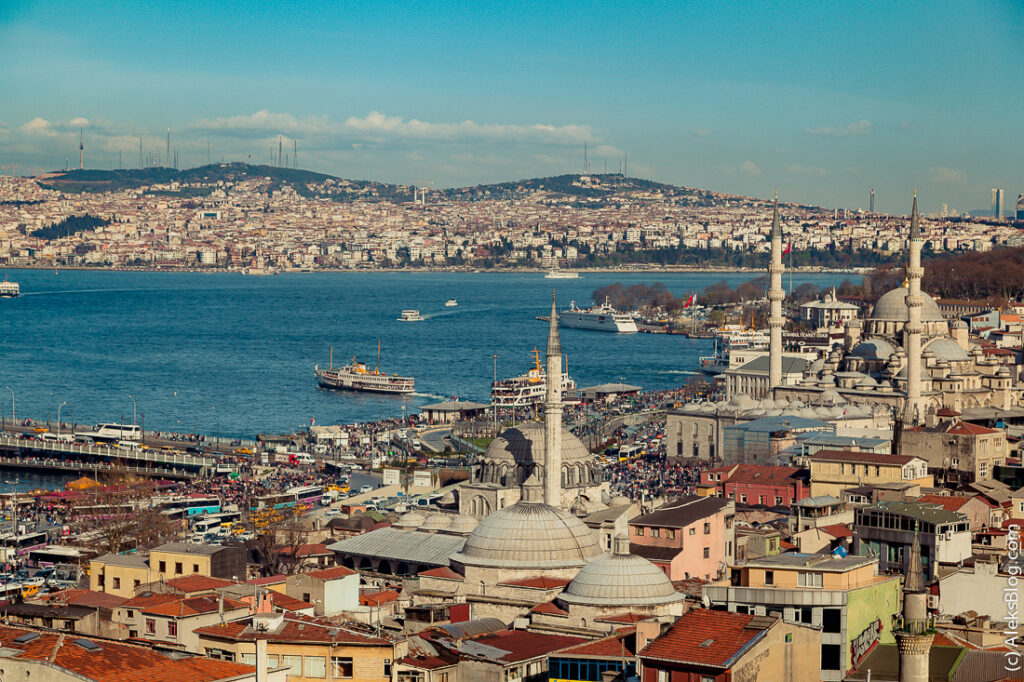
Hardly anyone notices this pavilion, even though it’s attached directly to the New Mosque (Yeni Cami). Here are its coordinates on Google Maps. Hold off on clicking though, there are a couple of things to know first.
- Despite the opening hours listed on Google, in reality they open whenever they feel like it. I came by three times and it was closed every time. Aim for after 2 PM, any day except Monday.
- Google Maps will take you to the building, but not to the actual entrance. There’s no sign, no indication, and it’s genuinely unclear which door hides all this luxury. When I visited, the first room by the entrance had a drawing exhibition set up, with posters only for that event.
How to find the entrance
Step-by-step with photos.
- Coming from the waterfront, face the New Mosque. Walk through the arch.
- After the arch, there will be souvenir shops on your left. Keep going.
- The passage between the two buildings is the sultan’s private entrance into the mosque. More on that below.
- Here’s the entrance to the pavilion. If it’s closed, turn around and come back later.
- If it’s open, go inside. Walk through a small gallery. Say “merhaba” to the guard. If the door is open — success. Put on shoe covers and enjoy. Free of charge! If the door is closed, ask the guard when it opens.


What Hünkar Kasrı actually is
Hünkar Kasrı translates fairly literally: Hünkar means “sultan,” and Kasır (Kasrı) means “pavilion” — a small palace, a countryside or private residence.
This is the sultan’s pavilion at the New Mosque, built in the 17th century as part of the mosque complex. Its purpose was very practical: the sultan didn’t enter the mosque like ordinary people. He’d arrive, first step into his pavilion, rest, and then go straight through a private passage into his own box inside the mosque to pray. After prayer, he’d return to the pavilion — tea, lule kebab, concubines, belly dancing, or just gazing out the window at the Bosphorus. Then he’d head back home to Dolmabahçe.


Why is the mosque called “New”?
The New Mosque (Yeni Cami) is called that simply because, at the time it was completed, it genuinely was new.
Actually, the New Mosque took a long time to build and came with plenty of drama. Construction began (mid-16th century) under Safiye Sultan — one of the most powerful women of the so-called “Sultanate of Women.” She wanted to build a massive mosque in a strategic spot by the water, close to trade and the port.
But after a change in power, her influence disappeared, the money ran out, and construction was frozen. It was only 50 years later that another valide, Turhan Hatice Sultan, returned to the project and finally completed it.
What was the “Sultanate of Women”?
Roughly during the 16th–17th centuries, women of the harem — especially the mothers of sultans (valide sultans) — held enormous power in the Ottoman Empire. This happened because sultans often took the throne as teenagers, and the real decisions were made by their mothers. Yes, the harem was a center of political decision-making.

Okay, enough history. Let’s admire the result of decisions made by two women of the Ottoman Empire.
A luxurious pavilion — the walls covered in İznik tiles. Simply divine. This is that same “Turkish blue” you’d normally view over the shoulders of hundreds of tourists at Topkapı Palace, but here you’ll have this beauty all to yourself. Almost no one else is around.
Just look at the ceilings and doors. All handcrafted, inlaid with mother-of-pearl and ivory, preserved in perfect condition.


The Turkish Banking Museum
We leave the pavilion, and across the street is a pink 19th-century building. That’s our next stop: the Turkish Banking Museum. Admission here is free too! What a deal. With the money you save, you can grab two ayrans that evening.
Opening hours: 10 AM to 6 PM, closed on Mondays.
The first floor has recreated bank clerks’ interiors — typewriters, antique telephones, giant ledger books. You can even grab a sheet of paper and try typing on the typewriter yourself.
The most interesting part is downstairs. Head down and walk along the corridor.
In the basement there’s a huge armored door and an old bank vault. Rows of safe deposit boxes, heavy locks. Pro tip: perfect spot for bank-heist-style photos. Or send your relatives a little clip of you “hiding” your crypto wallet seed phrase in box 221.


Alright… now you can head over to the Grand Bazaar. But not to hunt for €5 Guccis. I put together a great guide to its authentic spots — real treasures for history lovers, and for your reels so your friends can be jealous of the photos.