Istanbul’s Fener and Balat: Colorful Houses, Crumbling Staircases, Hidden Gems

Merhaba!
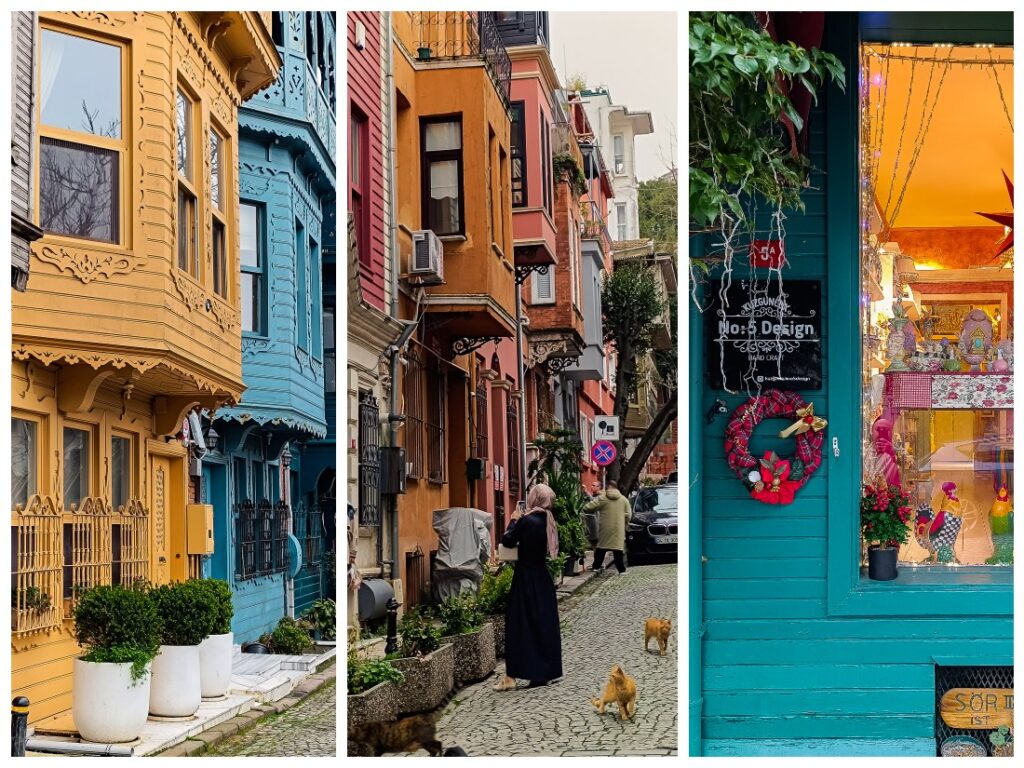
Planning a trip to Istanbul and looking for those colorful houses from the reels? There are actually two such neighborhoods — one in the European part of the megacity, one in the Asian part. I’ve already written about Kuzguncuk on Istanbul’s Asian side; today we’re walking through Fener and Balat.
Disclaimer: I’ve been here more than once, so the weather and light in the photos may vary. But that’s not the main point.
I want to lower your expectations a bit right away, so you don’t end up standing there thinking “that’s it? I should’ve just gone to Zara instead!”
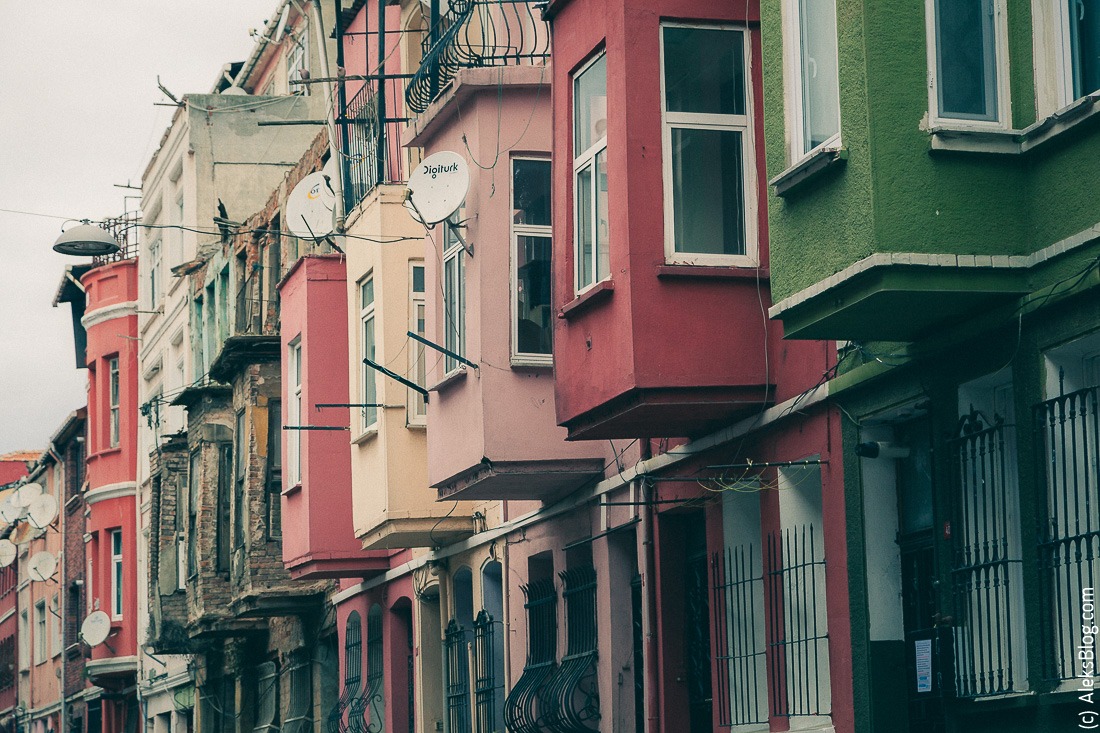
Don’t expect the whole neighborhood to be painted in every color of the rainbow. In reality, it’s much more modest: only a limited number of houses are painted. We’re not even talking about entire streets — just individual facades, put together to make a picture.
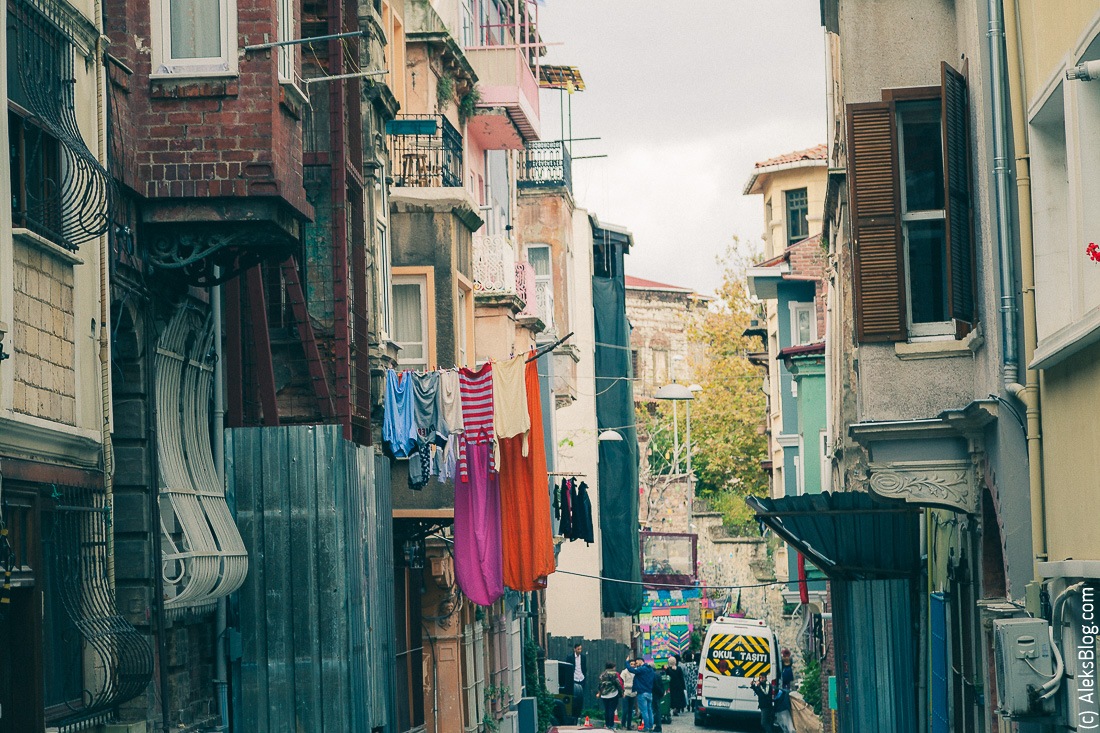
Personally, the fun for me isn’t standing in line for a photo by the blue wall (I’ll give you the list of those streets), but turning into the next alley over. That’s where it stops feeling like Istanbul and starts feeling almost like Naples: laundry hanging overhead (my personal photo fetish), peeling plaster, and life without filters.


Where to Go
I’d suggest getting to the starting point on Istanbul’s most iconic mode of transport — the ferry. Get off at the Fener pier. Head back from the Balat pier. If that doesn’t work for you, take the bus to the Fener stop.
There will be Google Maps links throughout the post. Let’s go take a look.
The Iron Church
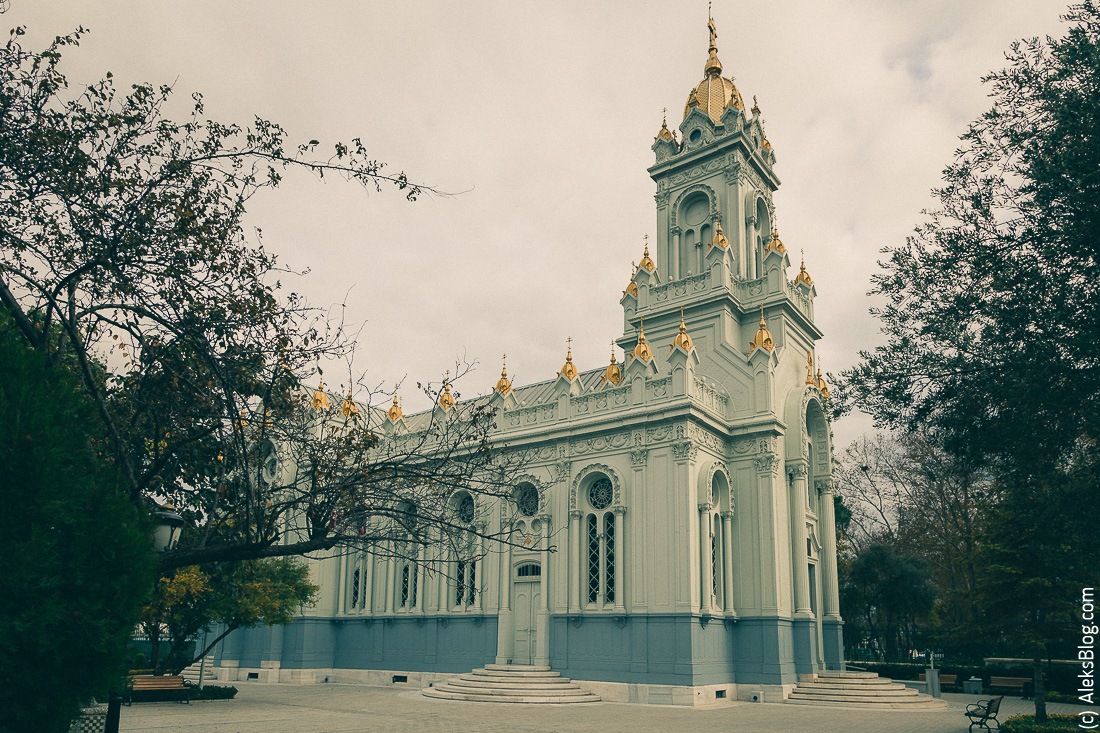
Bulgarian St. Stephen Church — Google Maps link. Free admission.
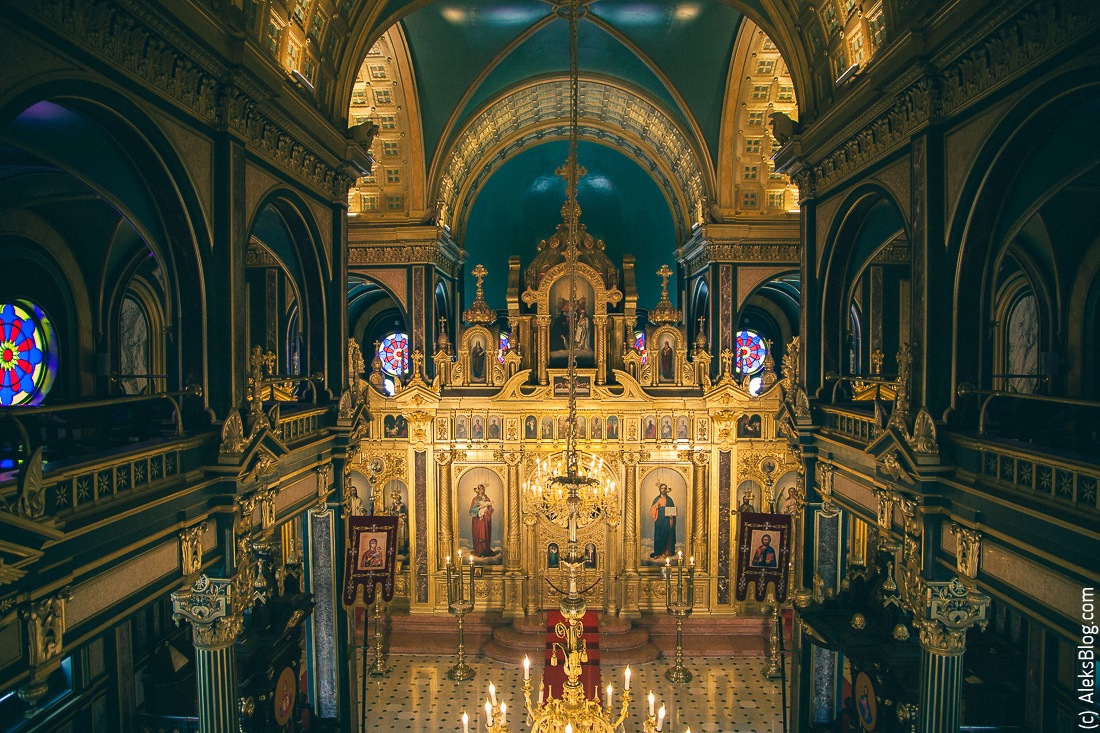
In the 19th century, Bulgarians in the Ottoman Empire won independence from Greek clergy. This created a need for their own church. The Ottoman authorities allowed the construction, but there was one significant obstacle: the plot was on the shore of the Golden Horn, on very unstable ground. A stone building simply wasn’t possible — it would have sunk.
The Bulgarians didn’t miss a beat: they commissioned the design in Vienna, had it cast in steel (500 tons of it!) like a giant kit, shipped it over on barges, and bolted it together on-site. Legend has it the Swedes heard about this, and that’s how IKEA was born.
St. George’s Cathedral (Ecumenical Patriarchate of Constantinople)
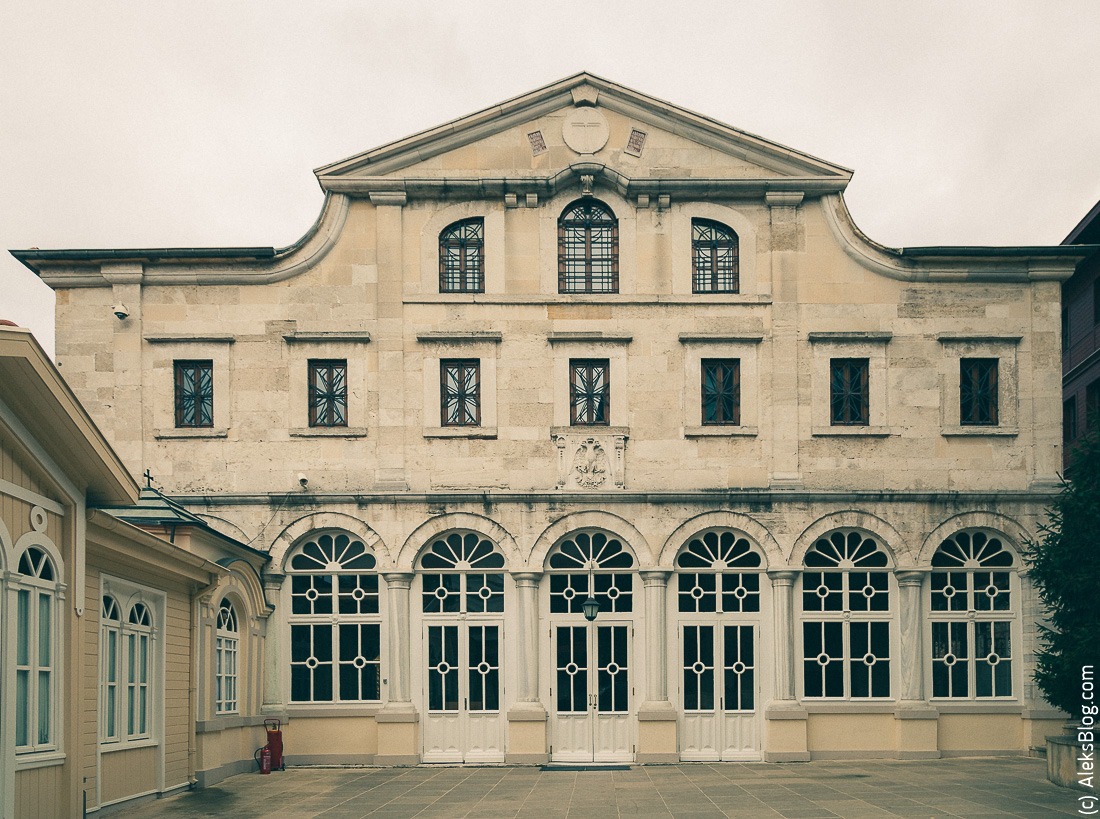
From the outside, it all looks unremarkable: a narrow street, an iron gate, a small courtyard, no grandeur at all. The cathedral itself is very modest too. If you’re expecting something on the scale of St. Peter’s Basilica, you won’t find it here.
The reason is that during Ottoman rule, Greeks weren’t allowed to build tall domes or show off wealth. That’s why St. George’s Cathedral looks as understated as possible on the outside.
But for millions of Orthodox Christians, this place holds roughly the same significance as Mecca does for Muslims or the Vatican does for Catholics.


A Bit of History
The Ecumenical Patriarchate of Constantinople is the oldest Orthodox see in the world. Its history traces back to the Apostle Andrew, and the Patriarch of Constantinople holds the title of Ecumenical — meaning first in honor among all Orthodox hierarchs. Essentially, it’s the Vatican of the Orthodox world, just without the gold and the three-kilometer tourist lines.
Why did it turn out this way?
In the 4th century, Emperor Constantine the Great moved the capital of the Roman Empire from Rome to Constantinople. The city became one of the main centers of Christianity — second only to Rome.
After the split of the Christian church in the 11th century (you can read up on that yourself if you’re curious), Rome became the center for Catholics, and the Patriarch of Constantinople became the head of the Orthodox Church.
Once you step through the first door of the cathedral, there are two more entrances ahead — on the right side, at the very end of the hall, behind glass, is the Column of Flagellation: an unremarkable black stone in a gold frame. It’s believed to be the very column Christ was tied to before the crucifixion.
Admission is free — definitely worth a visit.


The Greek Orthodox Lyceum
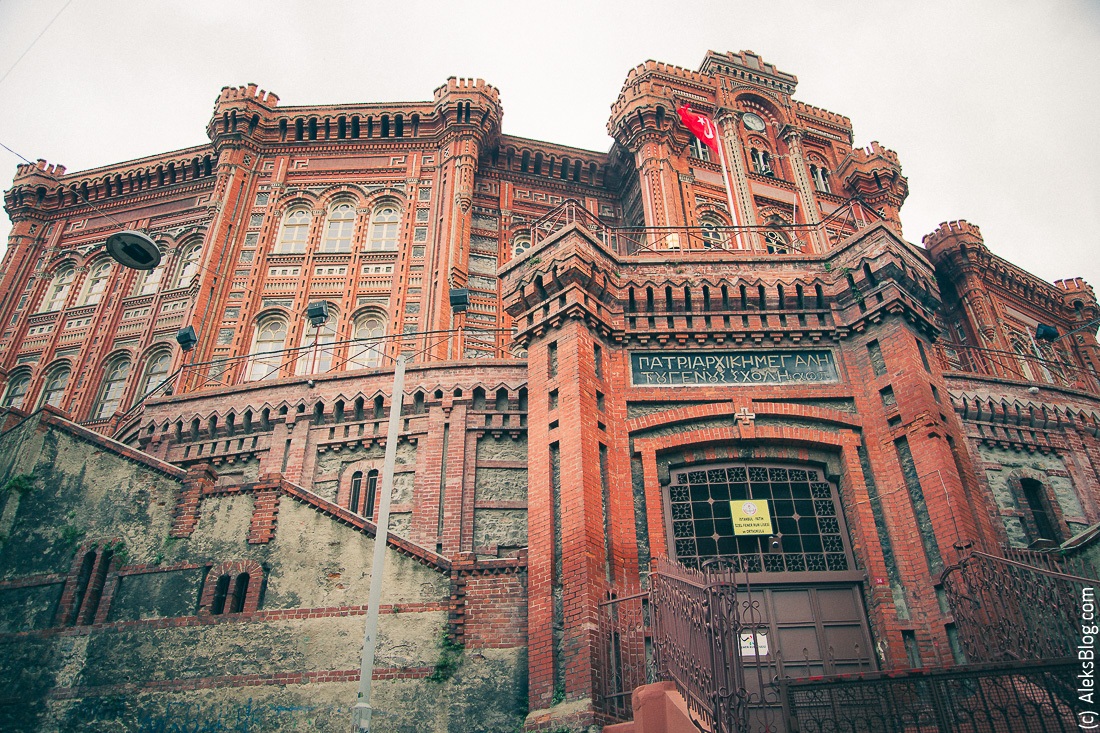
The Phanar Greek Orthodox College, also known as the “Great School of the Nation,” is located here.
A huge, massive building that looks like a medieval castle from a distance. It towers over the whole neighborhood — impossible to miss. Built in the late 19th century, most of the construction materials were brought in from Marseille.
It’s a working school, so you can’t go inside — at most you can catch a couple of angles from outside. The building sits on a hill, so be ready to work up a sweat climbing up. Your reward: watching the local kids ride down the street on anything that rolls — boards, cardboard, plastic tubs.
About Fener and Balat
A bit of history to help you understand why everything here is so worn down, yet so proud.
For anyone thinking right now, “enough with these long texts already, I’ll just find a guide to walk me around the neighborhood and tell me about it” — here you go.
The name Balat most likely comes from the Latin palatium (palace). Byzantine emperors really did live here at one point. After Constantinople “changed hands” in 1453, Greeks and Bulgarians moved into the area. Then, at the end of the 15th century, Sultan Bayezid II extended hospitality and allowed Sephardic Jews, expelled from Spain, to settle here.
That’s how Balat became a Jewish hub for 400 years, with synagogues and trade.
Neighboring Fener (the name comes from the word for “lighthouse,” which once stood here in Byzantine times) remained with the Greeks — and not just any Greeks, but wealthy ones. Hence all those stone mansions that are now being so carefully kept from falling apart.
In the 20th century, the idyll ended. First, the Jews left en masse for the newly founded state of Israel, and in the ’60s the Greeks left too. Balat instantly turned into rough slums, populated by migrants from Anatolia, Kurds, and Roma.
For a long time, it really wasn’t a place you’d want to wander into. Then UNESCO stepped in, a few facades got a fresh coat of paint, and in 2017 the neighborhood became the filming location for a series called “Yama,” popular among locals. Fans of Turkish soap operas rushed in first, followed by everyone else drawn to the aesthetic of urban decay. That’s how the neighborhoods became what we see today: a mix of a great past and a very colorful present.



Naftalin K Café
A legendary café — located here. Open especially for all the cat lovers out there. Such a cute, cozy atmosphere, cats climbing everywhere. If you want to have breakfast with a cat sharing your plate, it’s definitely worth stopping by.
Personally, I found it pretty gross.
We walked in, and I didn’t see any cats right away. We ordered two breakfasts. While they were bringing the food, I looked around a bit. In the end, I couldn’t finish eating. Ugh. I posted a short video.


Where to Find the Colorful Houses in Fener and Balat
If you follow the spots I mentioned above, you’ll automatically end up on the neighborhood’s main arteries: Vodina Cd and Kiremit Cd.
A small warning about the Rainbow Staircase. It’s located here — Incinnir Cd. Those vibrant photos you’ve seen on social media are edited. In reality, the staircase is worn down, nowhere near as bright. There are crowds of people wanting to take photos, all mixed in with a steady stream of people just going about their day, up and down.
Right before this staircase, there’s another popular spot — a café with umbrella-style awnings. You can’t enter the courtyard: there’s a barrier, and the staff are downright rude. You can’t just take a photo from outside. They’ll deliberately block the view to force you to come inside instead. Plus there’s always a crowd wanting the same shot. I’m not a fan of that — I’d rather find free views around the corner.


Just look at this masterpiece. Personally, I’d rather look for places like this than photograph some umbrellas in a crowd.

Vodina Caddesi Street — the main tourist street of Balat. Old signs, vintage shops, small souvenir stores, cafés.
Kiremit Cd — colorful houses and steep slopes.
The streets around them (just turn off onto the side streets) — wooden Ottoman houses, crooked balconies, laundry drying on lines, graffiti.
To repeat: while Vodina Cd is flat, the other streets are all uphill and downhill. Take your time exploring the neighborhood, and grab some pomegranate juice — it’ll be much cheaper here than around Sultanahmet.


At the end of Vodina Cd, just keep walking straight — you’ll figure it out once you’re there. The streets with cafés and shops will continue for a while, then the scenery will suddenly get much simpler: fewer cafés, more ordinary daily life. That’s your cue to turn toward the water.
Head down to the Golden Horn waterfront, where you’ll find the Balat pier, from which you can catch a ferry back.