Azores Travel Guide

Ola! Bom dia!
Finally, I managed to check off another item on my bucket list.
Yes! The Azores!
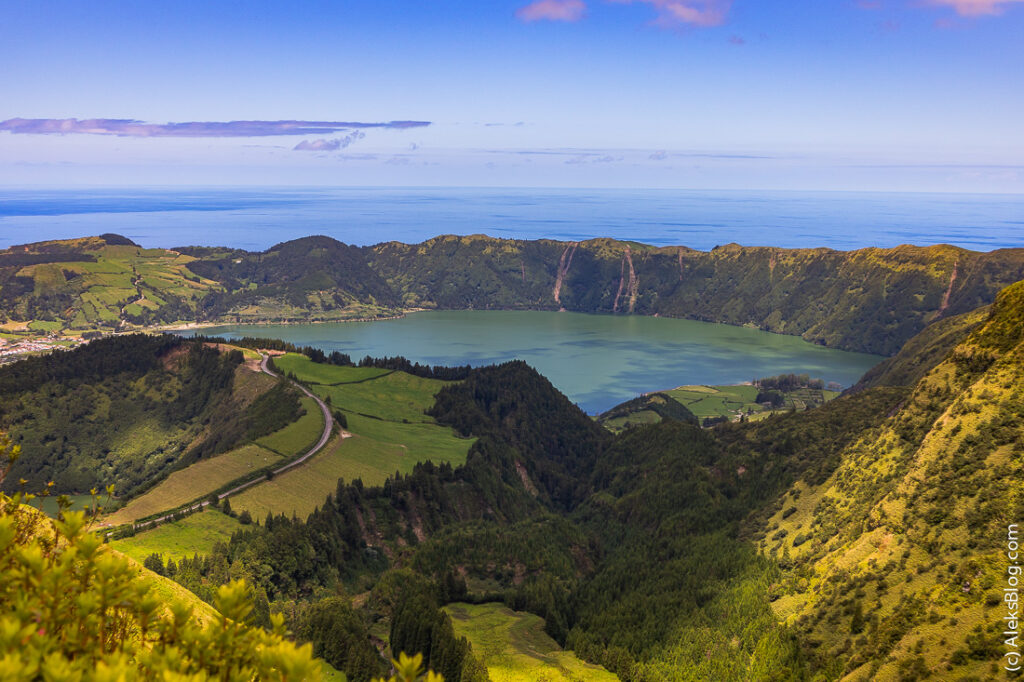
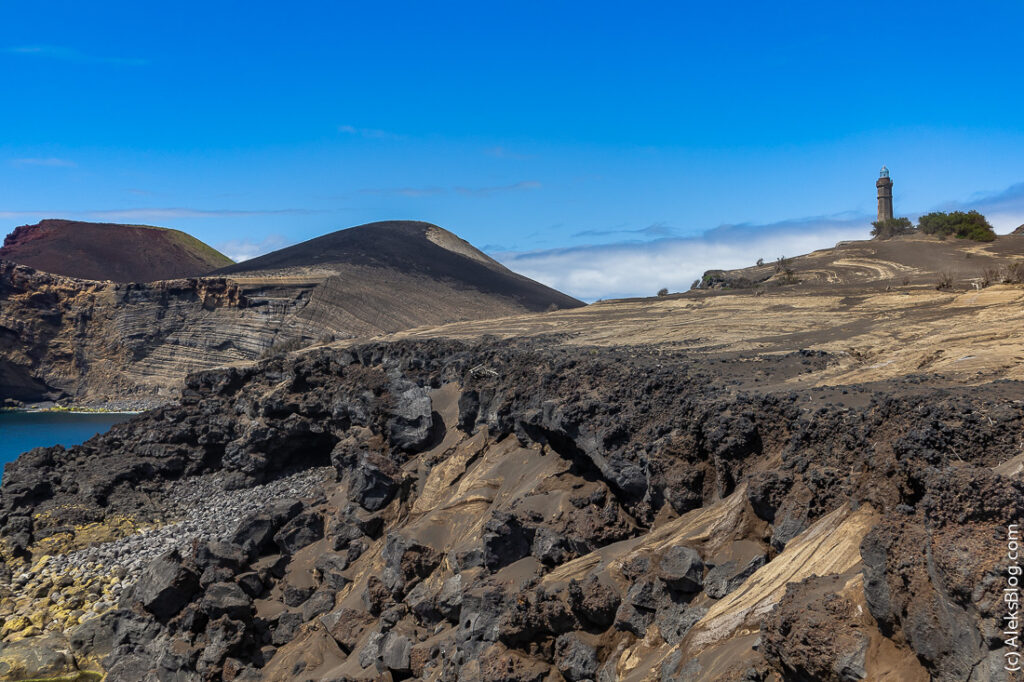
It’s just something out of this world, like another reality. Incredibly pure and untouched nature — green forests, crystal-clear lakes, volcanic mountain peaks against the ocean, and in summer, every island literally drowned in hydrangeas. In some places, it felt unreal, like the Jurassic Park is about to appear and a dinosaur will pop out, or some terrifyingly beautiful creature will fly by. Such beauty in every single square meter that no blog format or photo could ever do it justice.

São Miguel – the largest island, with geysers, tea plantations, waterfalls, thermal springs, crater lakes, and a huge botanical garden with natural hot pools.
Terceira – the second largest island: volcanic landscapes, underground caves in a volcanic crater, calderas, mountains.
Faial – a legend and a hotspot for sailors, the youngest volcano, levadas, with views of the island and Mount Pico.
Pico – incredibly, on these lifeless lava lands of the island, in small plots fenced with volcanic stones, they grow grapes and produce wine!
São Jorge – dramatic black cliffs along the coast and greenery; everything around is lush and green, with tiny villages on fajãs — small patches of land by the ocean.
I’ll make a separate post for each island. There will be lots of photos — I really want to share what I’ve seen. For now, just the highlights that apply to all the islands.


The Azores – where is that?
The Azores are a region of Portugal, located in the Atlantic Ocean, about 1,500 km from Lisbon. The archipelago consists of nine main islands, all of volcanic origin. The highest point in Portugal, Mount Pico (2,351 meters), is on the island of the same name and is an active volcano.
The islands are usually divided into three groups:
- Western – Corvo, Flores.
- Central – Terceira, São Jorge, Faial, Pico, Graciosa.
- Eastern – São Miguel, Santa Maria.
The largest island is São Miguel, and the smallest is Corvo.
Google Maps shows the capitals of the islands, but you can figure out which is which.


How to get there
I flew Ryanair from Porto to Terceira and returned from São Miguel. Most tourists start their Azores trip from one of these largest islands.
So if you’re heading to the Azores, look for flights to Terceira (TER, Lajes) or São Miguel (PDL, Ponta Delgada). Most likely, the flights will have a layover in Lisbon or Porto.
The Azores also have their own airline – Azores Airlines. They have a great offer for anyone flying with them to the US or Canada — you can do a stopover of up to 7 days on São Miguel. By the way, I saw direct flights to São Miguel from Barcelona on their schedule, so it’s worth checking.


Getting around between the islands
Planes
There are flights between all the islands, and only Azores Airlines operates them. On average, the flight lasts about half an hour. On planes like these.

Ferries
Check the schedule and buy tickets at atlanticoline.pt.
Ferries don’t connect all the islands — the distances are too long.
Ferry lines link the central islands: Terceira, São Jorge, Pico, Faial, Graciosa, as well as the western ones: Flores and Corvo. Keep in mind that ferries don’t run every day and only make a few trips per day. It’s not like in Istanbul, one after another.
On Terceira, São Jorge, Pico, and Faial, there are several ports — if you don’t find a route, check another port.
You can buy tickets online or at the dock. Take any free seat inside or on the deck. The trip takes about half an hour.


Getting around on the islands
Car rental. Without it, there’s really no point in being on the islands. There are some taxis, but very few, no Ubers or companies. You have to find personal numbers of taxi drivers, call them directly, and arrange everything in Portuguese. Taxis don’t have meters — prices are fixed, based on distance, and the driver has a price list. On weekends and at night, add 20%.
There are very few regular buses, and they run rarely. Everyone on the islands has a car, and buses won’t take you to any of the interesting spots. I swear, I can’t imagine how anyone could get around there without a car.
When to go
Any time of the year. The climate is mild and temperate thanks to the Atlantic Ocean. Temperatures rarely drop below 14°C in winter or exceed 26°C in summer. Because of this, the islands stay green year-round, and many exotic plants grow here.
In winter, it’s around 17°C — it gets dark early, it’s windy, and there’s rain. Well, “rain” — sometimes it’s raining, an hour later the sun is out and it’s hot, two hours later it showers again for half an hour. The weather is very changeable.
In spring, around 19°C, with much less rain. By late spring, everything is in bloom. I was in the Azores in May and July. In May, I spent the whole day in a T-shirt and shorts, sometimes needed a sweatshirt in the evening.
In summer, around 25°C, rarely higher. But the humidity is noticeable. I actually liked May even more. The ocean temperature is about 22°C — perfect for swimming.
In autumn, around 22°C. Early autumn weather is gorgeous — less humid and not much rain yet.


Accommodation
Each island has its own capital. On Terceira – Angra do Heroísmo, on São Miguel – Ponta Delgada. It’s better to look for accommodation in these cities rather than in villages across the island. I booked everything through Booking. In the next posts, I’ll share where I stayed.
Shops
If you have a car, there’s no problem. There are well-known Portuguese chains like Continente and Pingo Doce, but only in the capitals. In small villages, it’s more like a “corner shop,” with a limited selection.
What to pack for the Azores
Before the trip, I was planning to buy hiking boots. Luckily, I found my old sneakers and didn’t. Those heavy-duty mountain boots? Totally unnecessary. All the islands have decent trails — sneakers are fine.
So depending on the season: sports pants/shorts, a waterproof jacket/windbreaker, and a sweatshirt. Nothing special.


Which islands to visit
So far, I’ve been to five out of nine islands: Terceira, São Jorge, Faial, Pico, and São Miguel. I can’t pick a favorite — they’re all worth visiting.
I flew to Terceira, then took a plane Terceira → São Jorge, ferry São Jorge → Pico, ferry Pico → Faial, plane Faial → São Miguel, and from there flew home. I didn’t regret a single day spent on any of the islands.
It’s best to start with São Miguel or Terceira, as the largest islands. If you only have time to visit one, definitely São Miguel (capital and airport in Ponta Delgada).
How many days to go
For São Miguel — three full days; Terceira, Faial, Pico — two full days each; São Jorge — one day. This was my route, without rushing, by car, but also without long hikes. You’ll be able to see all the highlights and take a short walk on one of the many trails on the island.
For a short visit and just one island — five days on São Miguel is perfect.

What to drink and eat
Local alcoholic drinks include beer and wine.
There’s both local wine, made from vineyards growing on the volcanic soil of Pico Island, and all the usual Portuguese producers. Of course, you should try the Azorean ones. They’re not cheap, though — in a shop, a bottle of Azorean wine starts at 15 euros. A couple of bottles won’t break the bank. You can’t drink just Vinho Verde all the time.
What you absolutely must try in the Azores:
- Azorean pineapples. After trying them, you won’t eat other pineapples. They’re much sweeter and juicier, but also five times more expensive. Fun fact: in Portuguese, a regular pineapple is called abacaxi [a-ba-ka-shi, stress on “i”], while ananás [a-na-nash] refers to the Azorean pineapple, originally from Brazil. On São Miguel, you can visit the greenhouses where they grow them.
- Tuna. Just regular tuna, but freshly caught in the morning and cooked in the right place. That alone is worth coming to the Azores.
- Alcatra — a dish from Terceira, consisting of beef slowly braised with wine, spices, and garlic in a clay pot. They cook it until the meat falls off the bone.
- Azorean steak. Not just a beef steak, but made from local “cows” grazing year-round on the islands, in fresh air and perfect climate.
- Lapas Grelhadas (grilled limpets). These mollusks are grilled in their own shells with garlic and butter, served on a pan. Before eating, pour lemon over them immediately. Divine. A delicacy you can try in the Azores and Madeira. Quality varies by restaurant — some are small and salty, others tender and creamy. Absolutely amazing taste.


-
Cozido das Furnas. A stew of meat and vegetables cooked in the natural geothermal springs in the village of Furnas on São Miguel Island. Meat (pork, beef, chicken) and vegetables (potatoes, carrots, cabbage) are placed in special pots and lowered into hot volcanic pits, where they slowly cook in the steam. Cozido das Furnas must be ordered a day in advance. We booked a table and reserved a portion of cozido.
In the posts about each island, I’ll write where to try all of this.
In the photo — the geothermal area on São Miguel. The pits belong to different restaurants. Staff from one restaurant are taking out a pot that has been cooking there for eight hours. Then it’s loaded into a car and delivered straight to the tables.


Azorean restaurant tips
In both big and small restaurants, a buffet system is common at lunch. You pay a fixed price of 12–16 euros and get a buffet, usually including a drink (soda/beer) or coffee. Meat (pork, beef, chicken) is either fried or braised, plus vegetables, potatoes, and pasta. The selection is always decent. By evening, you’ll definitely be full. There are fewer buffet restaurants on Terceira and São Miguel, but on most other islands, this is the standard system. Some even offer a buffet at dinner. Of course, tuna or limpets won’t be on the buffet.
Dinners! Oh, they’re a whole different story. People eat after 7 pm, and you MUST book a table in advance. Call yourself — some places speak English — or ask at your hotel reception, but make the reservation. Otherwise, you’ll end up standing outside, hoping a table frees up early, or wandering for hours looking for any free spot. Fast food doesn’t count, right?
On Sundays, more than half of the restaurants are closed. Ha-ha-ha. You’ll need to search even harder. So make sure to eat well at lunch. There’s also a “lifehack” — have dinner about an hour and a half before the restaurant closes, around 10 pm. Chances are, by then, tables will be available and the chef hasn’t started washing the pots yet.


What to do in the Azores
Grab a car and drive to all the beautiful spots. In the Azores, you don’t have to park on the roadside and dash out with a camera. Wherever there’s a great view, there will usually be a viewpoint with benches or tables to rest.
Check out this resource for hiking routes:
Visit Azores – web version only, with officially approved and developed trails.
The hikes in the Azores are truly easy and accessible for people of any fitness level. You can drive to the start of the trail, park, and go. The routes pass through green valleys, forests, lakes, pastures, with views of the ocean or volcanic craters, surrounded by flowers, birds, and cows. Gorgeous!
The Azores are also one of the best places in the world for whale and dolphin watching. From April to June, whales migrate near the islands. On São Miguel and Terceira, you can take tours on catamarans or speedboats — if you’re lucky, you might see a sperm whale swish its tail in the distance or a dolphin leap out of the water.