
Uplistsikhe Ancient Caves

Just 80 km from Tbilisi lies a unique place – the ancient cave city of Uplistsikhe. Archaeologists believe the first settlers appeared here as early as the 1st millennium BC. A trip to Uplistsikhe will take at least half a day, and it can be combined with a visit to Mtskheta. If you’re traveling around Georgia by car, it’s better not to return to Tbilisi, but to continue on to Borjomi.
I share my journey to Uplistsikhe Cave City — an ancient rock-hewn town in Georgia dating back to the 1st millennium BC, carved into a cliff above the Kura River. Learn how to get there, explore its hidden chambers, and uncover its rich history. Practical tips, personal insights, and must-see highlights for your visit.

How to get to Uplistsikhe
Uplistsikhe is located not far from the town of Gori.
By Car
There’s a public parking lot near the entrance on the map.
I highly recommend renting a car. You can even rent for a short period. In one day, you can see Mtskheta and Uplistsikhe. Two days – and you can also drive through Kakheti; three days – add the Georgian Military Highway and Stepantsminda.
In Georgia, we always rent cars through LocalRent. Don’t miss: Car Rental in Georgia – where it’s best + everything about driving and traffic rules.
You need to book cars in advance, as during the high season there are far fewer options and available cars might simply not exist.
By Public Transport
Take a minibus (marshrutka) from Didube Bus Station in Tbilisi. When you exit the metro, ask passersby where the minibuses to Gori are. They depart every half hour. Travel time is just over an hour. In Gori, you need to transfer to a bus to the village of Kvakhvreli – 20 minutes, and you’re there. From there, it’s a 2 km walk to Uplistsikhe. Or, you can take a taxi from Gori.
Taxi
In Tbilisi, you can arrange a trip to Uplistsikhe and back with taxi drivers. The cost depends on your bargaining skills.
It’s better to use gotrip.ge. I traveled with them from Batumi around the Kutaisi area, and I really liked the service. The price is known upfront, and there’s no limit on the number or duration of stops along the route. It’s like renting a car with a personal driver. In the end, it will be cheaper than taking a taxi off the street.
I recommend planning the route on gotrip: Tbilisi – Mtskheta – Shio-Mgvime Monastery – Uplistsikhe – Tbilisi. You should be able to see everything in one day.
Entrance to Uplistsikhe is paid – 15 lari. Opening hours: daily from 10 a.m. to 6 p.m., in winter from 10 a.m. to 5 p.m.

History of Uplistsikhe
Surprisingly, this cave city was only abandoned in the 19th century. Today, out of 700 caves, 150 have been preserved. The entire complex is under UNESCO protection.
There are several theories about the origin of the city’s name. According to one, “Upali” translates from Georgian as “God’s,” making Uplistsikhe the God’s Fortress. Some sources base it on “Uplos,” which can be translated as “ruler,” so Uplistsikhe would mean the Ruler’s Fortress. In any case, the overall meaning is the same.
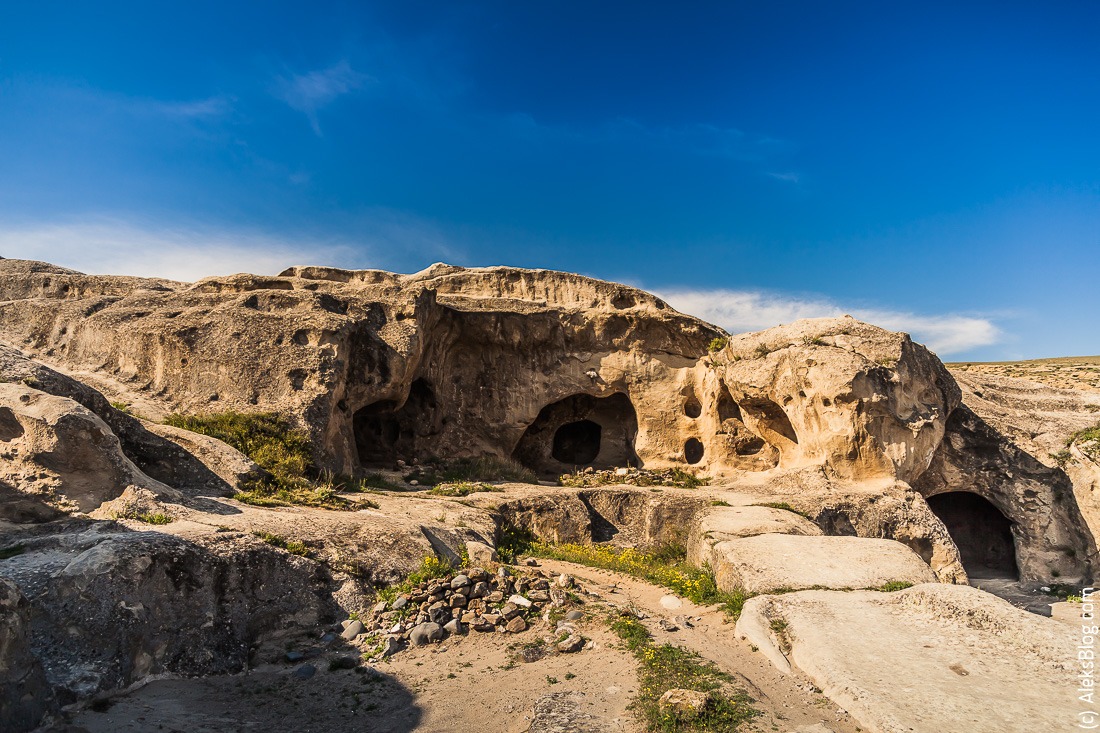

In addition to residential caves, temples and pagan shrines have been found in Uplistsikhe. When the surrounding region had fully adopted Christianity, the inhabitants of Uplistsikhe remained pagans. And they were fiercely resistant. Saint Nino, who brought Christianity to Georgia, did not preach in the cave city. Only by the mid-4th century did the conflict end: some of Uplistsikhe’s priests were executed and persecuted, pagan temples were burned, and Christian churches were built in their place. The first Christians also destroyed the massive wine storage that existed within Uplistsikhe.
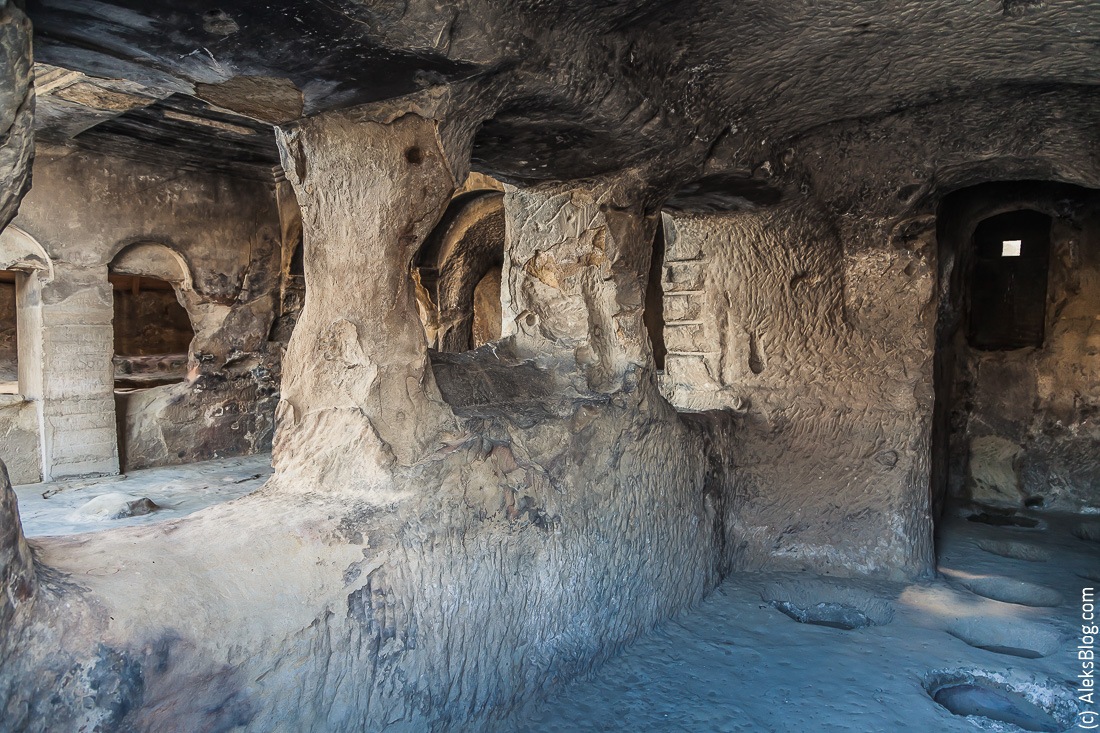
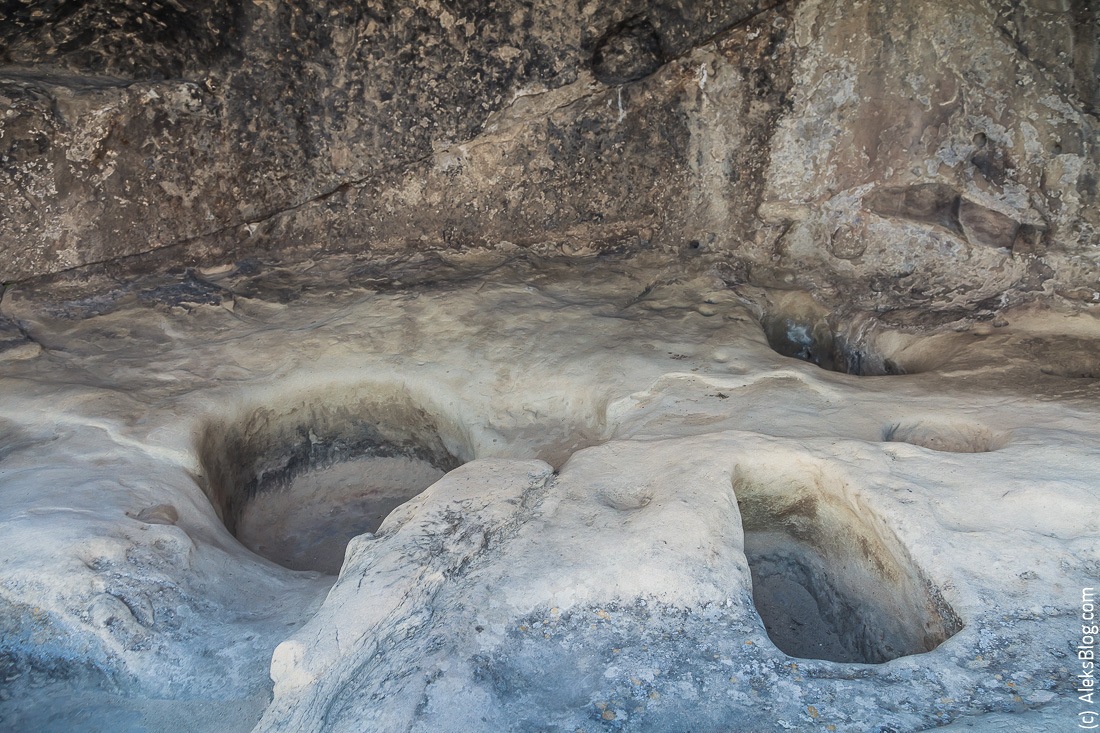
In the Middle Ages, Uplistsikhe served as a fortress city with numerous utility buildings.
Around the 10th–11th centuries, the Church of Uplistsuli (the Prince’s Church) was built on the site of a destroyed Sun Temple. Later, it was used as a bakery. Today, it is an active church. Its interiors and original frescoes were destroyed.
The walls of the church and some caves are covered with signatures and inscriptions from soldiers of Russian army units stationed in Uplistsikhe. There are many inscriptions on the walls, and examining them turned out to be quite interesting.
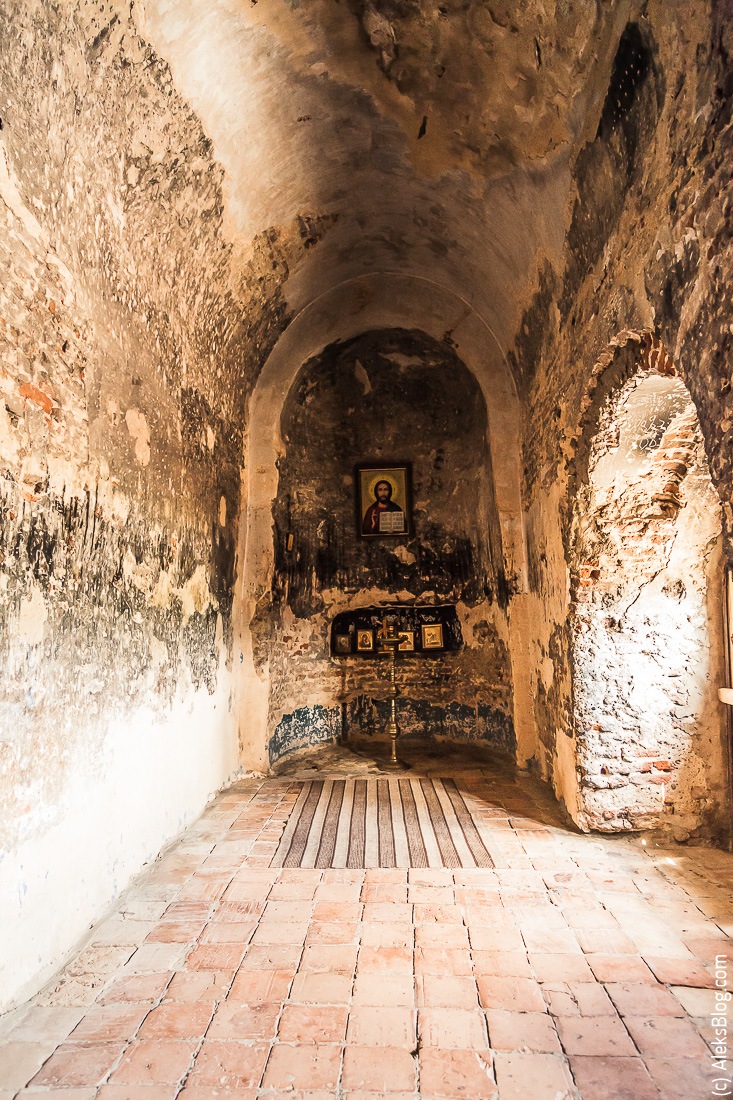

In 1920, Uplistsikhe was heavily damaged by an earthquake. Since then, no one has settled here.

Near Uplistsikhe, there are a few places worth visiting:
The Stalin House Museum in Gori. Joseph Stalin was the leader of the Soviet Union from the mid-1920s until his death in 1953. Historically, it’s the house where he spent the first four years of his life, along with some items that may have belonged to Stalin. The most interesting part (in my opinion) is his personal railway carriage, which he used. Whether it’s worth going just for this – you decide.
Ateni Sioni – the Sioni Monastery in the village of Ateni, located 10 km from Gori. It’s a small 7th-century monastery. When designing and building it, the architect used the Jvari Monastery (the same one that is in Mtskheta) as a model.


