Georgia: Kakheti

Gamardzhoba! — which means Hello in Georgian.
If you’ve been in Georgia for more than a day, you’ve probably already heard these magical words — Alazani Valley, Tsinandali, Mukuzani, Kindzmarauli. All of them come from here, from Kakheti – the heart of Georgian winemaking and one of the most beautiful regions in the Caucasus.
But Kakheti is not only about wine. It’s also about ancient monasteries, beautiful landscapes, delicious food, and plenty of sunshine.
In this post I share how to get there, where to stay, what to eat, and the most fascinating places to explore — from charming Sighnaghi and Telavi to hidden monasteries, vineyards, and mountain views.

How to get to Kalhetia
By car
If you decide to make a road trip around Kakheti, it’s best to rent a car.
You won’t be able to see much by taking minibuses. You’ll spend more time and money on getting around — switching to taxis or hitchhiking here and there. Renting a car even for 1–2 days will cost you much less than hiring a driver. The roads in Kakheti are good. When we first drove through the Gombori Pass (by the way, in a Nissan Micra — all the Georgians were laughing), the name sounded scary. In reality, it turned out to be an ordinary paved mountain road. In Georgia, it’s best to rent a car through Localrent.
By public transport
It’s impossible to explore Kakheti in just one day. First, you’ll need to take a minibus (marshrutka) either to Telavi or Sighnaghi:
- Tbilisi – Telavi: from the Ortachala bus station, every half hour, about 2–2.5 hours on the road.
- Tbilisi – Sighnaghi: from the bus station near Samgori metro, every 1–2 hours, about 2 hours on the road. The last minibus from Sighnaghi to Tbilisi leaves at 18:00.
However, public transport doesn’t go to all the monasteries and wineries. So in Telavi or Sighnaghi, you’ll need to hire a driver with a car to visit the main sights. One day won’t be enough, so it’s better to stay overnight in one of these two towns.
Taxi or Car with a driver
If you don’t drive, you can hire a car with a driver. Any taxi driver in Tbilisi will agree to go, but you should arrange it in advance. The price depends on how well you can bargain.
Before agreeing on a trip, compare prices on gotrip.ge. I’m actually a big fan of this service. You can build your route directly on the website, and the system will calculate the travel time and total cost. Everything is done online — no haggling needed. During the trip, you can make as many stops as you like to take photos or visit sights.
Excursions
There are day tours from Tbilisi to Kakheti. They leave in the morning and return late in the evening. It’s a full-day trip and quite tiring, as you spend a lot of time on the bus.
For example:
Where to stay
Of course, you can race through all of Kakheti in one day by car, but it’s much better to stay overnight in Telavi — or even better, in Kvareli — because you should definitely visit at least one winery. And judging by the reviews from those who hired a driver and rushed through all of Kakheti in 12 hours, by the end of the trip they weren’t even looking out the window anymore — some got carsick (it’s really a full day in the car), while others were overwhelmed by all the information and scenery.
Near Telavi there’s a beautiful spot — Lopota Lake, where the absolutely stunning (by Georgian standards) Lopota Lake Resort and Spa is located. It’s a 5-star hotel. Rooms, food, several pools — everything is excellent. The territory is completely closed off — even access to the lake is only for hotel guests. We stayed there in October for one night on a great special offer — and it was absolutely wonderful.
You can also stay at a private winery — Schuchmann Wines Château.
Or there’s a simpler option — Kvareli. That’s exactly where the Kindzmarauli winery is located. You can park your car by Château Kvareli Hotel or a guesthouse, take a taxi or even walk to the winery, have a tasting, grab a few bottles to go, and continue in a cozy setting with good company. That’s exactly what we did.
- Visiting Kindzmarauli Winery – review
What to see in 2 full days by car
This is the perfect 2-day route — the one we took ourselves and the one I recommend to all my friends (no one has ever complained!). It’s a circular route, so you won’t drive the same road twice, and you’ll see all of Kakheti.
Day 1. Tbilisi – Gombori Pass – Old and New Shuamta – Telavi – Ikalto – Alaverdi – Gremi – Kindzmarauli winery in Kvareli (or Shumi in Tsinandali, or any other you prefer).
Stay overnight in Telavi or nearby, in Kvareli. I already mentioned good options above.
Day 2. Nekresi – Bodbe – Sighnaghi – David Gareji – Tbilisi
About Telavi — in my opinion, there’s absolutely nothing to do there. You can stop for half an hour just for the sake of it. The capital of Kakheti has only two real sights: an 800-year-old plane tree and the Batonis Tsikhe fortress (inside there’s a very modest museum — I’d even call it a “little museum”). Some people also visit the market. Kutaisi is better (sorry, Kakhetians).
Gombori Pass
There are two roads leading to Kakheti — one we’ll take from Tbilisi (the Telavi road) and the other we’ll return on (the Sighnaghi highway).
We leave Tbilisi in the direction of Telavi through the Gombori Pass. Along the way, there are several interesting places worth a quick stop if you have time:
-
Sasadilo — just a village with a funny name that literally means “canteen.”
-
Ujarma (41.788805, 45.162369) — the ruins of an old fortress. Restoration work has been ongoing there since 2019, so I’m not sure if it’s open.
-
Verona — a village 7 km from the top of the pass. Stop for a photo with the sign “Verona,” post it on social media, and let everyone wonder how you ended up in Italy, in the homeland of Romeo and Juliet.
-
Gombori Pass — the summit (41.863976, 45.279440), 1,839 meters above sea level.
New and Old Shuamta Monasteries
About 16 km after Gombori Pass is the first stop — New Shuamta (41.913849, 45.390947), and right next to it, just 2 km away, is Old Shuamta (41.911961, 45.405878).
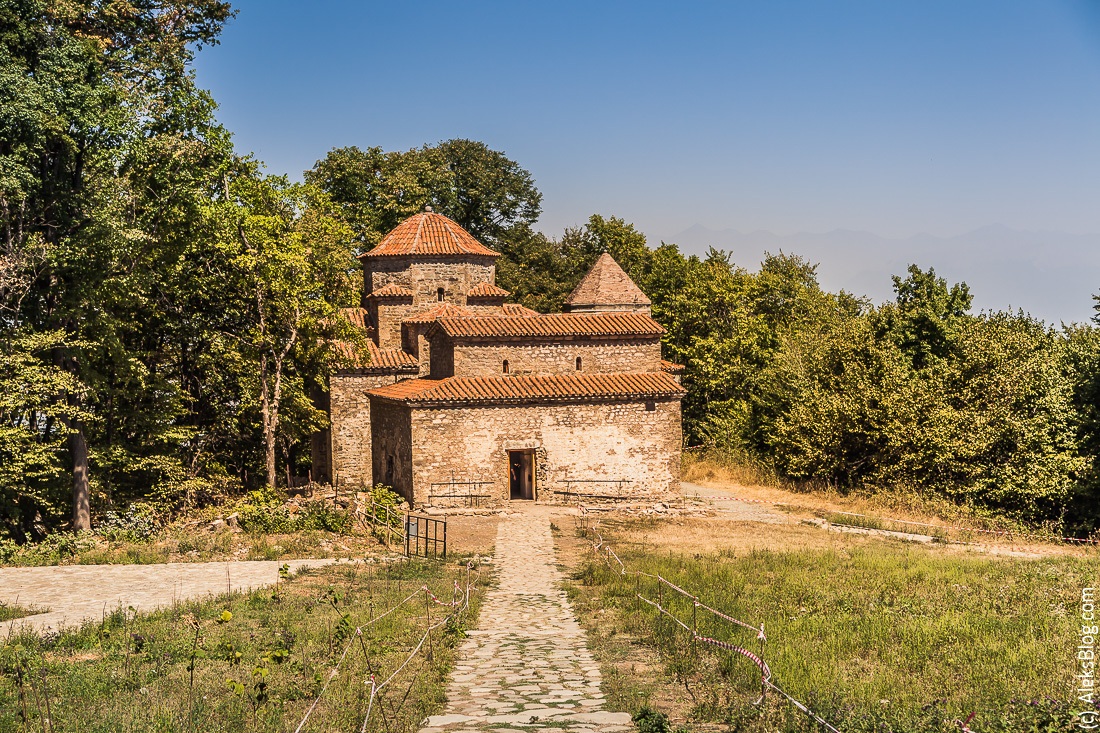
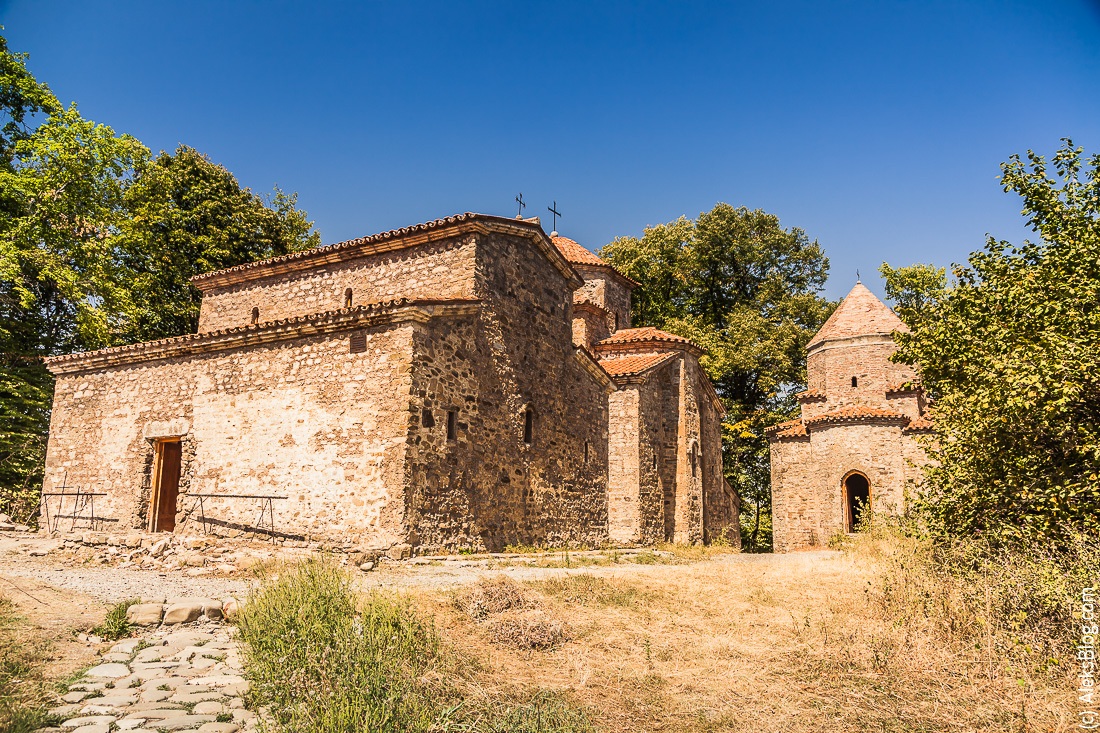
The exact date of the founding of Old Shuamta is unknown. It’s believed to have been abandoned in the 16th century. Today, it consists of three small churches. The oldest basilica was built around the 5th century. Who could have built a temple in the Gombori forests at that time is unknown. But it’s reasonable to assume that this modest church was the first temple in Kakheti. In the 6th century, a domed church was built next to the basilica, modeled exactly after Jvari (famous monastery in Mtskheta).
New Shuamta appeared in the 16th century. Today, it’s an active nunnery. Access to the territory is sometimes closed. Honestly, I would even recommend skipping New Shuamta. Around Old Shuamta, despite its small size, it’s much more interesting — the forest is so quiet and peaceful.
Ikalto Monastery
The next stop is 13 km away — Ikalto Monastery (41.937352, 45.381160). Many people just drive past it on the way to Alaverdi, which is a real shame — the monastery is right by the road, and you can easily stop for half an hour.

Ikalto Monastery was founded in the 6th century. It’s one of the first monasteries in Georgia and Kakheti. In the past, Ikalto, like Gelati (famous spot in Kutaisi), had an Academy. However, the complex of buildings on the site was burned down in the 17th century by Shah Abbas. Ikalto was only restored in the 19th century. Today, the monastery is a mix of restored 6th-century structures and newer buildings. You can see the marani — a wine cellar — and the preserved kvevri (ceramic wine amphorae).
Alaverdi Monastery
Alaverdi (42.041028, 45.377521) — officially named the Cathedral of St. George — is the main and most revered church in Kakheti. It’s the second tallest in Georgia.

There are several theories about the origin of the name “Alaverdi.” One suggests it comes from two Turkic words, All Verdi (Allah gave), by analogy with the city of Alaverdi in Armenia. However, in Armenia, the city was indeed founded by nomads — Turks — so why a Christian church would be named using Turkic words is unclear. The second, more logical theory is based on a distorted version of the name of the location where the church was built — Alva-Khvard (the Alvan plain).

Alaverdi Monastery was originally built in the 6th century by one of the Assyrian fathers, Iofis of Alaverdi, whose tomb is on the monastery grounds. The cathedral building, however, was constructed in 1010 — the same year that the Svetitskhoveli Cathedral was completed in Mtskheta.
Today, almost the entire Alaverdi complex is closed to visitors; you can only enter the Cathedral. A reminder: all monasteries have a dress code. Women must wear a headscarf and cover their legs, and men are not allowed in shorts at Alaverdi — you can rent wide, one-size-fits-all pants at the entrance.
Gremi Castle
Gremi (42.002419, 45.660082) is a popular tourist spot included in virtually every guided tour. You’ll have better luck visiting in the afternoon, when there are fewer people.
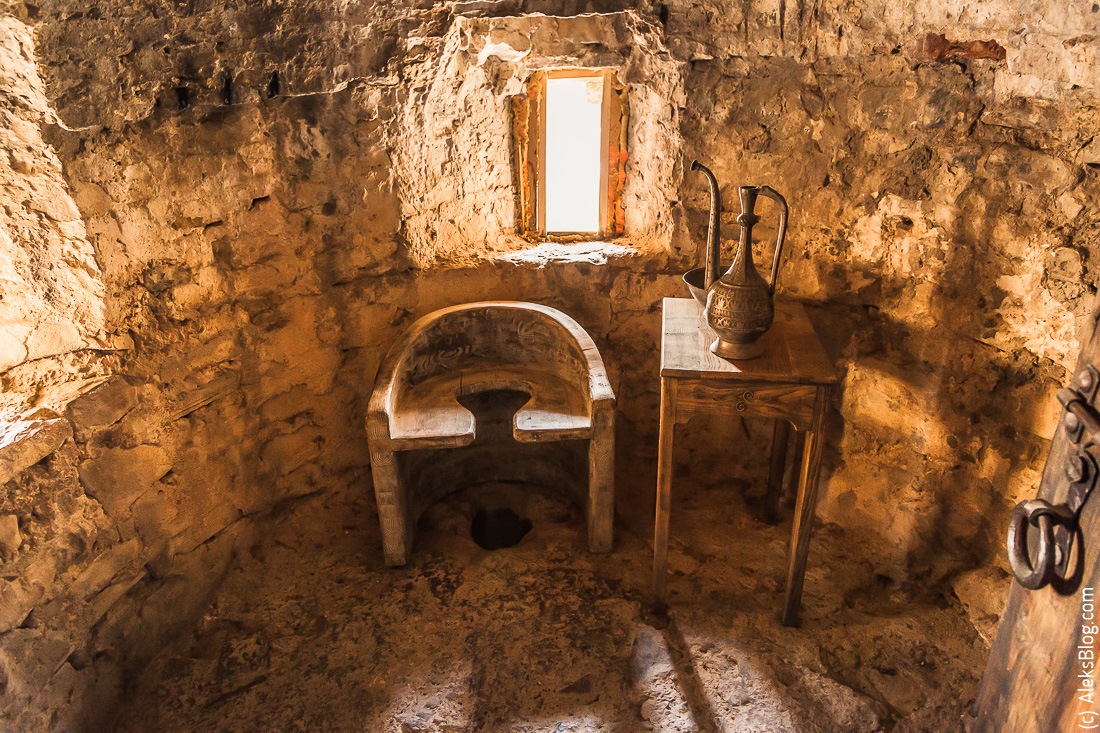
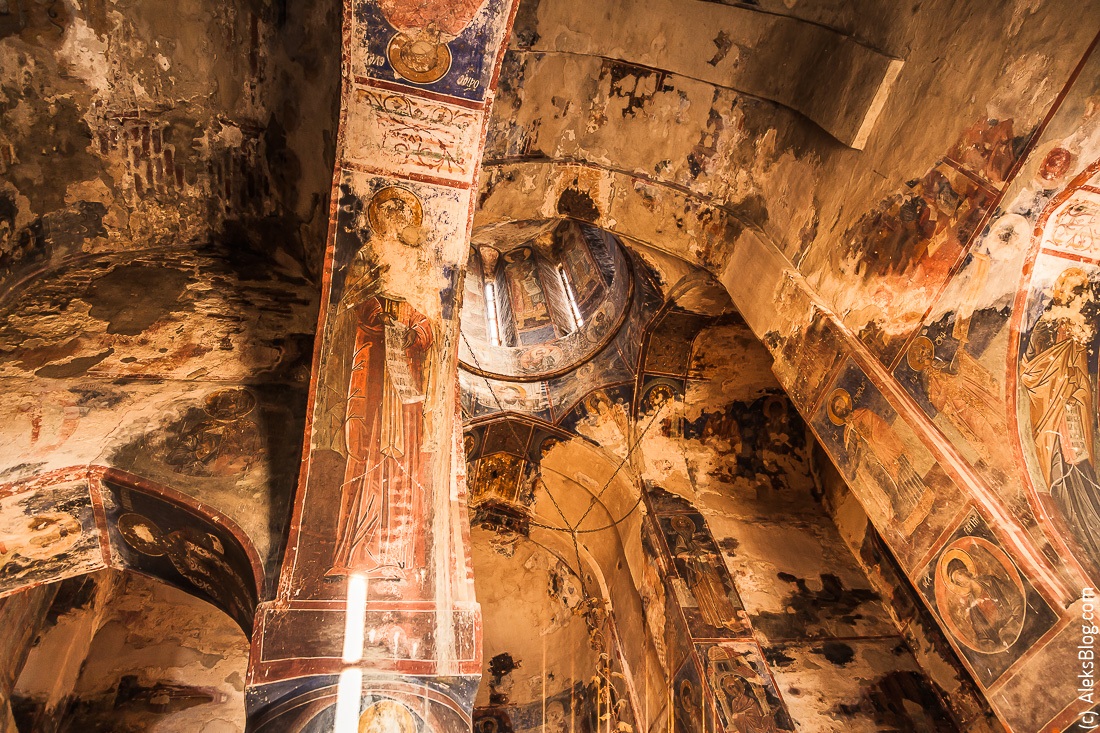
From the outside, it hardly looks like a castle or fortress — it looks more like a church.

In the 15th century, a town grew around Gremi Castle, founded by the Kakhetian king George I. By the 16th century, the town covered a large area, with a fortress at its center on top of a hill. In the 17th century, Shah Abbas’s army completely burned Gremi down, leaving only the buildings around the castle.
Kindzmarauli Winery
In Kakheti, all the open fields are planted with vineyards, and of course, there are many private wineries as well as several large corporations whose wines are exported and known worldwide. There are special wine tours in Kakheti that don’t visit churches or fortresses, but focus solely on wineries and the wine-making process. There, tastings are for professionals, complete with smacking lips, examining color and aroma, and meaningfully nodding your head…
Since I’m far from a connoisseur — I only distinguish wine by color (white or red) and taste (sour or sweet) — it didn’t really matter where we went. We chose Kindzmarauli because we wanted to stay in Kvareli.
Read more about Kindzmarauli Winery.

Nekresi Monastery
High on a mountain above the Alazani Valley, on the site of the long-lost town of Nekresi, stands a small but very interesting monastery (41.972449, 45.767717).

You can’t drive all the way to the monastery entrance. You need to leave your car in the parking lot below and either walk 1.5 km uphill or wait for the monastery shuttle, which constantly runs up and down.
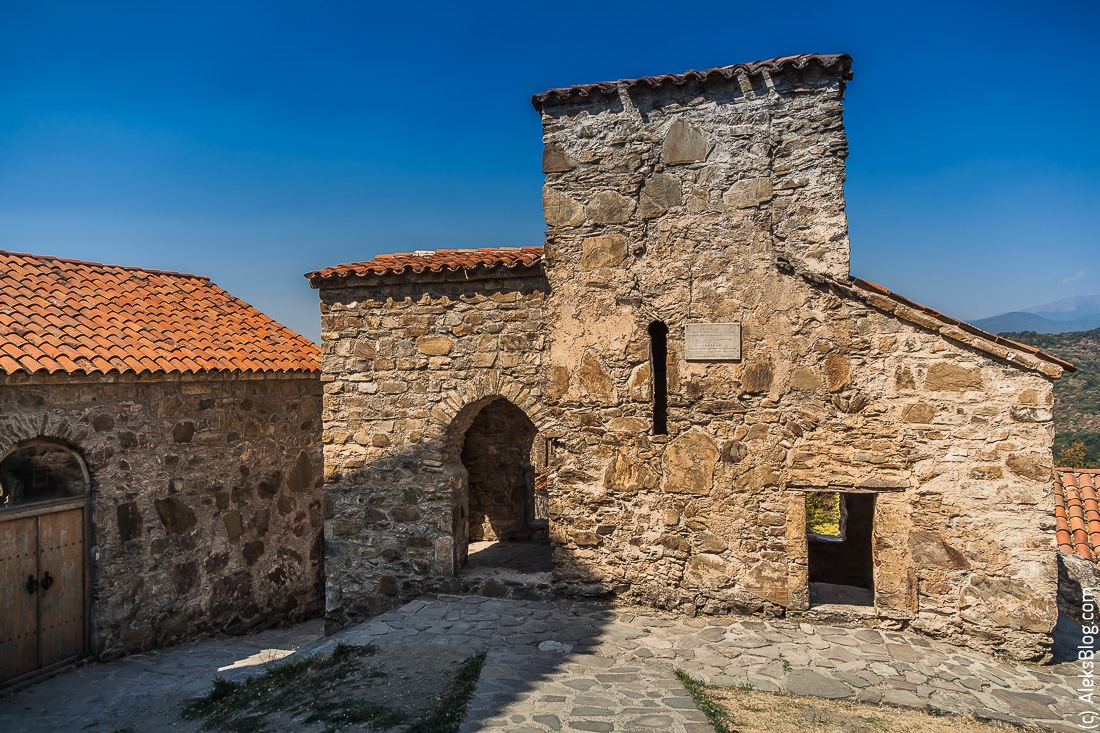
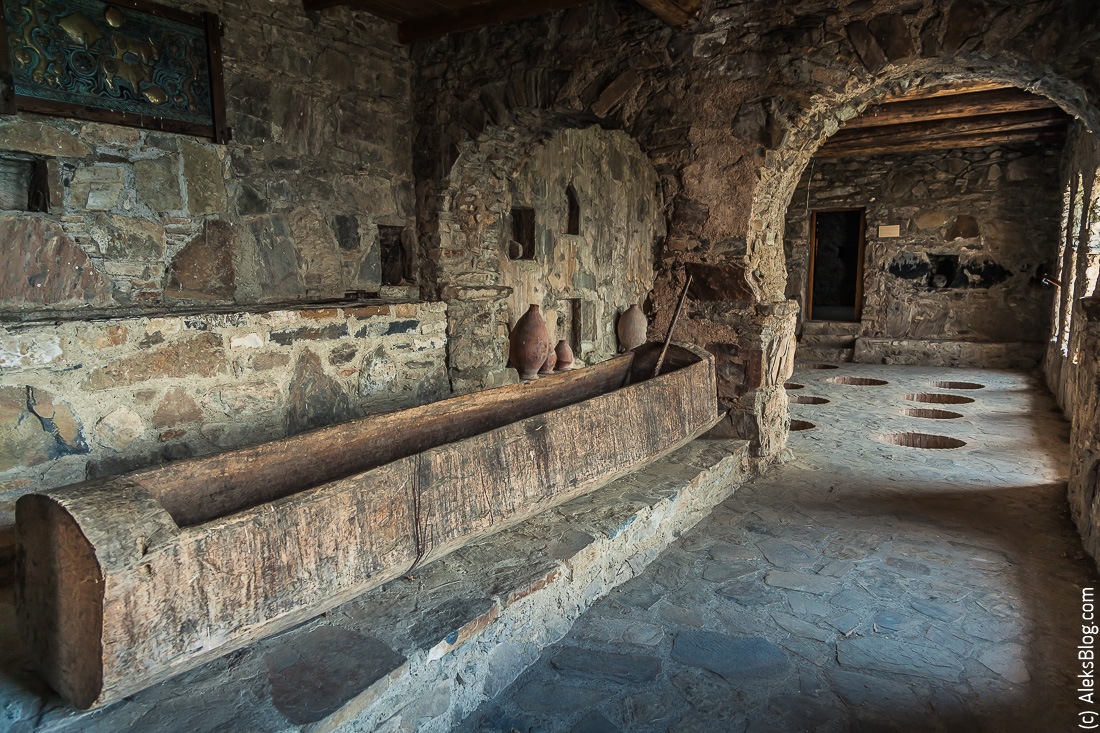
Within the Nekresi complex, there are a number of buildings, all open to visitors, and you can walk everywhere. There’s the Church of the Holy Virgin — 8th century, with interesting frescoes; a 9th-century church with an unusual square design; and the marani (wine storage room). The monastery shop sells wine, although the labels don’t indicate where it was produced.

Bodbe Monastery
Bodbe is a village and a monastery in the Sighnaghi district. The village is famous for the Monastery of Saint Nino, sometimes simply called “Bodbe Monastery.” The monastery is very close to Sighnaghi, just 2 kilometers away. Its most valuable feature is undoubtedly the tomb of Saint Nino*. The monastery is enclosed by a fence, and visiting hours end at 7 PM.
Inside is the Cathedral of St. George, the center of the Sighnaghi Diocese. It has the appearance of a domeless basilica. The central altar is dedicated to St. George, and in the southern chapel lies the tomb of Saint Nino.
*Explanatory note: Saint Nino — thanks to her, Georgia (then the Kingdom of Kartli) was Christianized in the 4th century.

As we know from the life of Saint Nino, after King Mirian* converted to Christianity and the first churches were built, Nino headed east to Tianeti and Ujarma, then went south to the area of Bodbe (or Budi), where she settled in a tent.
According to her hagiography, this land belonged to the Kingdom of Kakheti, although it was actually called Kiziki and might have still been independent at that time. Nino didn’t come to Bodbe by chance. At one point, four stars appeared to King Mirian, which scattered across various mountains, and crosses were later erected on these mountains. The fourth cross was supposed to be placed somewhere near Bodbe, and its installation was postponed until Nino herself visited the site — but whether the cross was eventually erected is unclear.
*Explanatory note: Mirian III — the first Christian king of Georgia.


Sighnaghi
A small town in eastern Georgia (41.611459, 45.925899) with a population of only 2,000. In all the travel guides, Sighnaghi is described as almost the main attraction of Georgia — “unique and amazing,” and strolling through it, you are supposed to be filled with “a feeling of happiness and love.”
I’m not a tour agent, so I’ll be honest — you won’t find anything like that here.

Sighnaghi is not an ancient city at all — it was founded in the 18th century. Little is known about its history. In 2005, the decision was made to turn Sighnaghi into a promotional town for tourists. The designers did a good job: building facades were renovated, streets were paved, and during the season many cafés operate and guesthouses began to open. From here, you get fairy-tale views of the Alazani Valley. In my opinion, it’s much more interesting to look at Sighnaghi from the road. A walk through the town takes just 1–2 hours.
As for sights: there are a few churches, fortress walls, Sighnaghi Fortress, and a couple of charming streets. The center of Sighnaghi includes 9 April Park and two squares — Solomon Dodashvili and David the Builder. From these two squares, you can walk along the two main ceremonial streets — Lalashvili and Kostava. They lead to Irakli II Square, with a fountain, a casino, and the Wedding Palace.
The Wedding Palace in Sighnaghi is almost like getting married in Las Vegas. If you’re in a hurry, you can just go in and get married the same day.

After the city was restored by builders and architects, marketers got involved and began promoting Sighnaghi to tourists. They came up with the idea that at the Wedding Palace, which operates 24/7, you could register a marriage without any bureaucratic formalities.
At the same time, they started creating and spreading local legends and stories.
For example, one of the most famous — dating back to the Soviet era — involves the Russian singer Alla Pugacheva. She has a song called “A Million Scarlet Roses”, known throughout the post-Soviet space:
There once was a painter,
Who had a little house and canvases,
But he loved an actress
Who loved flowers.
He sold his house,
Sold his paintings and roof,
And with all the money bought
A whole sea of flowers.
A million, million, million scarlet roses
From the window, from the window, from the window you see.
This song is actually about the Georgian painter Niko Pirosmani, who covered the square in front of his beloved French actress Marguerite de Sèvres’ house with flowers. And of course, this happened in Sighnaghi.
I recommend visiting the Local History Museum, where Pirosmani’s paintings are on display.
If you’ve had enough of all the ancient sights, it’s time to return to Kakheti’s other main attraction — wine.
Stop by the wine shop and restaurant Pheasant’s Tears (41.616423, 45.920304). Pheasant’s Tears is a well-known company producing wine since 2007 and was the first private winery in Georgia. Bloomberg included their Rkatsiteli in the list of the best wines in the world under $50. Another legend: Rkatsiteli was supposedly the first vine Noah planted after the flood.
A little further from Pheasant’s Tears is another private winery restaurant, Okro’s Wines (41.620974, 45.921629), considered the second private winery in Georgia. The restaurant has a terrace with the best view in town of the Alazani Valley — almost the whole of Sighnaghi can be seen. If you want to have lunch, this is the place. If you ask, they’ll show you the wine cellar and tell you a bit about the wine. A tasting of three wines costs 20 lari. Wines from Okro’s Wines are not sold in retail stores.
David Gareji Monastery
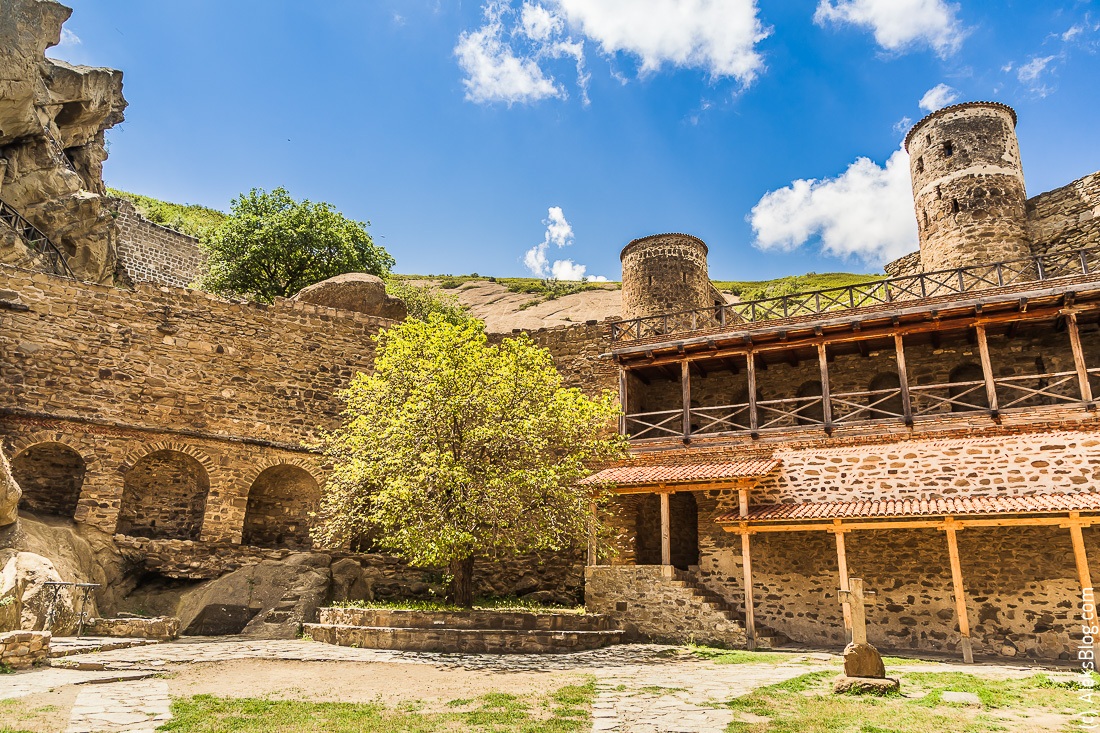
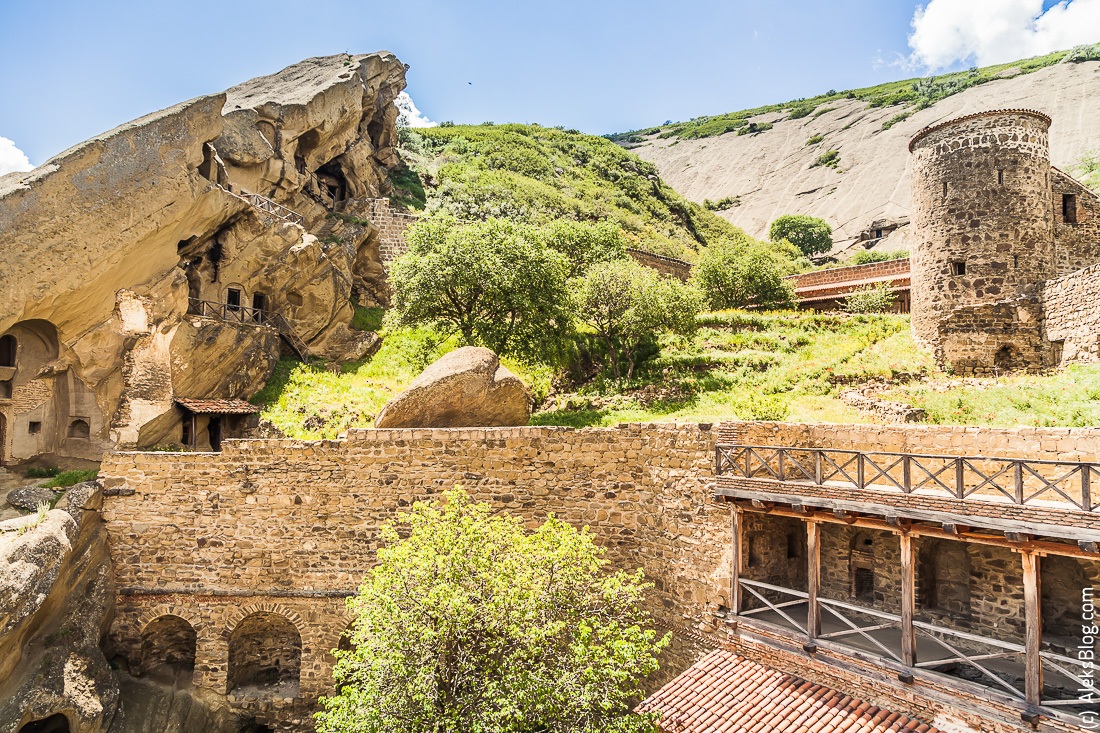
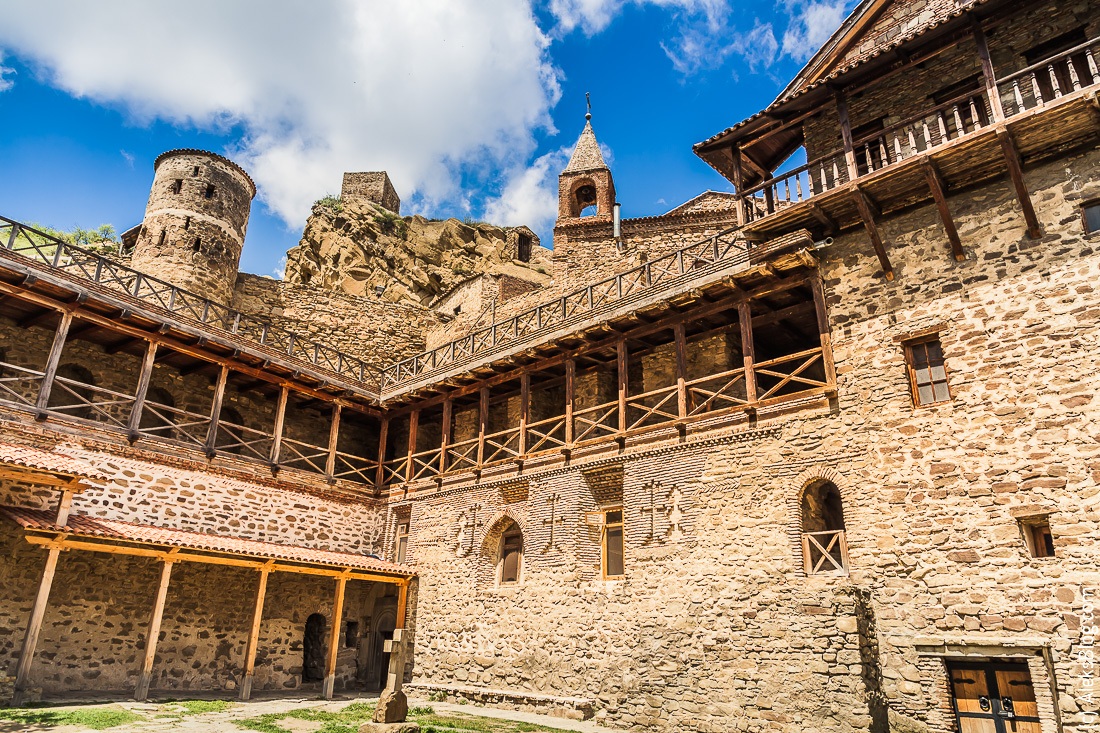
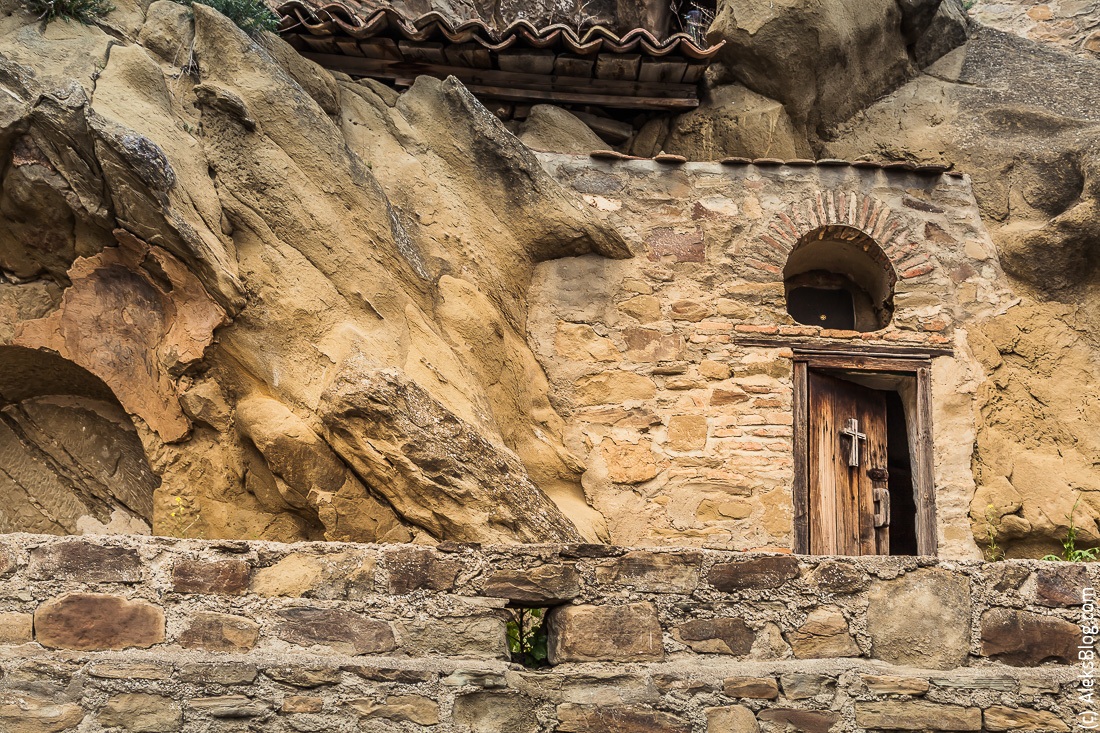
David Gareji Monastery is one of Georgia’s most famous attractions. It’s a large complex consisting of churches, cave monasteries, and utility buildings spread over several dozen kilometers, with part of it located in Azerbaijan.
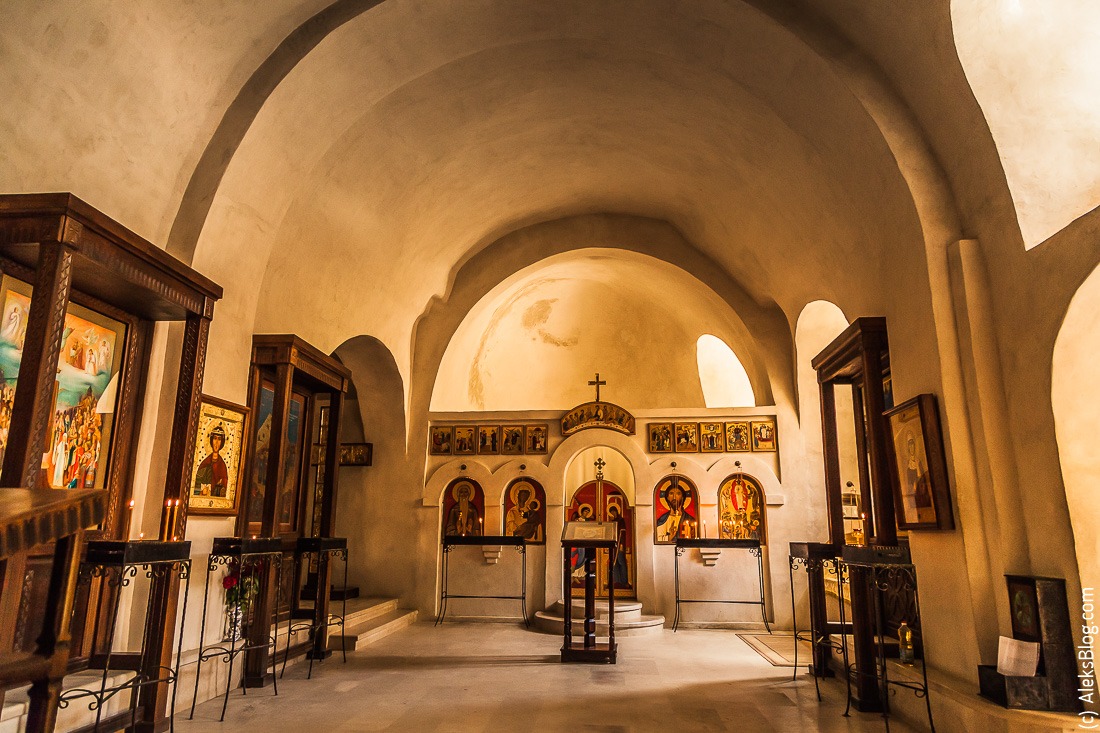
The David Gareji complex includes around 20 monasteries carved into the rocks, built in the 6th century. The complex is completely different from what you see in Uplistsikhe or Vardzia.
The main monastery of the complex is the Lavra of St. David, located on the northern slope of the mountain dividing Georgia and Azerbaijan. The border runs along the mountain ridge, which Georgian historians call Udabno, after one of the monasteries. This monastery itself is on Azerbaijani territory — on the southern slope of the mountain. In addition, the southern slope hosts over 100 caves that were used by monks as cells.
You can’t visit all the caves and monasteries; only part of the complex is open to visitors. Entrance is free.
The route Telavi – Bodbe – Sighnaghi – David Gareji – Tbilisi took us exactly a whole day.